
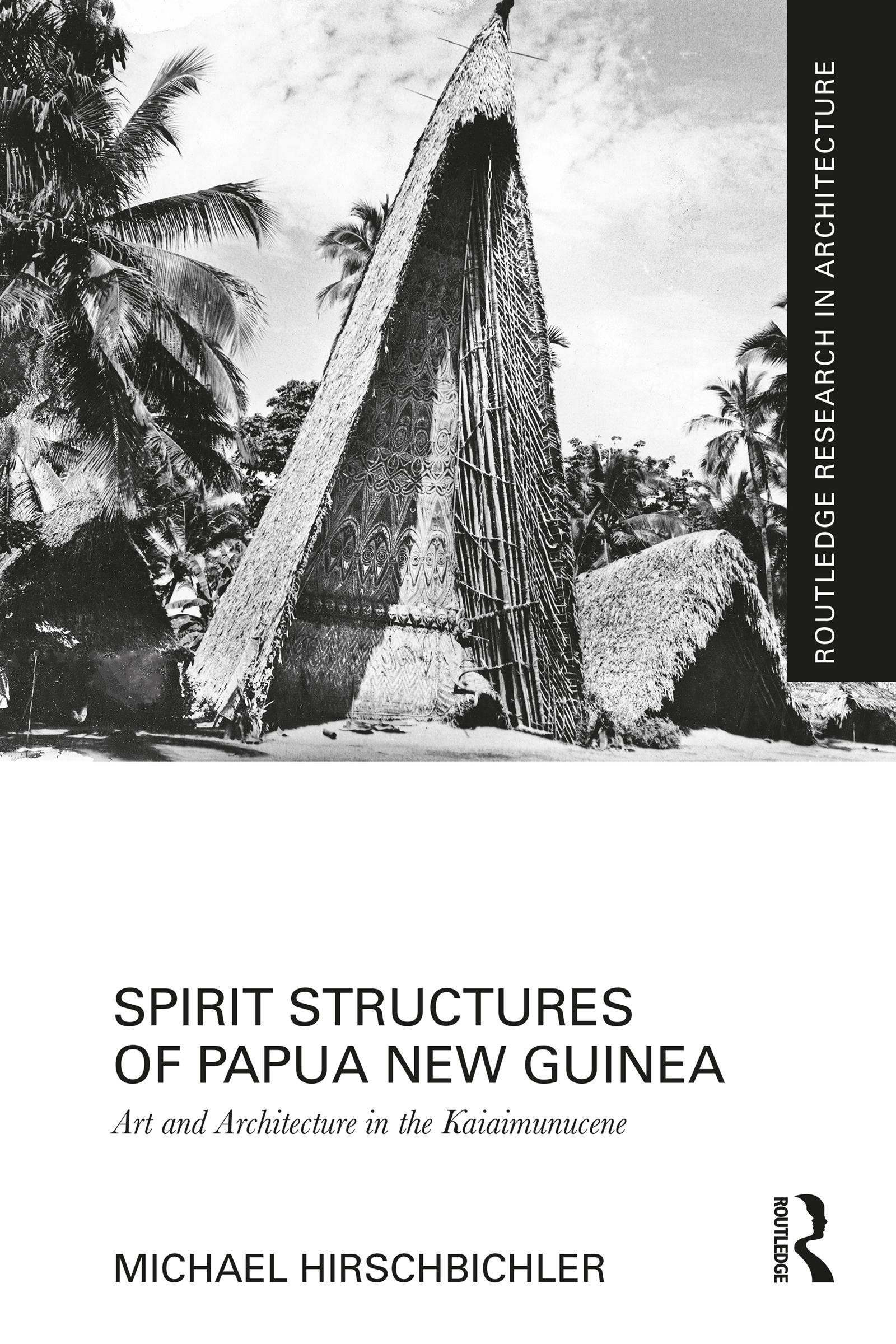
This book investigates the art and architecture of Papua New Guinean spirit structures with a multi-perspectival approach that combines cultural and social sciences with building, architectural, and spatial research. It offers the first comprehensive study of the spirit houses of New Guinea that exists to date.
The book’s aim is twofold: First, it aims to investigate the spirit structures and their associated cultural cosmos in detail. For this purpose, a representative selection of traditional buildings and artworks from different regions of Papua New Guinea is documented and analyzed, and theories for their understanding are formulated. In this course, the author develops a spatial theory of anthropological concepts – such as myths, signs, persons, and rituals. Secondly, this analysis is then situated in the broader context of the Anthropocene/Kaiaimunucene. Transforming the historical spirit structures into models for future-oriented cultural imagination, the consequences for contemporary productions of space and ways of worldmaking in light of existential challenges are traced.
The book thus offers more-than-human and more-than-secular concepts for building, art, and worldmaking that are of critical importance in the ongoing Anthropocene/Kaiaimunucene. It will be of interest to researchers and students of architecture, anthropology, cultural studies, environmental humanities, and adjacent disciplines.
Part I of the book was translated from German by Melanie Janet Sindelar.
Płać wygodnie kartą, Klarną, Apple Pay lub Google Pay. Nie jesteś zadowolony? Zawsze masz 14-dniową gwarancję zwrotu pieniędzy. Więcej przeczytasz w naszych warunkach. Masz pytania? Napisz do nas na hello@memmo.org.
Memmo ułatwia naukę – gdziekolwiek jesteś na świecie. U nas znajdziesz podręczniki i sprytne narzędzia do nauki w jednym miejscu: streszczenia, quizy, podcasty i fiszki. A do tego Ted, Twój kumpel do nauki, który odpowie na wszystko, co Cię nurtuje. Ponad 50 000 studentów już tu się uczy – stworzone, byś uczył się szybciej i mniej stresował.