
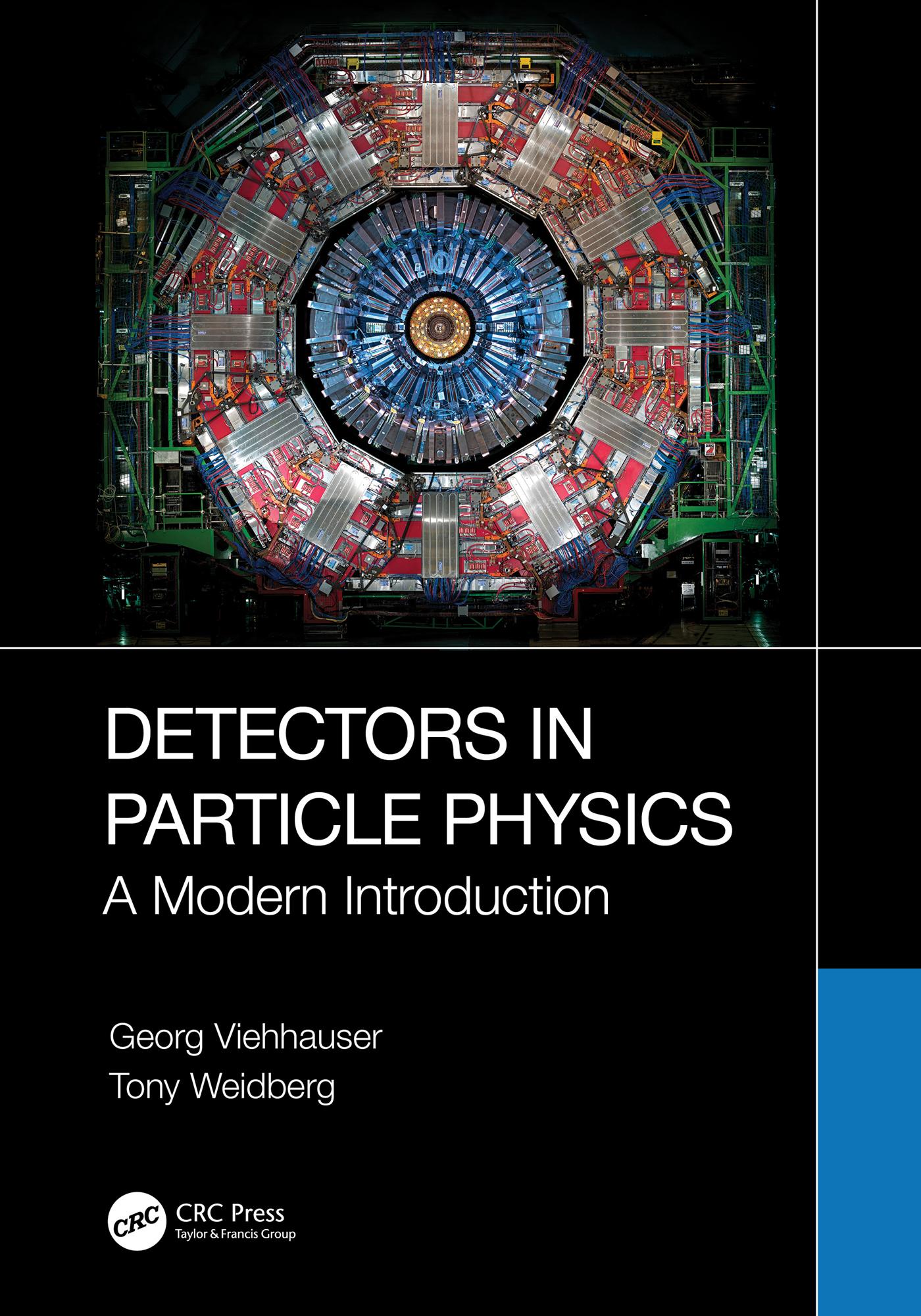
This textbook provides an accessible yet comprehensive introduction to detectors in particle physics. It emphasises the core physics principles, enabling a deeper understanding of the subject for further and more advanced studies. In addition to the discussion of the underlying detector physics, another aspiration of this book is to introduce the reader to practically important aspects of particle detectors, like electronics, alignment, calibration and simulation of particle detectors. Case studies of the various applications of detectors in particle physics are provided.
The primary audience is graduate students in particle or nuclear physics, in addition to advanced undergraduate students in physics.
Key Features:
- Provides an accessible yet thorough discussion of the basic physics principles needed to understand how particle detectors work.
- Presents applications of the basic physics concepts to examples of modern detectors.
- Discusses practically important aspects like electronics, alignment, calibration and simulation of particle detectors.
- Contains exercises for each chapter to further understanding.
For more information please see the authors companion webpage https://ppdetectors.web.ox.ac.uk/
This webpage allows instructors to request a copy of the solutions manual. There are also corrections for some of the exercises under the Errata tab.
This Book was published Open Access with funding support from the Sponsoring Consortium for Open Access Publishing in Particle Physics (SCOAP3).
Płać wygodnie kartą, Klarną, Apple Pay lub Google Pay. Nie jesteś zadowolony? Zawsze masz 14-dniową gwarancję zwrotu pieniędzy. Więcej przeczytasz w naszych warunkach. Masz pytania? Napisz do nas na hello@memmo.org.
Memmo ułatwia naukę – gdziekolwiek jesteś na świecie. U nas znajdziesz podręczniki i sprytne narzędzia do nauki w jednym miejscu: streszczenia, quizy, podcasty i fiszki. A do tego Ted, Twój kumpel do nauki, który odpowie na wszystko, co Cię nurtuje. Ponad 50 000 studentów już tu się uczy – stworzone, byś uczył się szybciej i mniej stresował.