
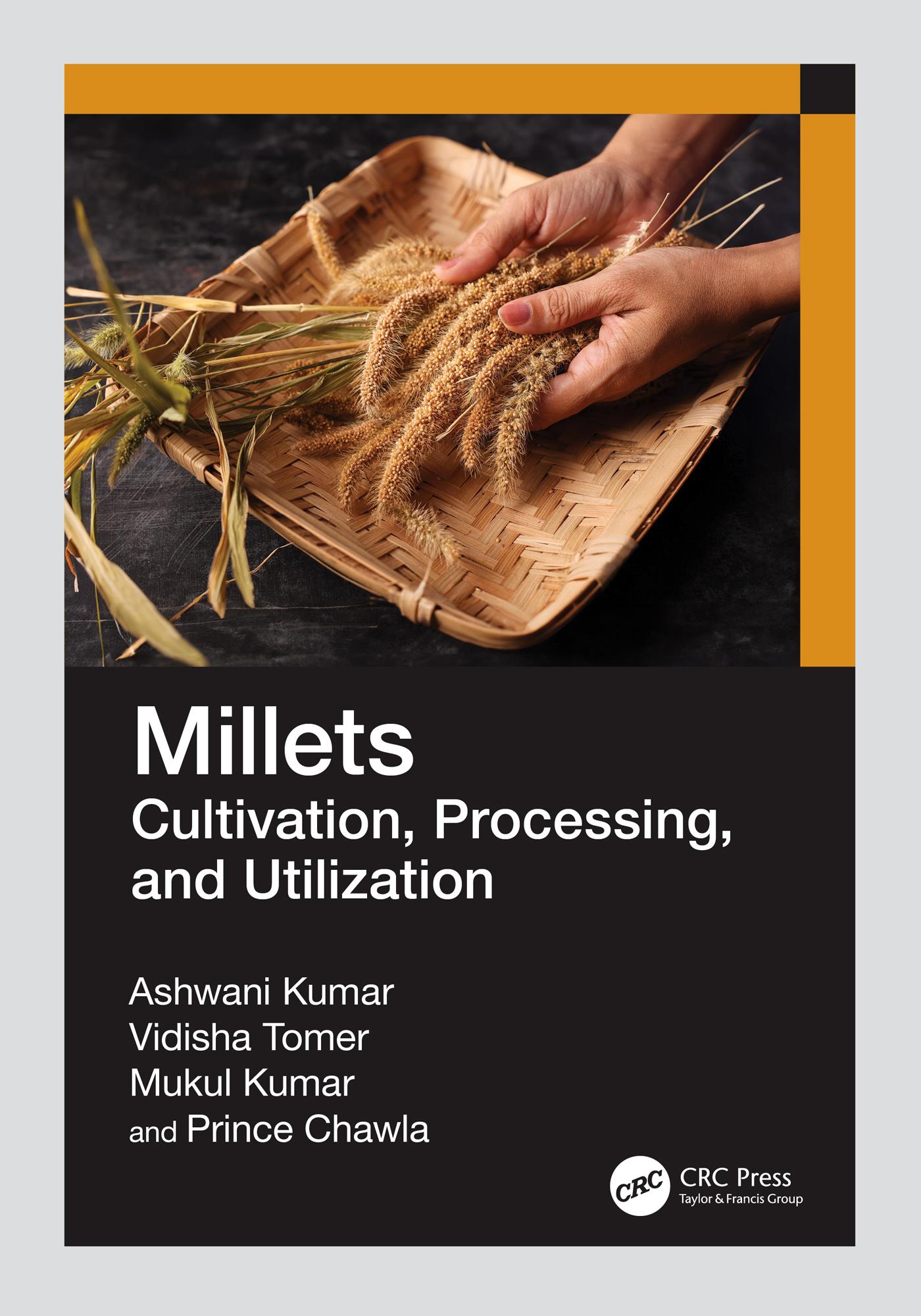
Millets are diverse small-seeded crops which are resilient to climatic stress, pests, and diseases. These can be grown in rainfed conditions with minimal agricultural inputs. These are considered nutritionally superior to other major cereals like rice, wheat, and maize as they contain a significant amount of protein, dietary fibre, and minerals. Today, millets are recognized and considered as integral components of a sustainable food system. Millets have low glycaemic index and are beneficial for diabetics. Millet protein is devoid of gluten, making them a better option than wheat for patients with gluten sensitivity.
Millets: Cultivation, Processing, and Utilization covers information on taxonomy, morphology, germplasm accessions, cultivation practices, harvesting methods, threshing, cleaning, storage, milling, structural and engineering properties, nutritional and anti-nutritional values, health benefits, food applications, by-products, non-food applications, quality standards, and prospects in millet processing. This book's sixteen in-depth chapters give readers complete information on all facets of millet cultivation, processing, and use. It is a unique compilation of information on millets from farm to fork and beyond. This book will be useful for students, researchers, farmers, and entrepreneurs in understanding millets and their applications. It has been compiled by experts in the field and can serve as a guidance document for the stakeholders.
Płać wygodnie kartą, Klarną, Apple Pay lub Google Pay. Nie jesteś zadowolony? Zawsze masz 14-dniową gwarancję zwrotu pieniędzy. Więcej przeczytasz w naszych warunkach. Masz pytania? Napisz do nas na hello@memmo.org.
Memmo ułatwia naukę – gdziekolwiek jesteś na świecie. U nas znajdziesz podręczniki i sprytne narzędzia do nauki w jednym miejscu: streszczenia, quizy, podcasty i fiszki. A do tego Ted, Twój kumpel do nauki, który odpowie na wszystko, co Cię nurtuje. Ponad 50 000 studentów już tu się uczy – stworzone, byś uczył się szybciej i mniej stresował.