
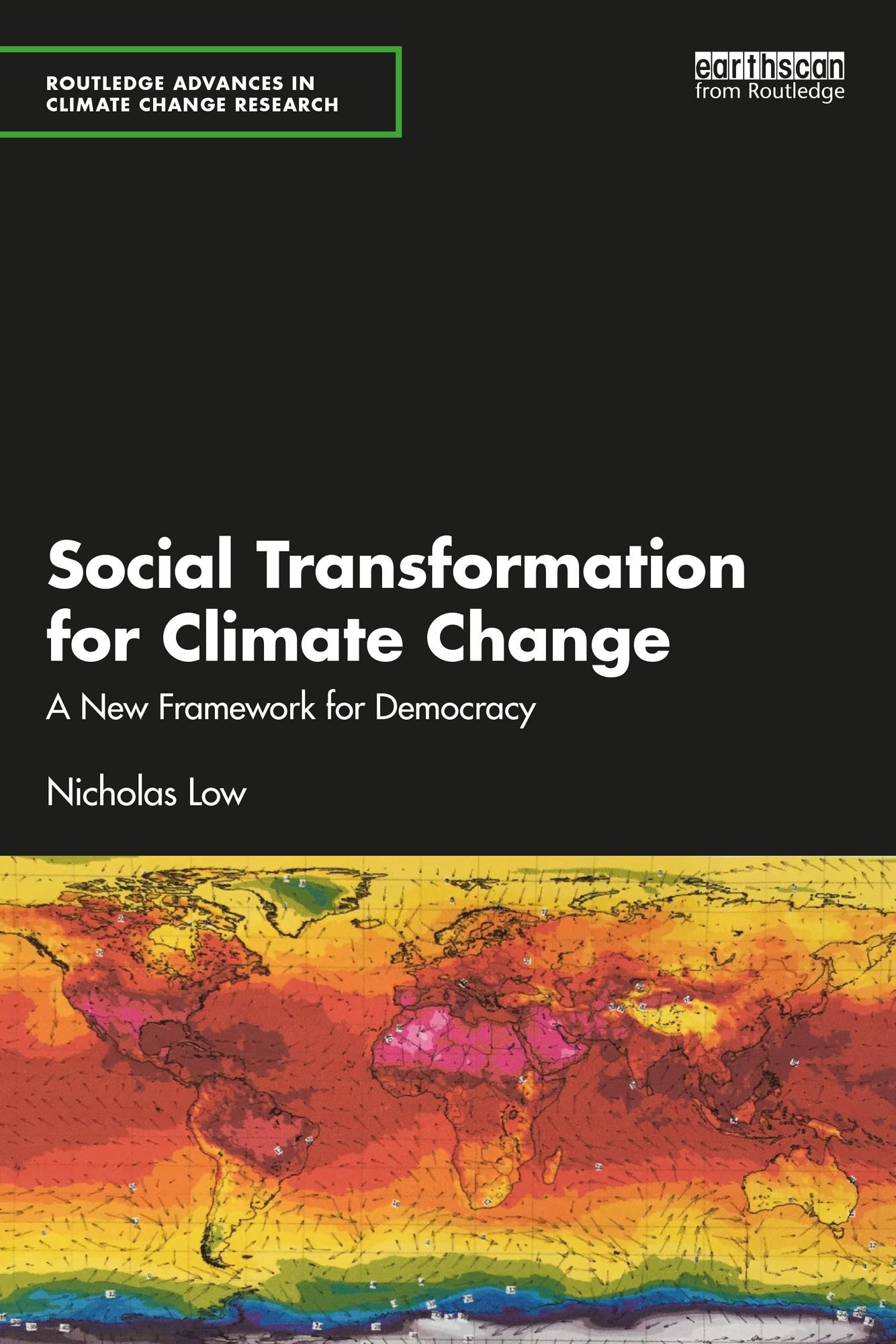
This book argues that social transformation is both necessary and possible if democracies are to respond effectively to the climate crisis without social collapse.
Climate transformation and social transformation are intimately connected. Understanding how to address climate change requires a historical approach both to the climate and to our collective institutions of humanity. Drawing on the works of Karl Polanyi and Thomas Piketty, Nicholas Low traces the course of historic social transformations from Britain, Russia, and Australia to highlight key commonalities: social crisis, the widespread sense by those in power that ‘something has to change’, the shift in ideology, and the political champions that drove the change. Within its international scope, the book delves deeper into specific instances of inequality and poverty from Britain, the USA, Australia, and the Global South. It shows how these examples are connected with the current climate emergency. Finally, the author draws together all the evidence from past transformations to outline how a new social democratic transformation could generate a better future, creating the social solidarity necessary to cope with the climate crisis.
This book will be of great interest to students and scholars of climate change, environmental politics and policy, political ecology, environmental sociology, and environmental studies more broadly. Its argument is also highly relevant for political actors working towards social and economic transformation.
Płać wygodnie kartą, Klarną, Apple Pay lub Google Pay. Nie jesteś zadowolony? Zawsze masz 14-dniową gwarancję zwrotu pieniędzy. Więcej przeczytasz w naszych warunkach. Masz pytania? Napisz do nas na hello@memmo.org.
Memmo ułatwia naukę – gdziekolwiek jesteś na świecie. U nas znajdziesz podręczniki i sprytne narzędzia do nauki w jednym miejscu: streszczenia, quizy, podcasty i fiszki. A do tego Ted, Twój kumpel do nauki, który odpowie na wszystko, co Cię nurtuje. Ponad 50 000 studentów już tu się uczy – stworzone, byś uczył się szybciej i mniej stresował.