
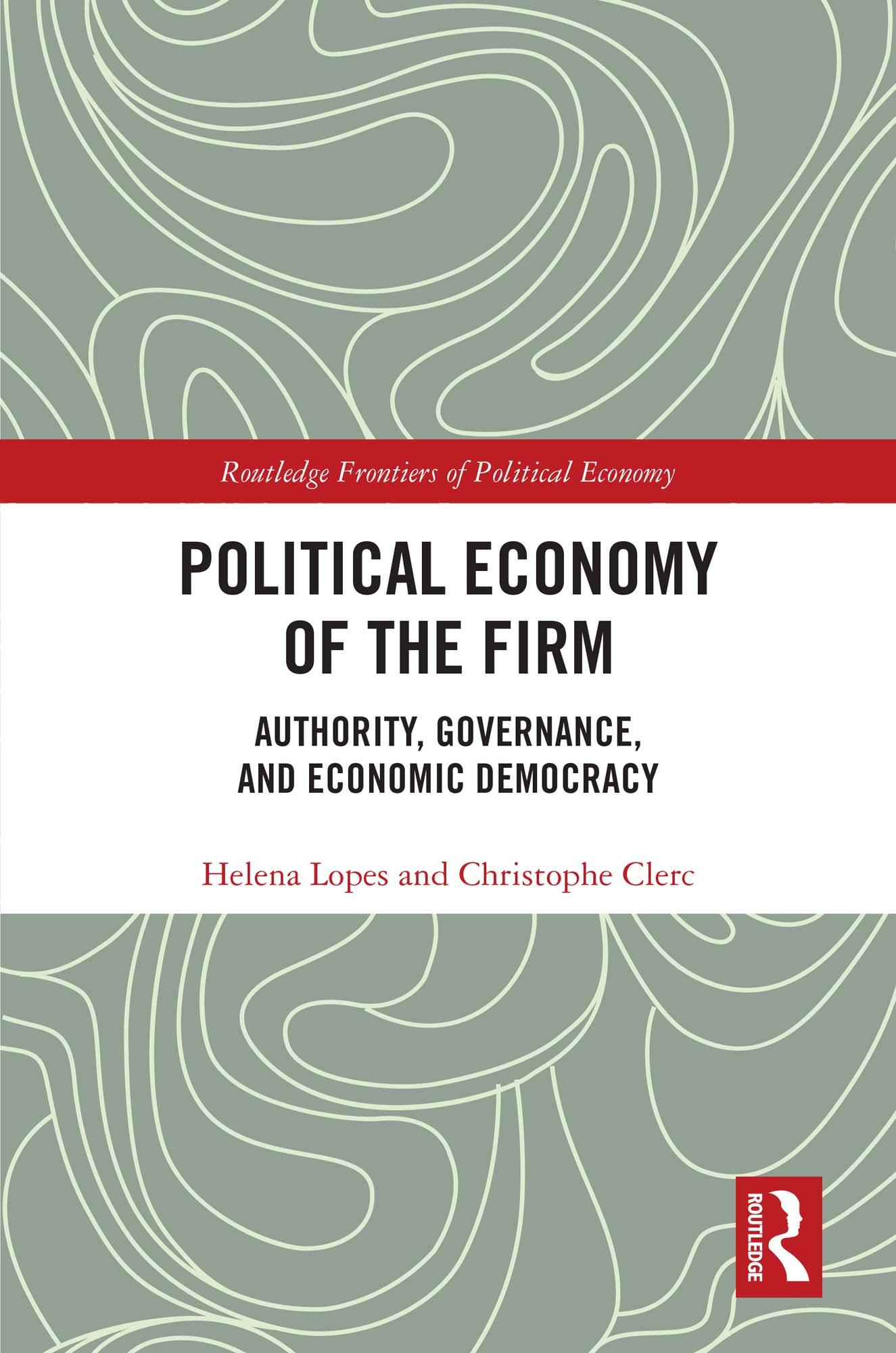
An alternative theory of the firm is needed that helps better understand the nature and actual functioning of firms as well as the challenges raised by digital platform firms. In defining firms as economic collective ventures organised by political means, this book offers a “political economy” vision of firms.
Specifically, the book provides an authority-based conception of the firm that supplies a theoretical grounding for democratic governance. It is argued that workers must be viewed as actors of the firm, not passive subjects of capital, given that authority is a non-coercive form of power. The book examines authority and subordination from the workers’ perspective and argues that when workers accept authority, it is because they see it as facilitating mutually beneficial cooperation between people with divergent interests. As managerial authority is based on its acceptance by workers, it calls for legitimacy. Neither ownership nor the function that authority performs makes it legitimate. The book shows that legitimacy entails the democratisation of corporate governance, within the framework of “pluralistic companies”, and thus joins the many voices that increasingly question shareholder primacy.
The book will be of great interest to researchers and students in economics and law as well as labour professionals, employers, unions, policymakers and anybody interested in economic democracy.
Płać wygodnie kartą, Klarną, Apple Pay lub Google Pay. Nie jesteś zadowolony? Zawsze masz 14-dniową gwarancję zwrotu pieniędzy. Więcej przeczytasz w naszych warunkach. Masz pytania? Napisz do nas na hello@memmo.org.
Memmo ułatwia naukę – gdziekolwiek jesteś na świecie. U nas znajdziesz podręczniki i sprytne narzędzia do nauki w jednym miejscu: streszczenia, quizy, podcasty i fiszki. A do tego Ted, Twój kumpel do nauki, który odpowie na wszystko, co Cię nurtuje. Ponad 50 000 studentów już tu się uczy – stworzone, byś uczył się szybciej i mniej stresował.