
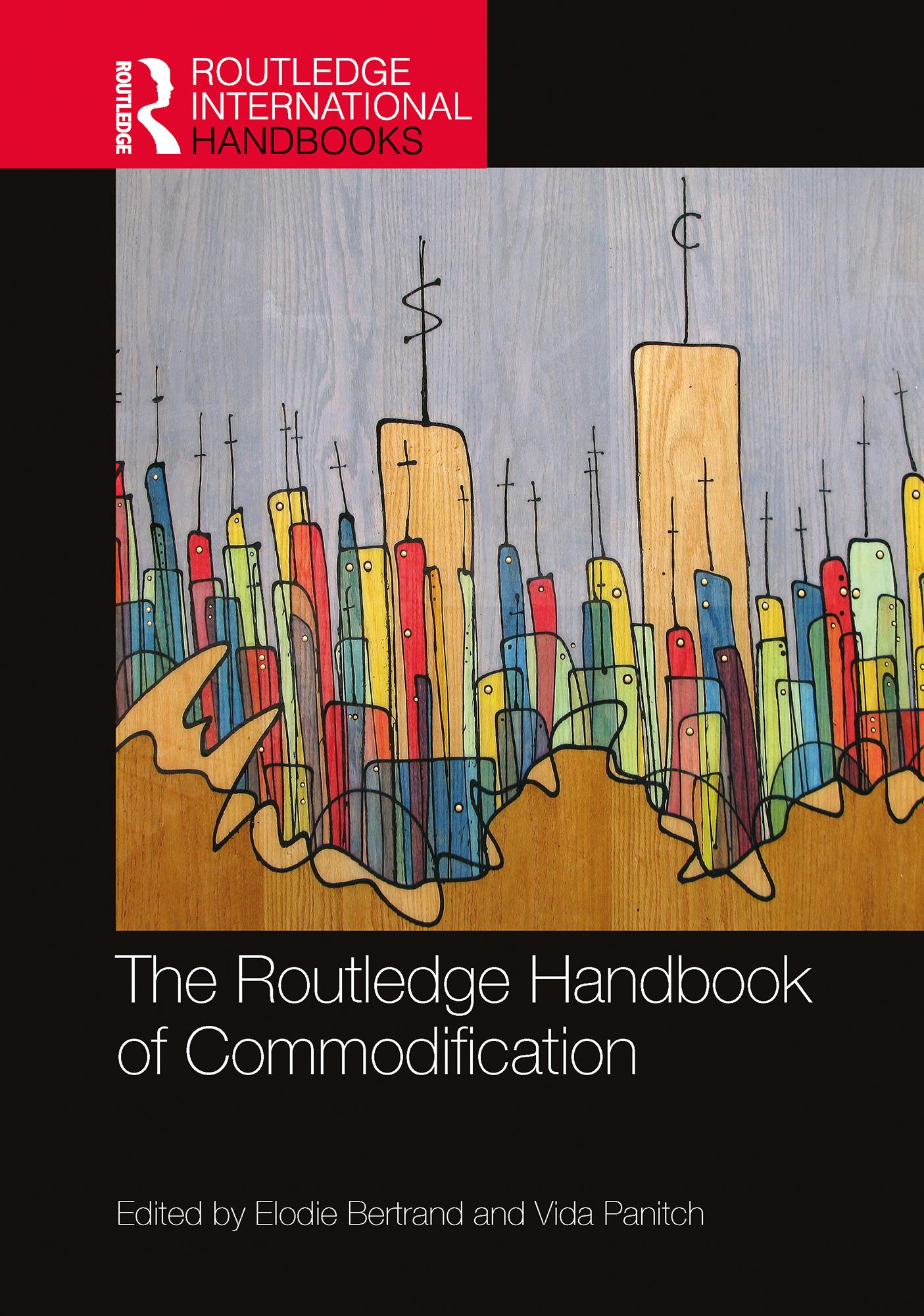
Some goods are freely traded as commodities without question or controversy. For other goods, their commodification – their being made available in exchange for money, or their being subject to market valuation and exchange – is hotly contested. “Contested” commodities range from labour and land, to votes, healthcare, and education, to human organs, gametes, and intimate services, to parks and emissions. But in the context of a market economy, what distinguishes these goods as non-commodifiable, or what defines them as contestable commodities? And why should their status as such justify restricting the market choices of rationally consenting parties to otherwise voluntary exchanges?
This volume draws together wide-ranging, interdisciplinary research on the legitimate scope of markets and the kinds of goods that should be exempt therefrom. In bringing diverse answers to this question together for the first time, it finally identifies commodification studies as a unique field of scholarly research in its own right. In so doing, it fosters interdisciplinary dialogue, advances scholarship, and enhances education in this controversial, important, and growing field of research. Contemporary theorists who examine this question do so from across the disciplinary spectrum and ground their answers in diverse scholarly literature and divergent methodological approaches. Their arguments will be of interest to scholars and students of philosophy, economics, law, political science, sociology, policy, feminist theory, and ecology, among others.
The contributors to this volume take diverse and divergent positions on the benefits of markets in general and on the possible harms of specific contested markets in particular. While some favour free markets and others regulation or prohibition, and while some engage in more normative and others in more empirical analysis, the contributors all advance nuanced and thoughtful arguments that engage deeply with the complex set of moral and empirical questions at the heart of commodification studies. This volume collects their new and provocative work together for the first time.
Płać wygodnie kartą, Klarną, Apple Pay lub Google Pay. Nie jesteś zadowolony? Zawsze masz 14-dniową gwarancję zwrotu pieniędzy. Więcej przeczytasz w naszych warunkach. Masz pytania? Napisz do nas na hello@memmo.org.
Memmo ułatwia naukę – gdziekolwiek jesteś na świecie. U nas znajdziesz podręczniki i sprytne narzędzia do nauki w jednym miejscu: streszczenia, quizy, podcasty i fiszki. A do tego Ted, Twój kumpel do nauki, który odpowie na wszystko, co Cię nurtuje. Ponad 50 000 studentów już tu się uczy – stworzone, byś uczył się szybciej i mniej stresował.