
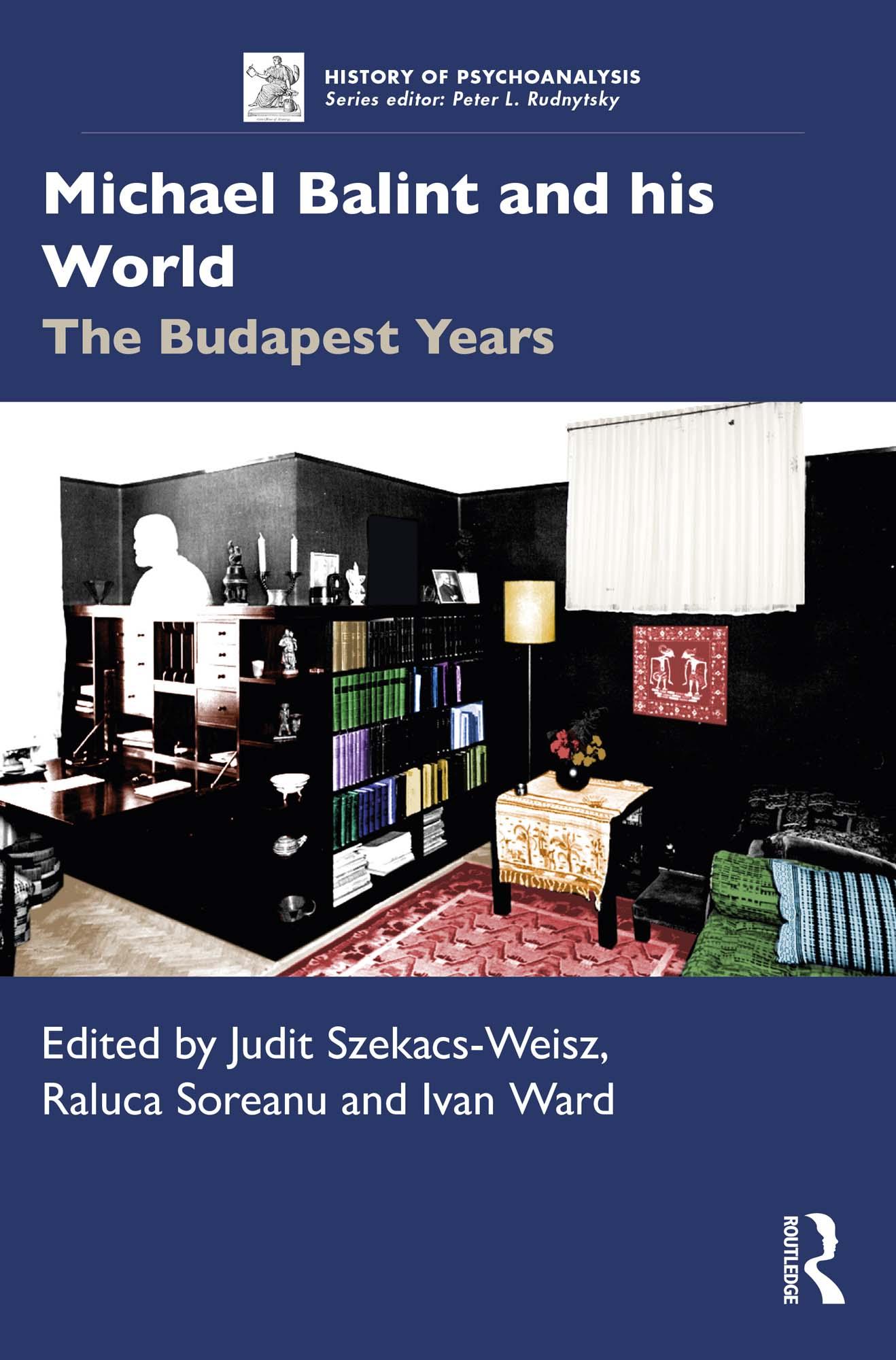
This fascinating collection explores the life of renowned psychoanalyst Michael Balint in his native Budapest. With a Balint revival in mind, Michael Balint and his World: The Budapest Years brings together the work of psychoanalysts, social thinkers, historians, literary scholars, artists and medical doctors who draw on Balint’s work in a variety of ways.
The book focuses on Balint’s early years in Budapest, where he worked with Sándor Ferenczi and a circle of colleagues, capturing the transformations of psychoanalytic thinking as it happens in a network of living relationships. Tracing creative disagreements as well as collaborations, and setting these exchanges in the climate of scientific, social and cultural developments of the time, Michael Balint and his World: The Budapest Years follows the development of psychoanalytic thinking during these critical times. The book recalls the story of several “lost children” of the Budapest School and reconstitutes Balint’s important early contributions on primary love. It also examines his little-known relationship with Lacan, including the extended discussion of Balint’s work by Wladimir Granoff in Lacan’s first public seminar in Paris in 1954, published here for the first time.
This important book provides a fresh perspective on Balint’s enormous contribution to the field of psychoanalysis and will interest both scholars and clinicians. It will also inspire those interested in clinical practice and the applications of psychoanalysis to the cultural sphere.
Płać wygodnie kartą, Klarną, Apple Pay lub Google Pay. Nie jesteś zadowolony? Zawsze masz 14-dniową gwarancję zwrotu pieniędzy. Więcej przeczytasz w naszych warunkach. Masz pytania? Napisz do nas na hello@memmo.org.
Memmo ułatwia naukę – gdziekolwiek jesteś na świecie. U nas znajdziesz podręczniki i sprytne narzędzia do nauki w jednym miejscu: streszczenia, quizy, podcasty i fiszki. A do tego Ted, Twój kumpel do nauki, który odpowie na wszystko, co Cię nurtuje. Ponad 50 000 studentów już tu się uczy – stworzone, byś uczył się szybciej i mniej stresował.