
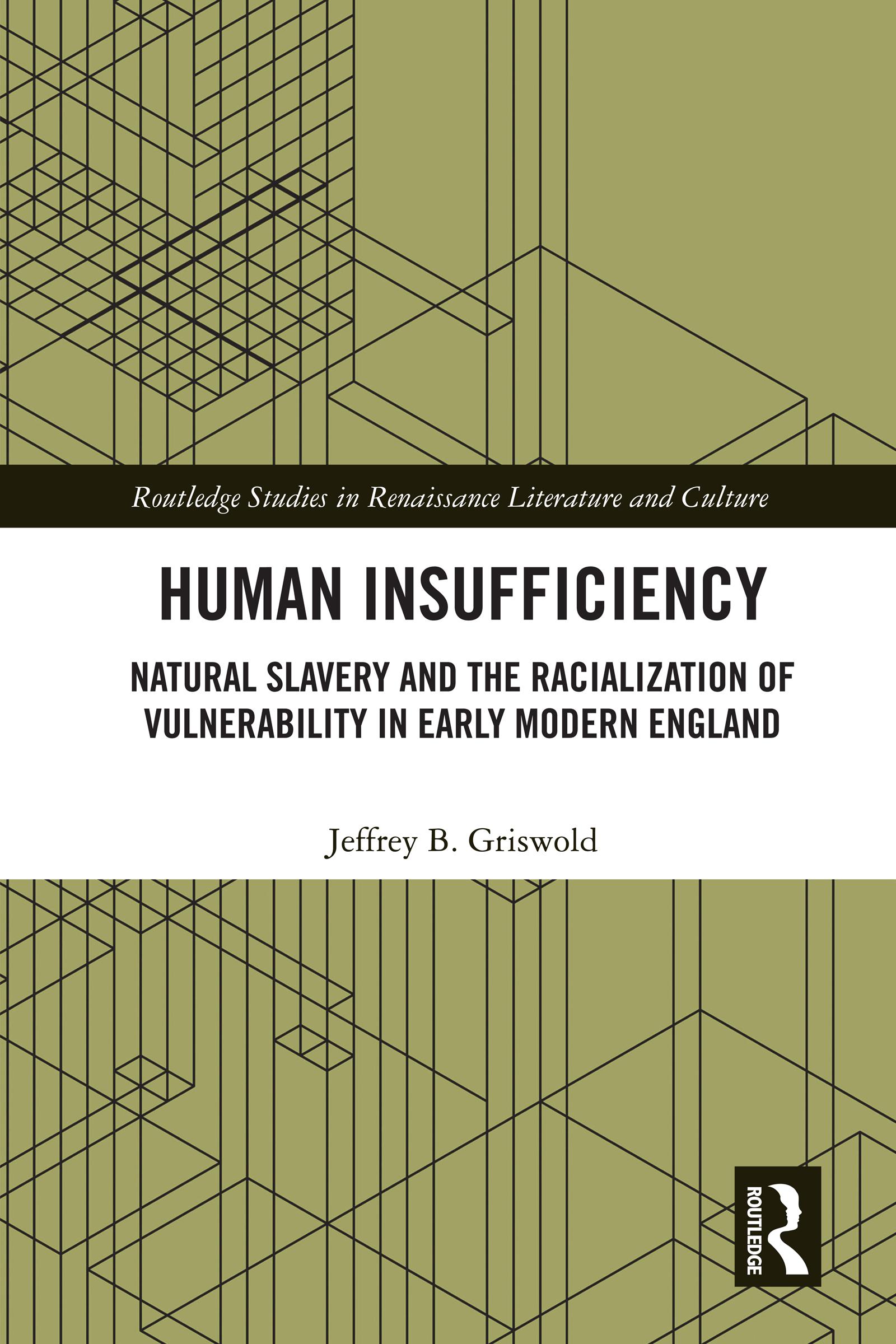
Human Insufficiency argues that early modern writers depict the human political subject as physically vulnerable in order to naturalize slavery. Representations of Man as a weak creature—“poor” and “bare” in King Lear’s words—strategically portrayed English bodies as needing care from people who were imagined to be less fragile. Drawing on Aristotle’s depictions of the natural master and the natural slave in the Politics, English writers distinguished the fully human political subject from the sub-human Slave who would care for his feeble body. This justification of a nascent slaving economy reinvents the violence of enslaving Afro-diasporic peoples as a natural system of care. Human Insufficiency’s most important contribution to early modern critical race studies is expanding the scope of the human as a racialized category by demonstrating how depictions of Man as a vulnerable species were part of a discourse racializing slavery.
Płać wygodnie kartą, Klarną, Apple Pay lub Google Pay. Nie jesteś zadowolony? Zawsze masz 14-dniową gwarancję zwrotu pieniędzy. Więcej przeczytasz w naszych warunkach. Masz pytania? Napisz do nas na hello@memmo.org.
Memmo ułatwia naukę – gdziekolwiek jesteś na świecie. U nas znajdziesz podręczniki i sprytne narzędzia do nauki w jednym miejscu: streszczenia, quizy, podcasty i fiszki. A do tego Ted, Twój kumpel do nauki, który odpowie na wszystko, co Cię nurtuje. Ponad 50 000 studentów już tu się uczy – stworzone, byś uczył się szybciej i mniej stresował.