
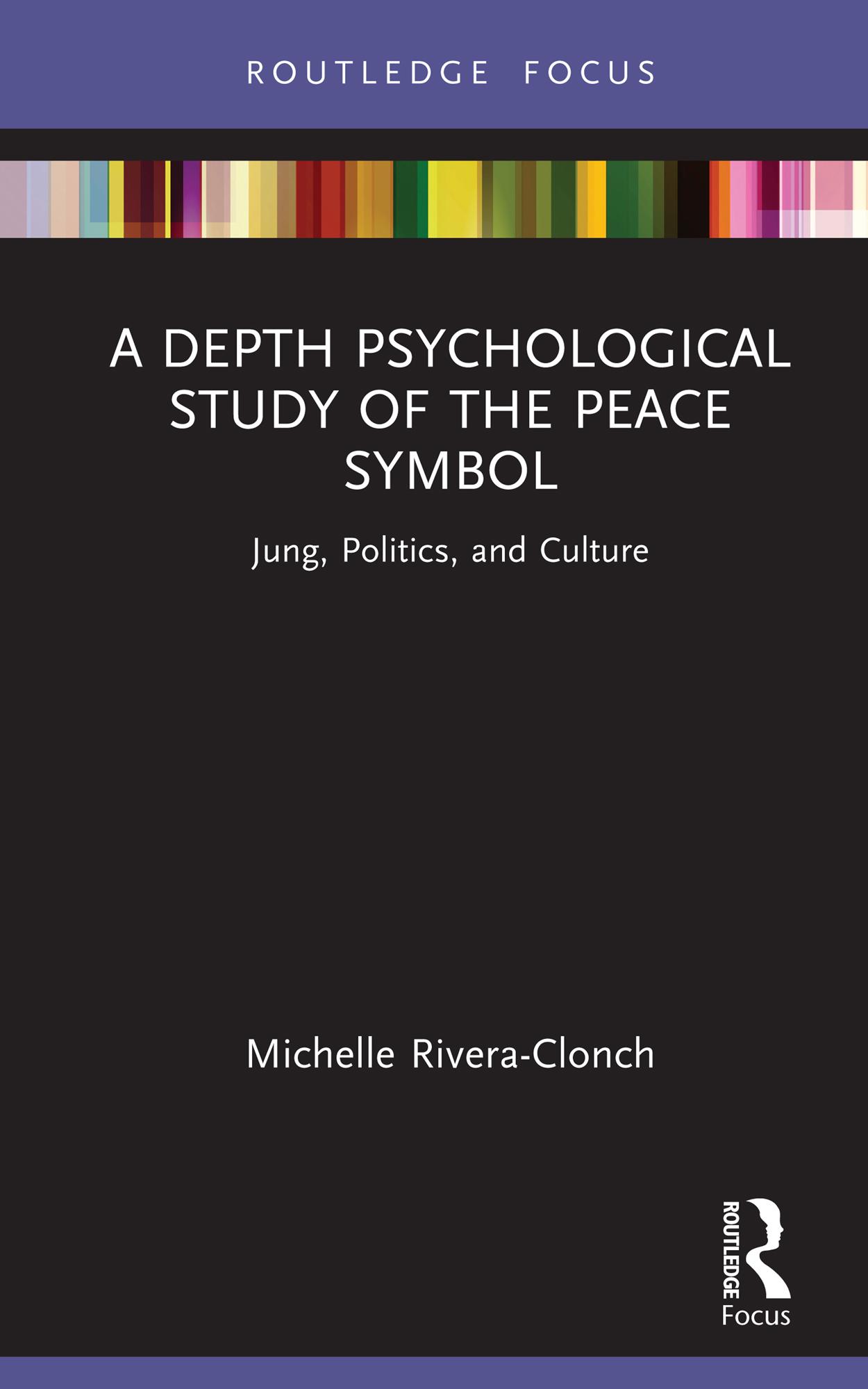
This engaging new book uncovers the cultural context behind the peace symbol’s emergence, its growing significance in the 1960s, and its ongoing presence in today’s worldwide grassroots and nonviolent social action protests.
Since its debut in 1958, the peace symbol has become a ubiquitous presence in broadcasted images of protest and resistance, yet most citizens are unaware of the symbol’s history or psychological evolution. It is a unique modern symbol in that it is at once an omnipresent and yet entirely unknown entity. This noteworthy text engages readers in fresh and thought-provoking ways around the interdependent relationships of peace and war, recognition and secrets, symbol and chaos, and action and inaction to name a few. In this book, Rivera-Clonch brings a depth psychological analysis to Post-World War II’s escalating nuclear tensions and rhetoric and links it to today’s increasing consciousness around social injustices and nonviolent activism. This is a timely and relevant interdisciplinary case study exploring the peace symbol through the dimensions of cultural secrets and psychological shadow, nuclearized storytelling and symbology, and grassroots nonviolent social action.
A Depth Psychological Study of the Peace Symbol will be of interest to Jungian and depth psychologists, as well as students and scholars of peace studies and psychology.
Płać wygodnie kartą, Klarną, Apple Pay lub Google Pay. Nie jesteś zadowolony? Zawsze masz 14-dniową gwarancję zwrotu pieniędzy. Więcej przeczytasz w naszych warunkach. Masz pytania? Napisz do nas na hello@memmo.org.
Memmo ułatwia naukę – gdziekolwiek jesteś na świecie. U nas znajdziesz podręczniki i sprytne narzędzia do nauki w jednym miejscu: streszczenia, quizy, podcasty i fiszki. A do tego Ted, Twój kumpel do nauki, który odpowie na wszystko, co Cię nurtuje. Ponad 50 000 studentów już tu się uczy – stworzone, byś uczył się szybciej i mniej stresował.