
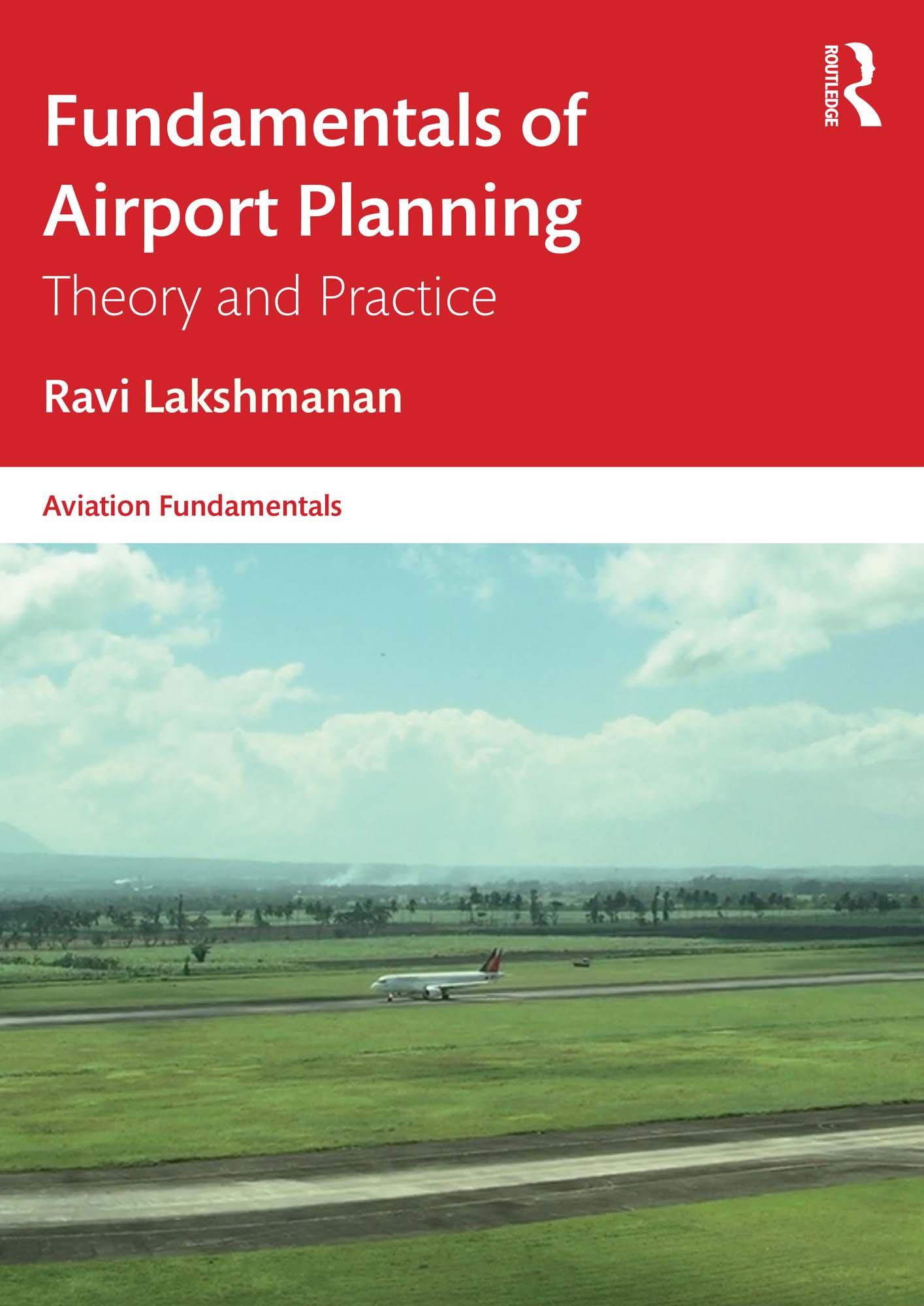
Airport planning, especially the airside, is based on strict compliance with regulatory requirements. In heavily urbanized, industrialized countries, where suitable sites for new airport developments are increasingly hard to find – and subjected to unprecedented public scrutiny – the role of the airport planner is more crucial than ever.
Fundamentals of Airport Planning aims to explain airport planning from the ground up. Utilizing a basic framework and step-by-step approach, the author introduces the critical parameters for selecting a suitable and 'best' location from among multiple sites. International and country-specific regulations are described and accounted for. The master planning process is described with suitable illustrations and examples, and the benefits and best practices of master planning are discussed. The location of visual aids (lighting and marking) and non-visual aids Communication, Navigation and Surveillance Systems (CNS) is considered, and readers will also learn how to prepare technically feasible plans with various infrastructures and how to assess a project's financial viability. This book includes a chapter on land use planning to maximize the utilization of the asset, with appropriate control within and outside the airport.
This book is aimed at postgraduate students who are specializing in aviation or air transport management, as well as professionals studying or working in airport planning and design and related aviation topics.
Płać wygodnie kartą, Klarną, Apple Pay lub Google Pay. Nie jesteś zadowolony? Zawsze masz 14-dniową gwarancję zwrotu pieniędzy. Więcej przeczytasz w naszych warunkach. Masz pytania? Napisz do nas na hello@memmo.org.
Memmo ułatwia naukę – gdziekolwiek jesteś na świecie. U nas znajdziesz podręczniki i sprytne narzędzia do nauki w jednym miejscu: streszczenia, quizy, podcasty i fiszki. A do tego Ted, Twój kumpel do nauki, który odpowie na wszystko, co Cię nurtuje. Ponad 50 000 studentów już tu się uczy – stworzone, byś uczył się szybciej i mniej stresował.