
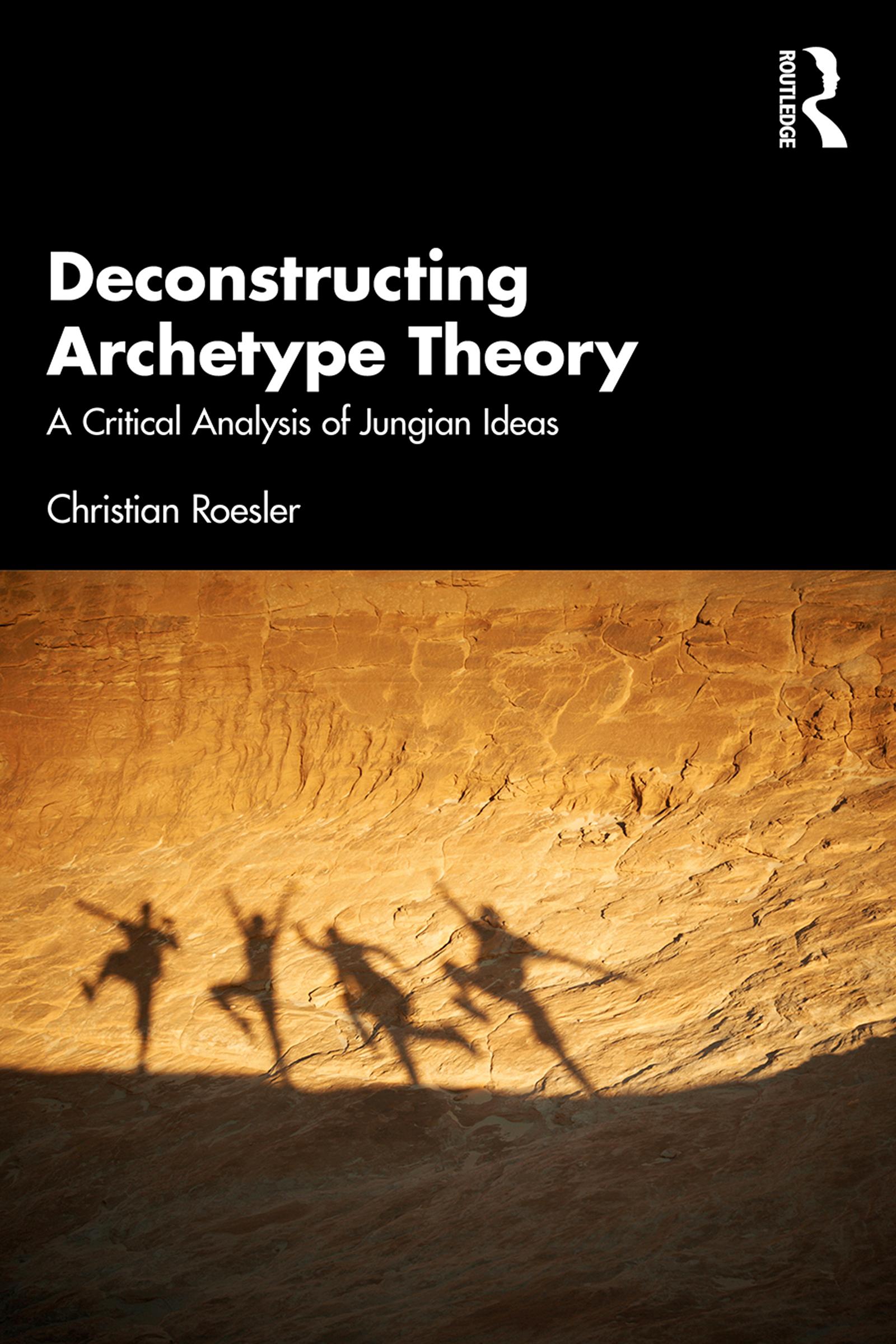
This important book offers a critical and timely reassessment of one of the cornerstones of analytical psychology, Jung’s concept of archetypes.
Exploring not only Jung’s original writings but also the range of interpretations used by Jungian scholars today, the book argues that Jung’s conceptualization of archetype theory is not a single coherent theory; rather, it is four different theories which must be understood separately. Roesler goes onto deconstruct these four ideas: the biological, the anthropological, the transcendental and the psychological in context with contemporary insights from each of these disciplines. A thorough analysis of the state of knowledge in the respective disciplines (i.e. biology, anthropology, religious and mythological studies) makes clear that the claims archetype theory makes in these fields have no support and should be given up. Deconstructing Archetype Theory concludes by arguing that a universal process of psychological transformation is the only part of archetype theory which should be maintained, as it provides a map for psychotherapy.
Rigorous and insightful, this is a book that will fascinate scholars and practitioners of analytical psychology, as well as anyone with an interest in Jung’s original work.
Płać wygodnie kartą, Klarną, Apple Pay lub Google Pay. Nie jesteś zadowolony? Zawsze masz 14-dniową gwarancję zwrotu pieniędzy. Więcej przeczytasz w naszych warunkach. Masz pytania? Napisz do nas na hello@memmo.org.
Memmo ułatwia naukę – gdziekolwiek jesteś na świecie. U nas znajdziesz podręczniki i sprytne narzędzia do nauki w jednym miejscu: streszczenia, quizy, podcasty i fiszki. A do tego Ted, Twój kumpel do nauki, który odpowie na wszystko, co Cię nurtuje. Ponad 50 000 studentów już tu się uczy – stworzone, byś uczył się szybciej i mniej stresował.