
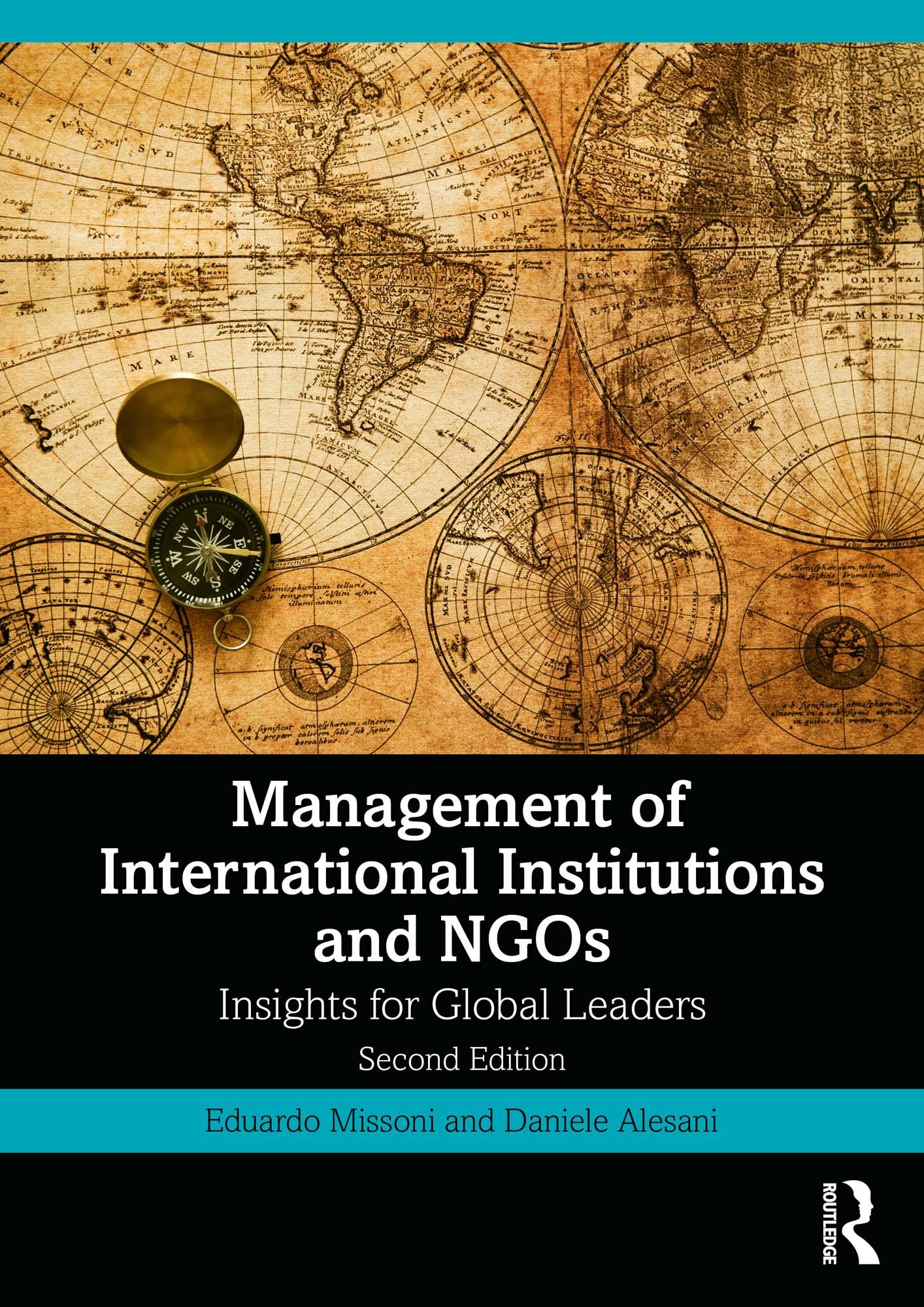
This second edition of Management of International Institutions and NGOs covers all key topics in global governance from a unique management perspective. It analyzes the management challenges associated with international cooperation rather than the more commonly explored political or economic lenses.
This text is structured to enable students to connect theory with practice, beginning with the main management frameworks developed in the context of corporate and national public/nonprofit organizations and adapting them to the specificity of international institutions and international non-governmental organizations. This leads to the identification of a “tailored” approach to international organization management based on their institutional and operational settings, stakeholder groups, core business, staff profiles, and financial arrangements. The authors then connect this theory with practice by linking frameworks to several case studies and best practices of organizations currently experimenting with management systems and tools, with case studies including the World Bank and the Gates Foundation.
This edition has been extensively revised and updated, with an expanded conceptual framework inclusive of systemic theories of organization, new cases throughout, and new chapters on leadership, supply chain and operations, and human-centered digitization. This comprehensive textbook is a must-own resource for students and academics involved with studying and working with international organizations.
Płać wygodnie kartą, Klarną, Apple Pay lub Google Pay. Nie jesteś zadowolony? Zawsze masz 14-dniową gwarancję zwrotu pieniędzy. Więcej przeczytasz w naszych warunkach. Masz pytania? Napisz do nas na hello@memmo.org.
Memmo ułatwia naukę – gdziekolwiek jesteś na świecie. U nas znajdziesz podręczniki i sprytne narzędzia do nauki w jednym miejscu: streszczenia, quizy, podcasty i fiszki. A do tego Ted, Twój kumpel do nauki, który odpowie na wszystko, co Cię nurtuje. Ponad 50 000 studentów już tu się uczy – stworzone, byś uczył się szybciej i mniej stresował.