
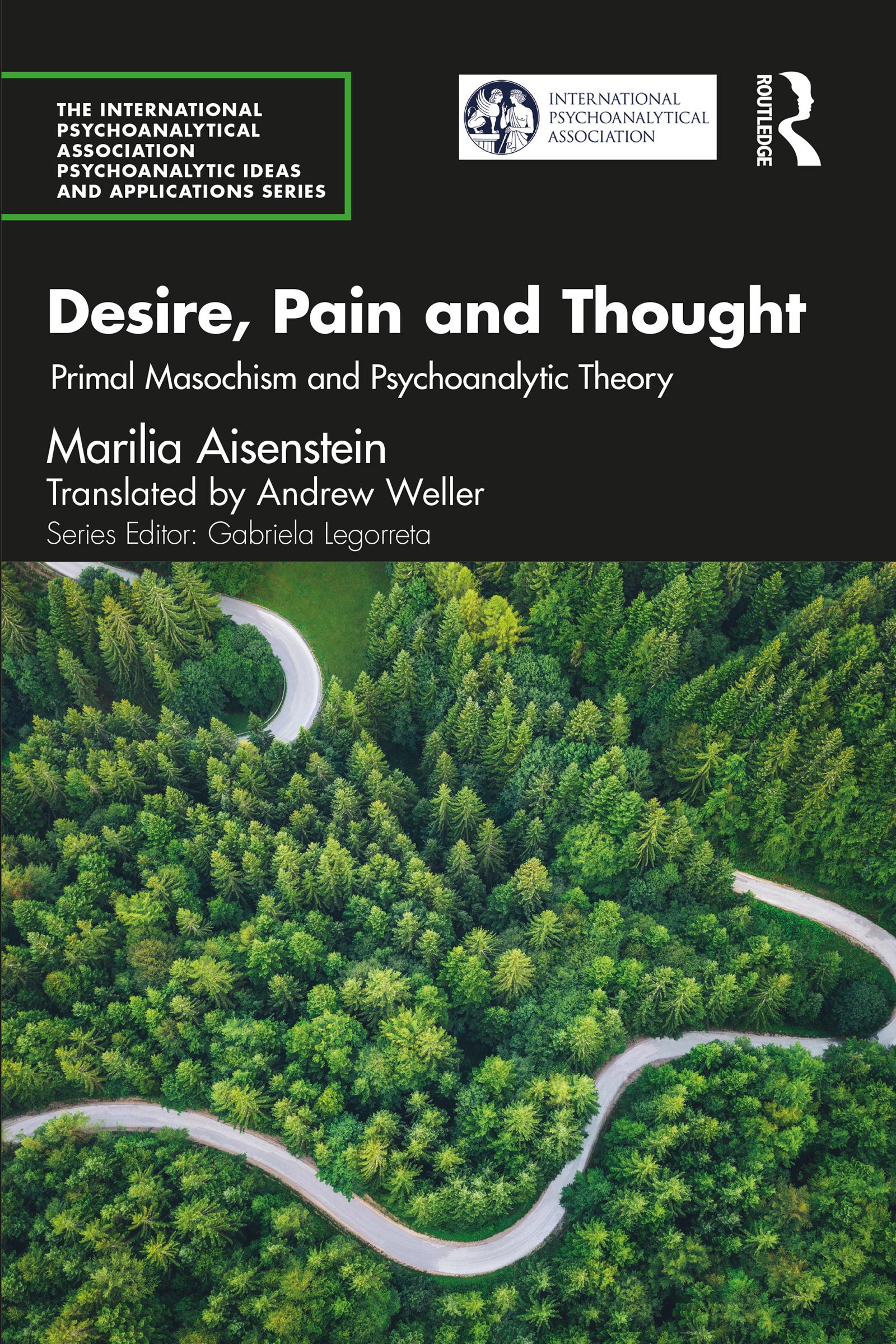
Desire, Pain and Thought presents a new perspective on primal erotogenic masochism, which Marilia Aisenstein regards as the core of psychoanalytic theory.
Aisenstein distinguishes between pathological masochism – the active search for pain – and primal erotogenic masochism, which she believes develops in early childhood. Desire, Pain and Thought explains that the formation of this response in a child is essential to the survival of the individual and the development of resilience. Aisenstein skilfully and convincingly uses her deep understanding of metapsychology and her mastery of Freud’s seminal papers to demonstrate that thought is one of the manifestations of desire which implies a painful renunciation of the object of desire. By moving away from its pathological, negative connotation to a more positive one, the book presents an understanding of masochism as “the guardian of life”.
Desire, Pain and Thought will be essential reading for psychoanalysts in practice and in training.
Płać wygodnie kartą, Klarną, Apple Pay lub Google Pay. Nie jesteś zadowolony? Zawsze masz 14-dniową gwarancję zwrotu pieniędzy. Więcej przeczytasz w naszych warunkach. Masz pytania? Napisz do nas na hello@memmo.org.
Memmo ułatwia naukę – gdziekolwiek jesteś na świecie. U nas znajdziesz podręczniki i sprytne narzędzia do nauki w jednym miejscu: streszczenia, quizy, podcasty i fiszki. A do tego Ted, Twój kumpel do nauki, który odpowie na wszystko, co Cię nurtuje. Ponad 50 000 studentów już tu się uczy – stworzone, byś uczył się szybciej i mniej stresował.