
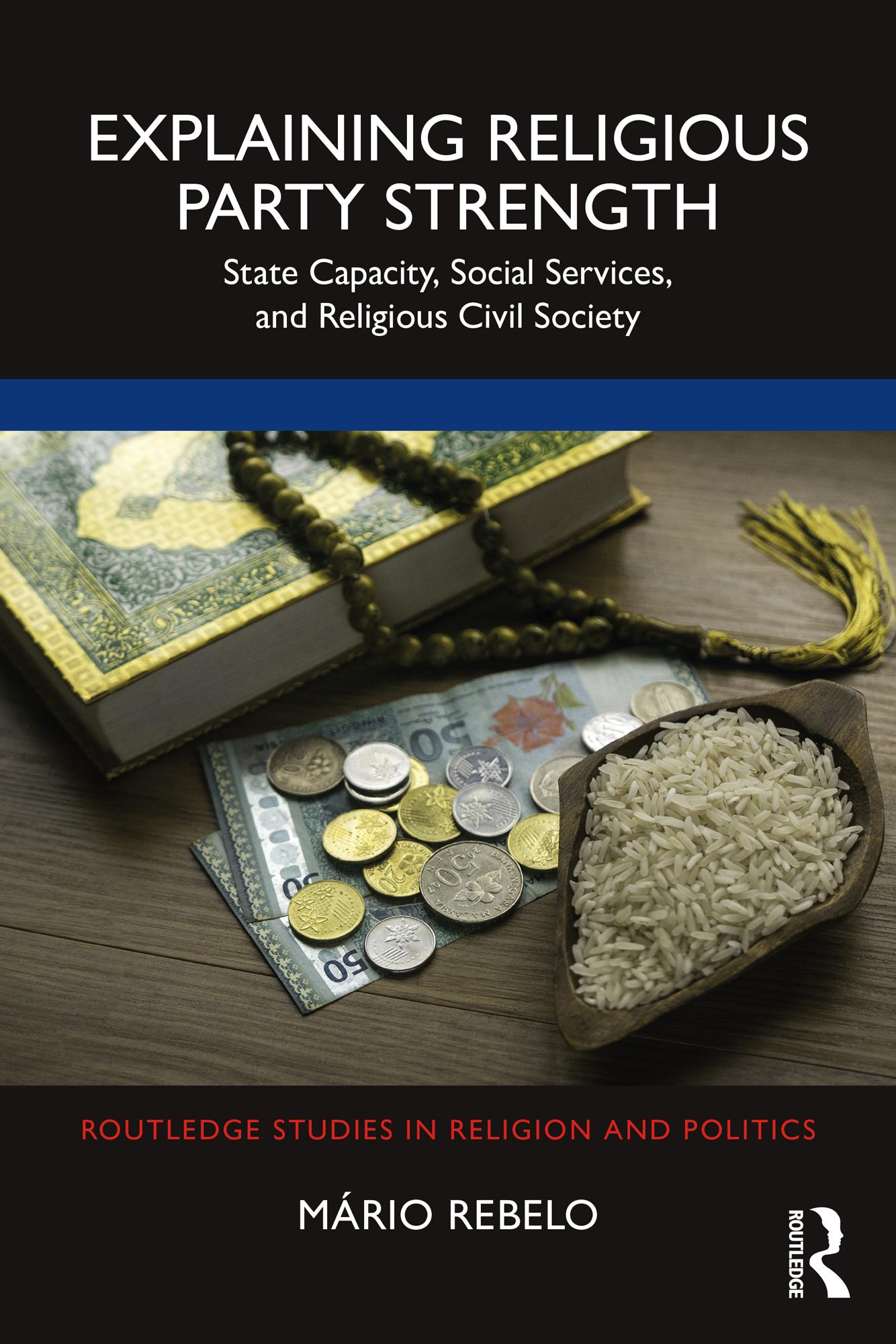
Explaining Religious Party Strength explores why religious political parties are electorally successful in some countries but not in others.
Drawing on insights from political science and sociology, this book argues that religious parties are typically formed for defensive reasons, reacting against state-builders’ attempts to secularize public services such as education, welfare, and healthcare. Building on these findings, the author argues that the strength of religious parties is determined by the infrastructural power of the state. Weak states that fail to provide adequate public services open up space for religious communities to build a dense network of private schools, hospitals, and charities, which translates into votes for religious political parties. By contrast, strong states that provide efficient public services squeeze out private welfare providers, undermining the electoral strength of religious political parties. The author tests this theory through statistical analysis, using a new dataset on all religious parties which have participated in national parliamentary elections between 1800 and 2015. He includes comparative historical analyses of Roman Catholic political parties in France and Italy and Sunni Islamic political parties in Egypt, Turkey, and Albania.
This book will interest students and scholars of religion and politics, specifically those interested in party formation, voting, and political activism, as well as policymakers.
Płać wygodnie kartą, Klarną, Apple Pay lub Google Pay. Nie jesteś zadowolony? Zawsze masz 14-dniową gwarancję zwrotu pieniędzy. Więcej przeczytasz w naszych warunkach. Masz pytania? Napisz do nas na hello@memmo.org.
Memmo ułatwia naukę – gdziekolwiek jesteś na świecie. U nas znajdziesz podręczniki i sprytne narzędzia do nauki w jednym miejscu: streszczenia, quizy, podcasty i fiszki. A do tego Ted, Twój kumpel do nauki, który odpowie na wszystko, co Cię nurtuje. Ponad 50 000 studentów już tu się uczy – stworzone, byś uczył się szybciej i mniej stresował.