
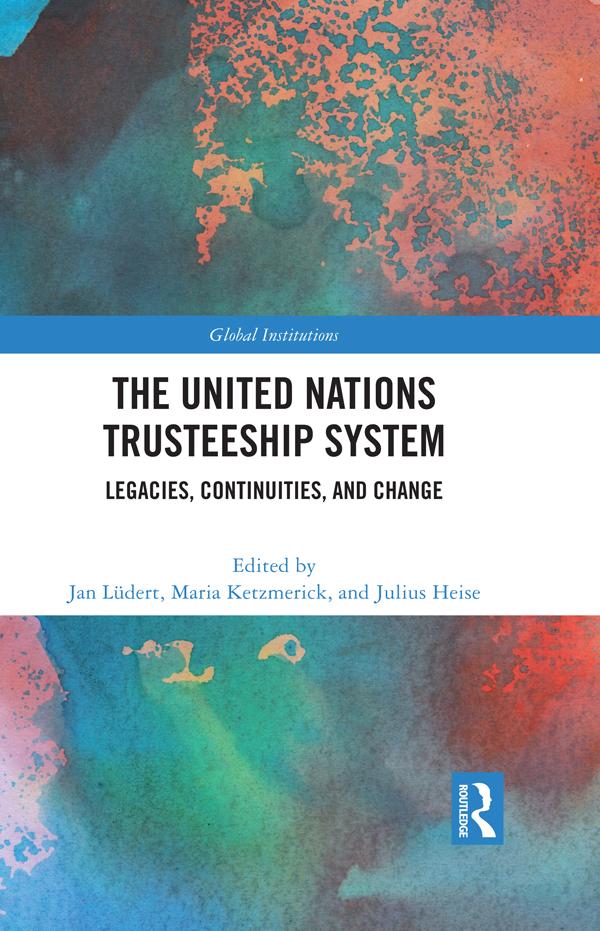
This book considers the past and present legacies, continuities and change of the United Nations Trusteeship System by assessing consequences and legacies of decolonization in contemporary society, international organizations and international politics. International contributors address the UN Trusteeship System as a venue for multiple state and non- state actors and its effect on the international system. Rather than viewing UN trusteeship as a bygone phenomenon, the volume underscores its current relevance, particularly in view of the recent resurgence of trusteeship models such as in Kosovo and East Timor. Offering a novel and robust, yet simple and intuitive analytical framework through which to understand a broad range of cases related to the Trusteeship System and its impact on the international system, the book places emphasis on the agency of states in the Global South and highlights the importance of multiple actors in global governance. It will be of interest to scholars of international relations theory and history in a variety of fields, ranging from African Politics to Intergovernmental Organizations and Comparative Politics.
Płać wygodnie kartą, Klarną, Apple Pay lub Google Pay. Nie jesteś zadowolony? Zawsze masz 14-dniową gwarancję zwrotu pieniędzy. Więcej przeczytasz w naszych warunkach. Masz pytania? Napisz do nas na hello@memmo.org.
Memmo ułatwia naukę – gdziekolwiek jesteś na świecie. U nas znajdziesz podręczniki i sprytne narzędzia do nauki w jednym miejscu: streszczenia, quizy, podcasty i fiszki. A do tego Ted, Twój kumpel do nauki, który odpowie na wszystko, co Cię nurtuje. Ponad 50 000 studentów już tu się uczy – stworzone, byś uczył się szybciej i mniej stresował.