
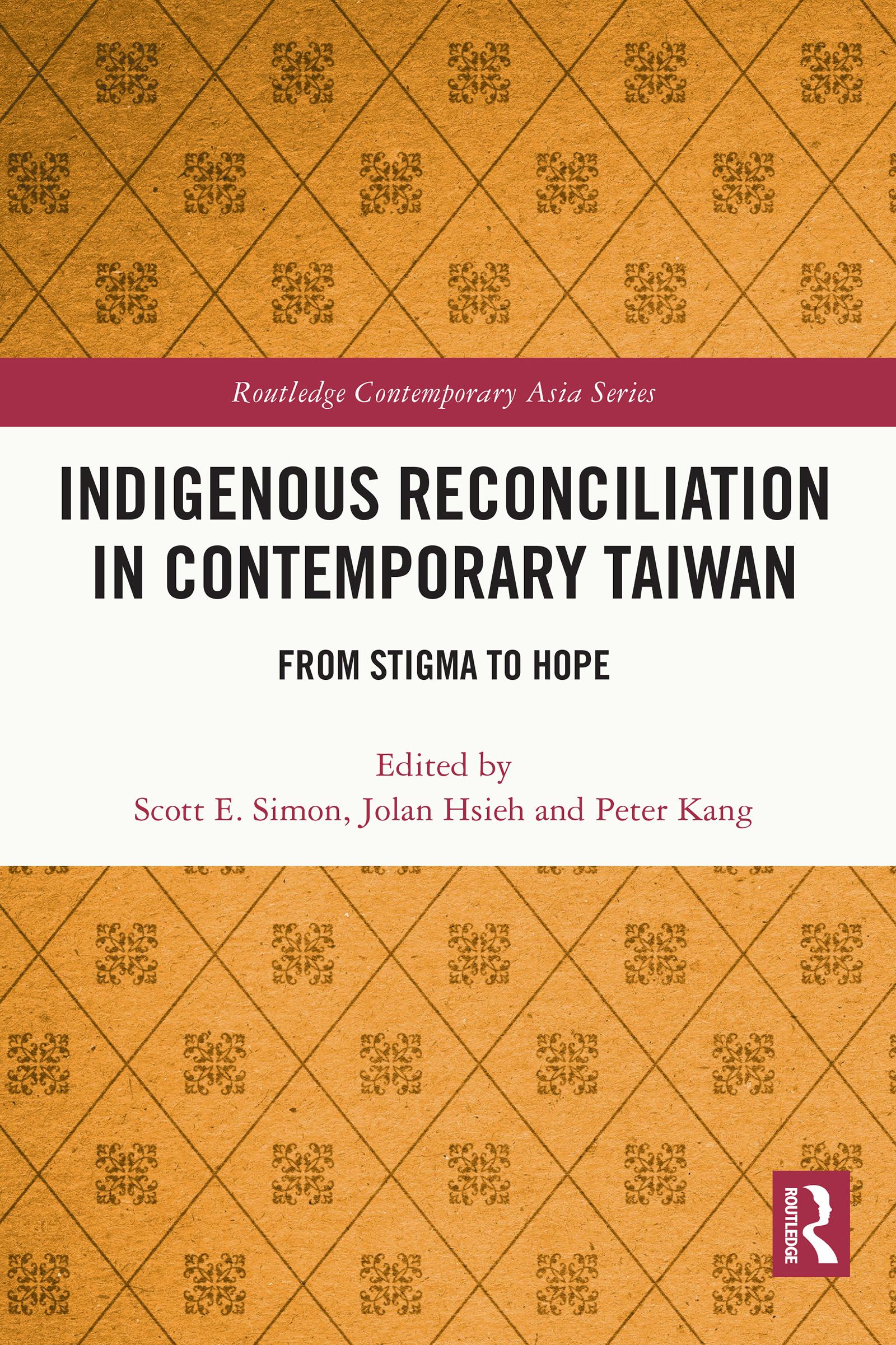
This book draws attention to the issues of Indigenous justice and reconciliation in Taiwan, exploring how Indigenous actors affirm their rights through explicitly political and legal strategies, but also through subtle forms of justice work in films, language instruction, museums, and handicraft production.
Taiwan’s Indigenous peoples have been colonized by successive external regimes, mobilized into war for Imperial Japan, stigmatized as primitive “mountain compatriots” in need of modernization, and instrumentalized as proof of Taiwan’s unique identity vis-à-vis China. Taiwan’s government now encapsulates them in democratic institutions of indigeneity. This volume emphasizes that there is new hope for real justice in an era in which states and Indigenous peoples seek meaningful forms of reconciliation at all levels and arenas of social life. The chapters, written by leading Indigenous, Taiwanese, and international scholars in their respective fields, examine concrete situations in which Indigenous peoples seek justice and decolonization from the perspectives of territory and sovereignty, social work and justice.
Illustrating that there is new hope for real justice in an era in which states and Indigenous peoples seek meaningful forms of reconciliation, this book is an invaluable resource for students and scholars of Taiwan Studies, Indigenous Studies, and Social Justice Studies.
Płać wygodnie kartą, Klarną, Apple Pay lub Google Pay. Nie jesteś zadowolony? Zawsze masz 14-dniową gwarancję zwrotu pieniędzy. Więcej przeczytasz w naszych warunkach. Masz pytania? Napisz do nas na hello@memmo.org.
Memmo ułatwia naukę – gdziekolwiek jesteś na świecie. U nas znajdziesz podręczniki i sprytne narzędzia do nauki w jednym miejscu: streszczenia, quizy, podcasty i fiszki. A do tego Ted, Twój kumpel do nauki, który odpowie na wszystko, co Cię nurtuje. Ponad 50 000 studentów już tu się uczy – stworzone, byś uczył się szybciej i mniej stresował.