
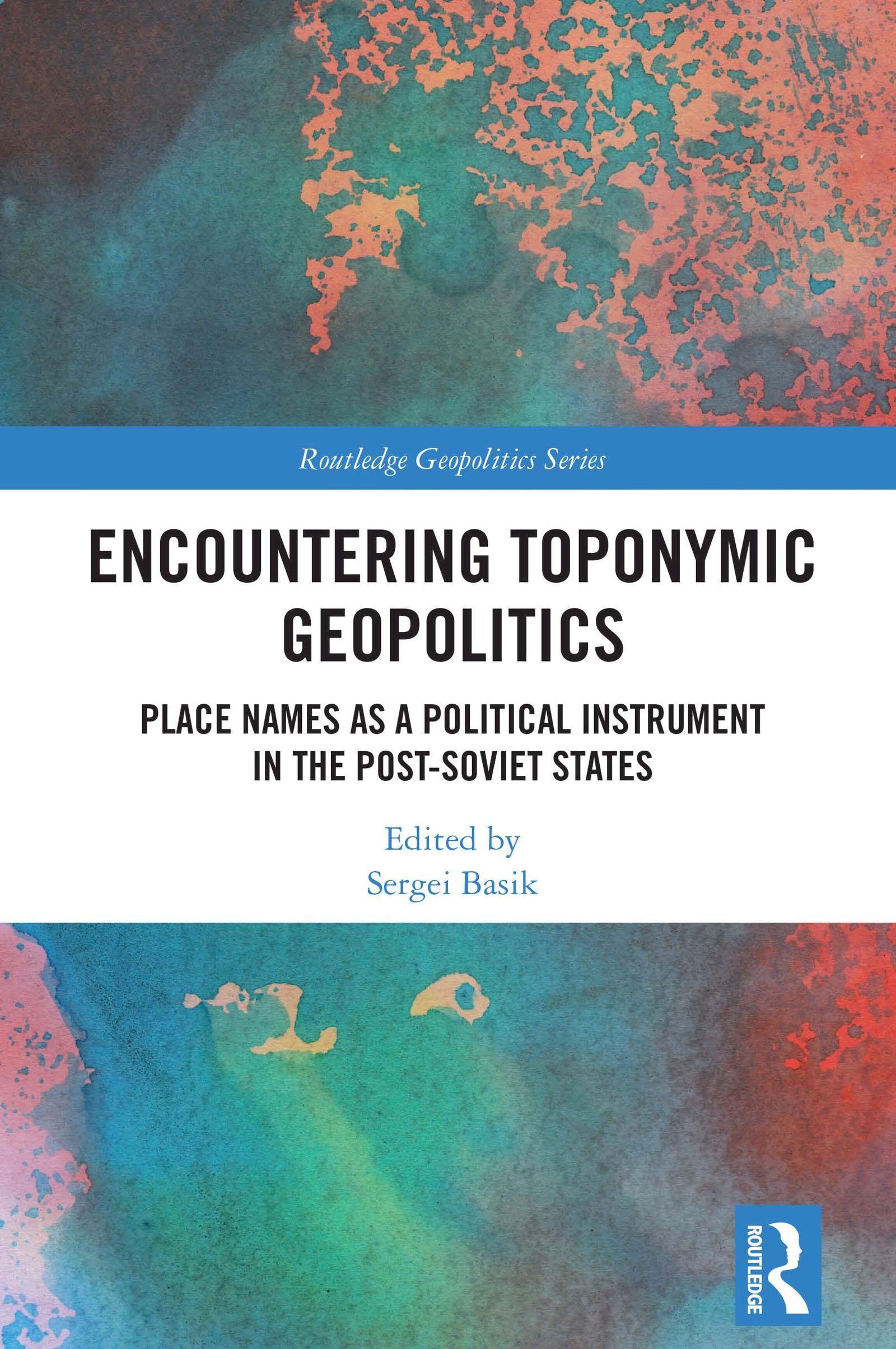
This book provides cutting-edge insights on contemporary geopolitical toponymic policy and practice in post-Soviet countries. It examines the political features of place naming as a reflection of contemporary political discourse.
With multidisciplinary insights from leading scholars, chapters explore a range of topics drawing on critical political toponymy and traditional methods. Contributions examine how the toponymic system can act as a symbol of national identity, the regional geopolitics of toponymy, and geopolitical patterns in contemporary renaming. The historical roots of toponymic decolonization are analyzed, as well as indigenous toponymy and politics, and toponymic aspects of people's daily lives. The book explores a wide range of processes in the post-Soviet realm, including power, identity, economy, social order, and how political power is changing/transforming. It considers how these processes are distributed through various geopolitical and political-economic technologies.
Offering empirically rich research from a variety of regions to give insights beyond "Western" perspectives, this book is the first to provide an in-depth exploration of post-Soviet place naming. It will appeal to students and researchers in human geography, politics, sociology, Eastern European studies, onomastics and cultural studies.
Płać wygodnie kartą, Klarną, Apple Pay lub Google Pay. Nie jesteś zadowolony? Zawsze masz 14-dniową gwarancję zwrotu pieniędzy. Więcej przeczytasz w naszych warunkach. Masz pytania? Napisz do nas na hello@memmo.org.
Memmo ułatwia naukę – gdziekolwiek jesteś na świecie. U nas znajdziesz podręczniki i sprytne narzędzia do nauki w jednym miejscu: streszczenia, quizy, podcasty i fiszki. A do tego Ted, Twój kumpel do nauki, który odpowie na wszystko, co Cię nurtuje. Ponad 50 000 studentów już tu się uczy – stworzone, byś uczył się szybciej i mniej stresował.