
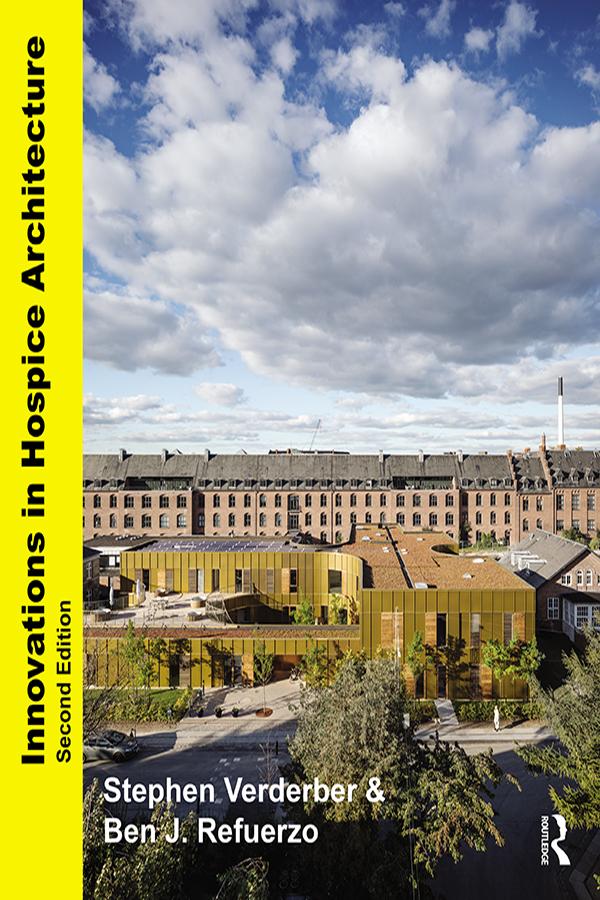
This fully revised, new edition of Innovations in Hospice Architecture responds to the need for an up-to-date, theoretically based reference book summarizing key historical and recent developments with respect to this rapidly evolving building type. This Second Edition presents:
- an overview of the historical origins of the contemporary hospice
- the diverse variations on the basic premise of hospice care
- a review of the scant architectural literature published on this subject to date
- a broad series of case studies of exemplary hospices around the world
- planning and design concepts for palliative care environments.
Case study projects are from Japan, Canada, Europe, Africa, Australia, Indonesia, China, the United States and South America. Thirty-six case studies are individually presented and comparatively analysed, and prognostications for the future of hospice architecture are examined. Each case includes floor plans, technical drawings and beautiful, full colour illustrations. Through an in-depth discussion of the inner profundities of hospice architecture, the book presents this type as a humane, genuine expression of the spiritual, physical and psychosocial dimensions of the contemporary death and dying movement. Written with a broad audience in mind, the book provides both technical and conceptual information, blending narrative, images and diagrammation so that the audience may understand and articulate the complexities of this specialized building type in professional practice contexts.
Płać wygodnie kartą, Klarną, Apple Pay lub Google Pay. Nie jesteś zadowolony? Zawsze masz 14-dniową gwarancję zwrotu pieniędzy. Więcej przeczytasz w naszych warunkach. Masz pytania? Napisz do nas na hello@memmo.org.
Memmo ułatwia naukę – gdziekolwiek jesteś na świecie. U nas znajdziesz podręczniki i sprytne narzędzia do nauki w jednym miejscu: streszczenia, quizy, podcasty i fiszki. A do tego Ted, Twój kumpel do nauki, który odpowie na wszystko, co Cię nurtuje. Ponad 50 000 studentów już tu się uczy – stworzone, byś uczył się szybciej i mniej stresował.