
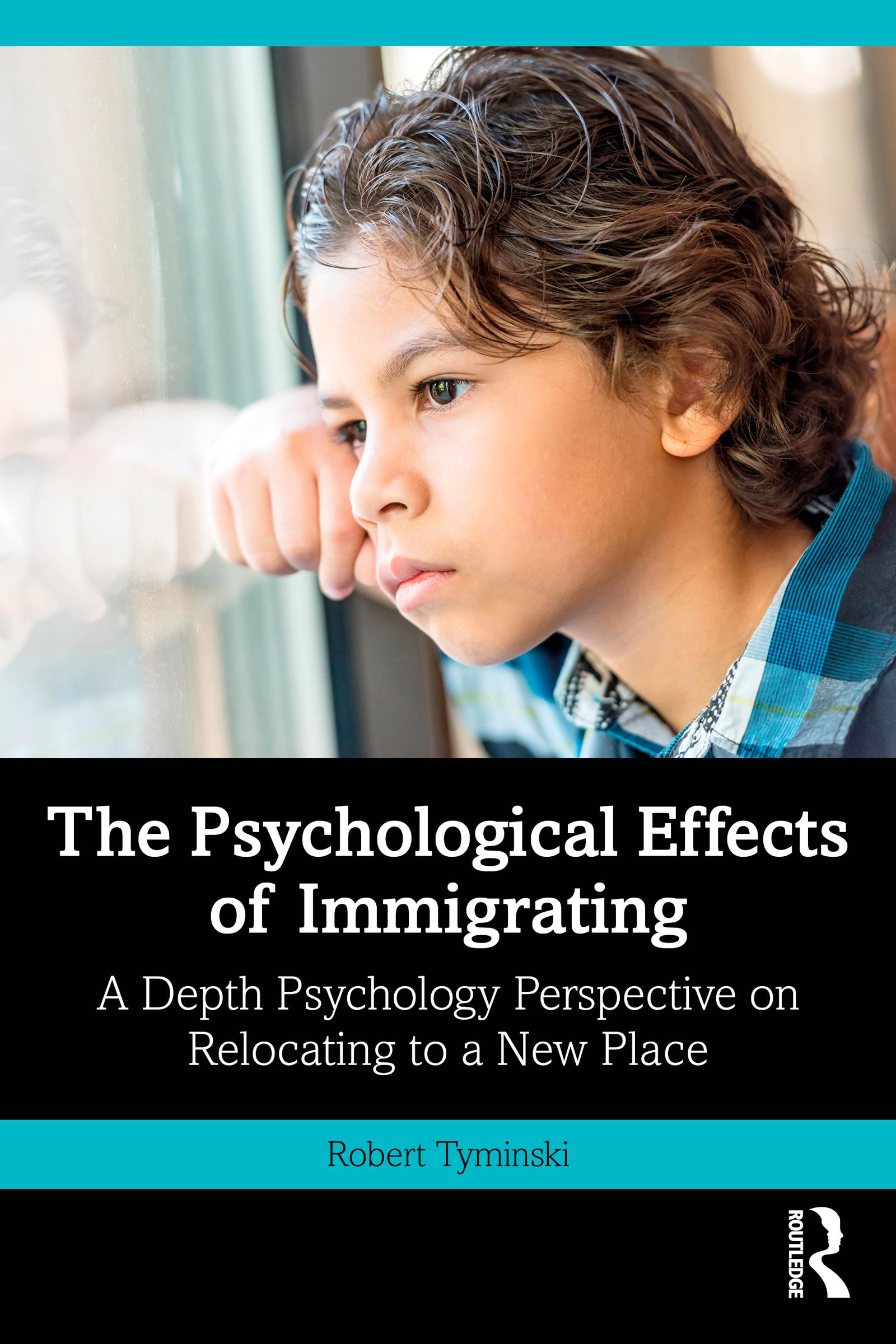
Exploring immigration from psychological, historical, clinical, and mythical perspectives, this book considers the varied and complex answers to questions of why people immigrate to entirely new places and leave behind their familiar surroundings and culture.
Using research reviews, extensive case material, and literary examples (such as Virgil’s The Aeneid), Robert Tyminski’s work will deepen readers’ understanding of what is both unique and universal about migratory experiences. He addresses the negative consequences of xenophobia, the acculturation experiences of children compared to adults, the trauma and psychological issues that arise when seeking refuge or relocating to a new country, and the more recent implications of COVID-19 upon border crossings. Tyminski also re-evaluates the term identity as a psychological shorthand, suggesting that it can flatten our understanding of human complexity and erase migrant and refugee life stories and differences. As one of few books to investigate immigration from a Jungian-oriented perspective, Robert Tyminski’s work offers a new and broad perspective on the mental health issues related to immigration.
This book will prove essential for clinicians working with refugees and migrants, when in training and in practice, as well as students and practitioners of psychoanalysis seeking to deepen their understanding of migratory experiences.
Płać wygodnie kartą, Klarną, Apple Pay lub Google Pay. Nie jesteś zadowolony? Zawsze masz 14-dniową gwarancję zwrotu pieniędzy. Więcej przeczytasz w naszych warunkach. Masz pytania? Napisz do nas na hello@memmo.org.
Memmo ułatwia naukę – gdziekolwiek jesteś na świecie. U nas znajdziesz podręczniki i sprytne narzędzia do nauki w jednym miejscu: streszczenia, quizy, podcasty i fiszki. A do tego Ted, Twój kumpel do nauki, który odpowie na wszystko, co Cię nurtuje. Ponad 50 000 studentów już tu się uczy – stworzone, byś uczył się szybciej i mniej stresował.