
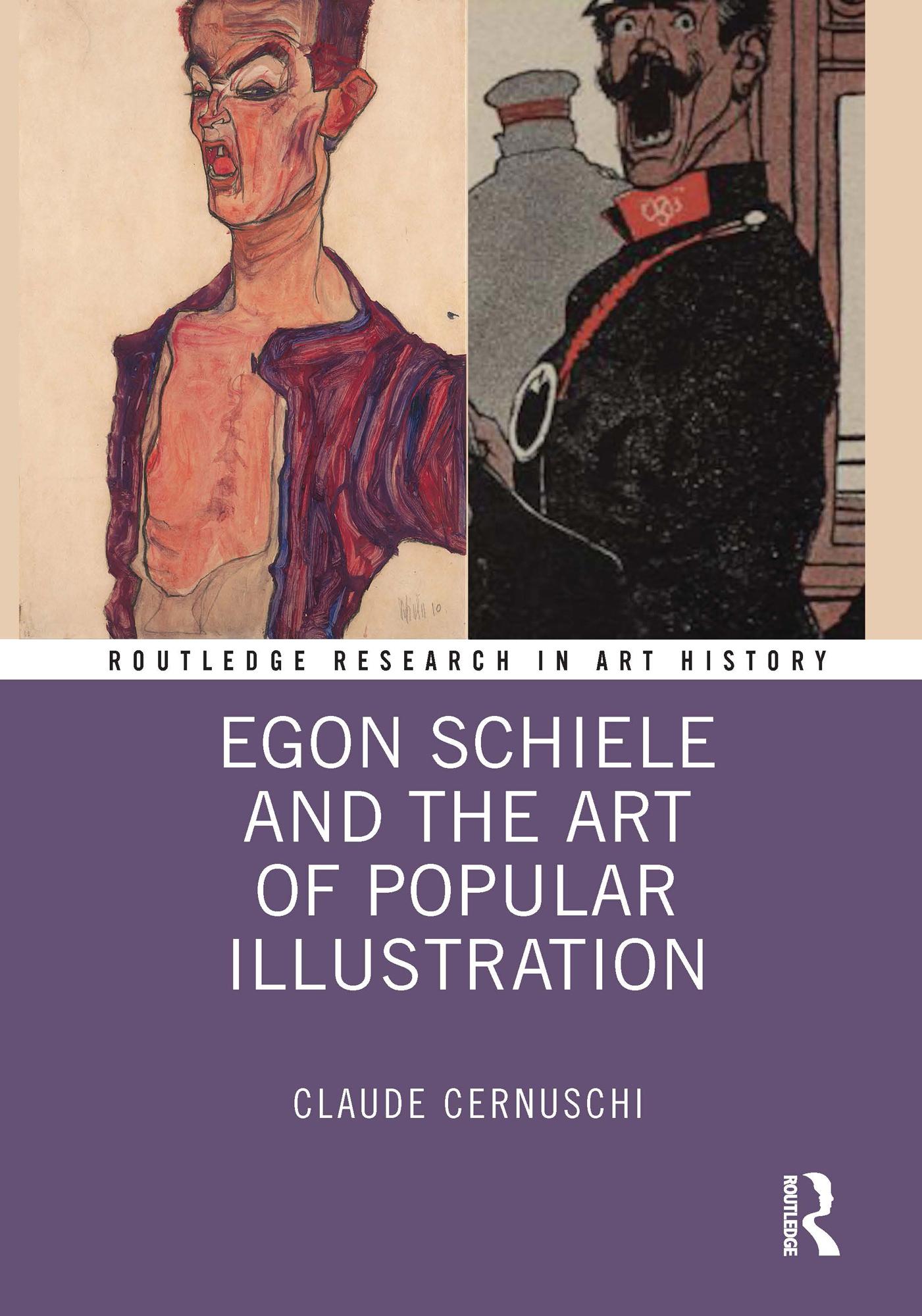
Presenting a radically different picture of Egon Schiele’s work, this study documents (in one-to-one comparisons) the extent of the artist’s visual borrowings from the Viennese humoristic journal, Die Muskete.
Claude Cernuschi analyzes each comparison on a case-by-case basis, primarily because the interpretation of cartoons and caricatures is highly contingent on their specific historical and cultural context. Although this connection has gone unnoticed in the literature, in retrospect, this correlation makes perfect sense. Not only was Schiele’s artistic production frequently compared to caricature (and derided for being “grotesque”), but Expressionism and caricature are natural allies. One may belong to “high” art and the other to “popular” culture, yet both presuppose similar assumptions and deploy a similar rhetorical position: namely, that the exaggeration of human physiognomy allows deeper psychological “truths” to emerge.
The book will be of interest to scholars working in art history, visual culture, popular culture, and politics.
Płać wygodnie kartą, Klarną, Apple Pay lub Google Pay. Nie jesteś zadowolony? Zawsze masz 14-dniową gwarancję zwrotu pieniędzy. Więcej przeczytasz w naszych warunkach. Masz pytania? Napisz do nas na hello@memmo.org.
Memmo ułatwia naukę – gdziekolwiek jesteś na świecie. U nas znajdziesz podręczniki i sprytne narzędzia do nauki w jednym miejscu: streszczenia, quizy, podcasty i fiszki. A do tego Ted, Twój kumpel do nauki, który odpowie na wszystko, co Cię nurtuje. Ponad 50 000 studentów już tu się uczy – stworzone, byś uczył się szybciej i mniej stresował.