
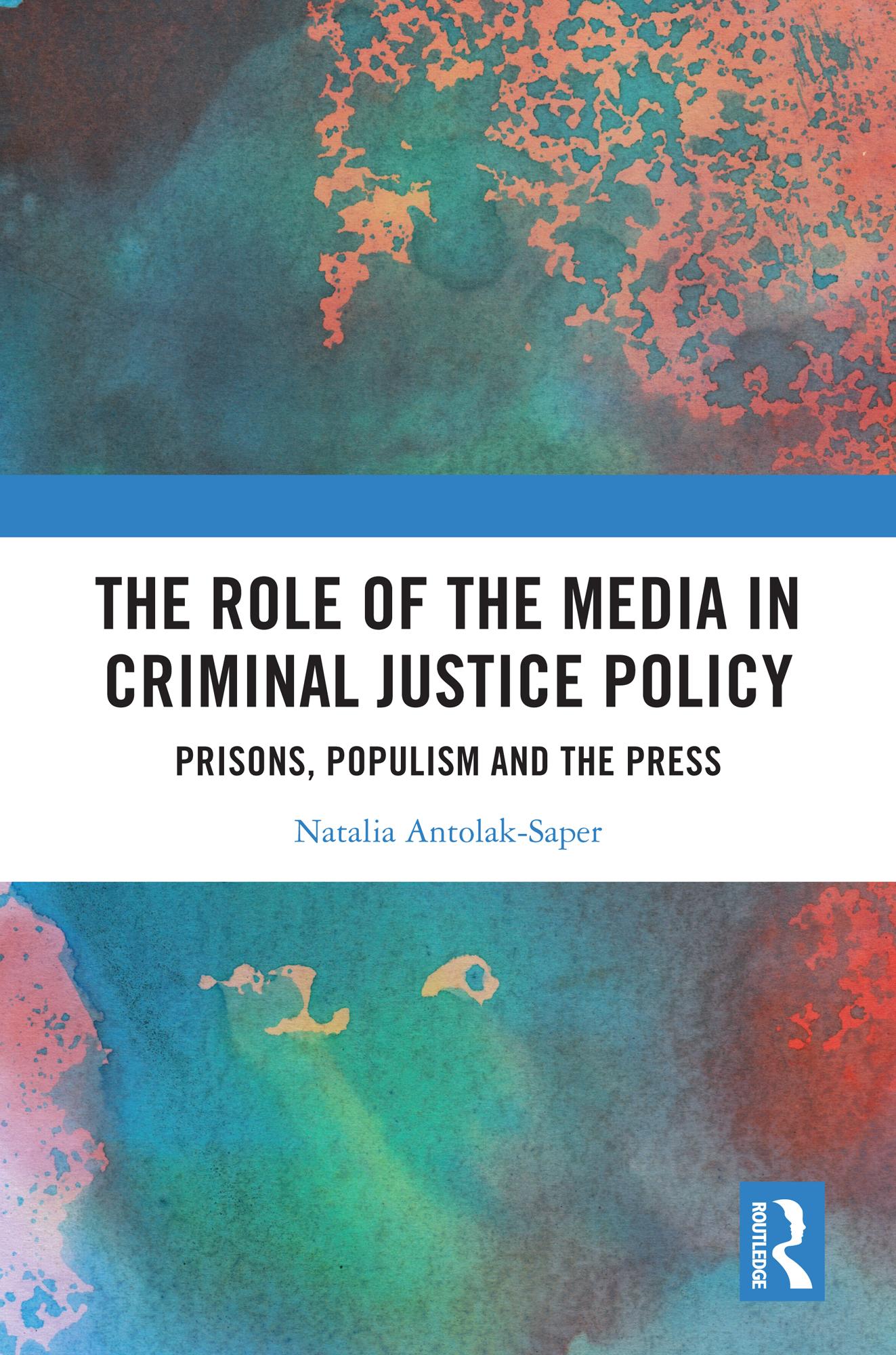
This book provides a socio-legal examination of the media’s influence on the development and implementation of criminal justice policy.
This impact is often assumed. And, especially in the wake of high-profile crimes, the press is routinely observed calling for sentences to be harsher, and for governments to be tougher on crime. But how do we know that there is a connection? To answer this question, the book draws on a case study of the media reporting of the rape and murder of Jill Meagher in Melbourne, Australia; as well as other well-known cases, including those of James Bulger, Sarah Payne, Stephen Lawrence and Michael Brown, among others. Deploying a socio-legal framework to examine how the media’s often powerful and emotive narratives play a crucial role in the development and implementation of law, the book provides a deep and critical reflection on its influence. The book concludes with a number of suggestions for media reform: both to moderate the media’s influence, and to incorporate a broader range of viewpoints.
This multi-disciplinary book will appeal to scholars and students in sociolegal studies, criminology and criminal law as well as those working in relevant areas in sociology and media studies.
Płać wygodnie kartą, Klarną, Apple Pay lub Google Pay. Nie jesteś zadowolony? Zawsze masz 14-dniową gwarancję zwrotu pieniędzy. Więcej przeczytasz w naszych warunkach. Masz pytania? Napisz do nas na hello@memmo.org.
Memmo ułatwia naukę – gdziekolwiek jesteś na świecie. U nas znajdziesz podręczniki i sprytne narzędzia do nauki w jednym miejscu: streszczenia, quizy, podcasty i fiszki. A do tego Ted, Twój kumpel do nauki, który odpowie na wszystko, co Cię nurtuje. Ponad 50 000 studentów już tu się uczy – stworzone, byś uczył się szybciej i mniej stresował.