
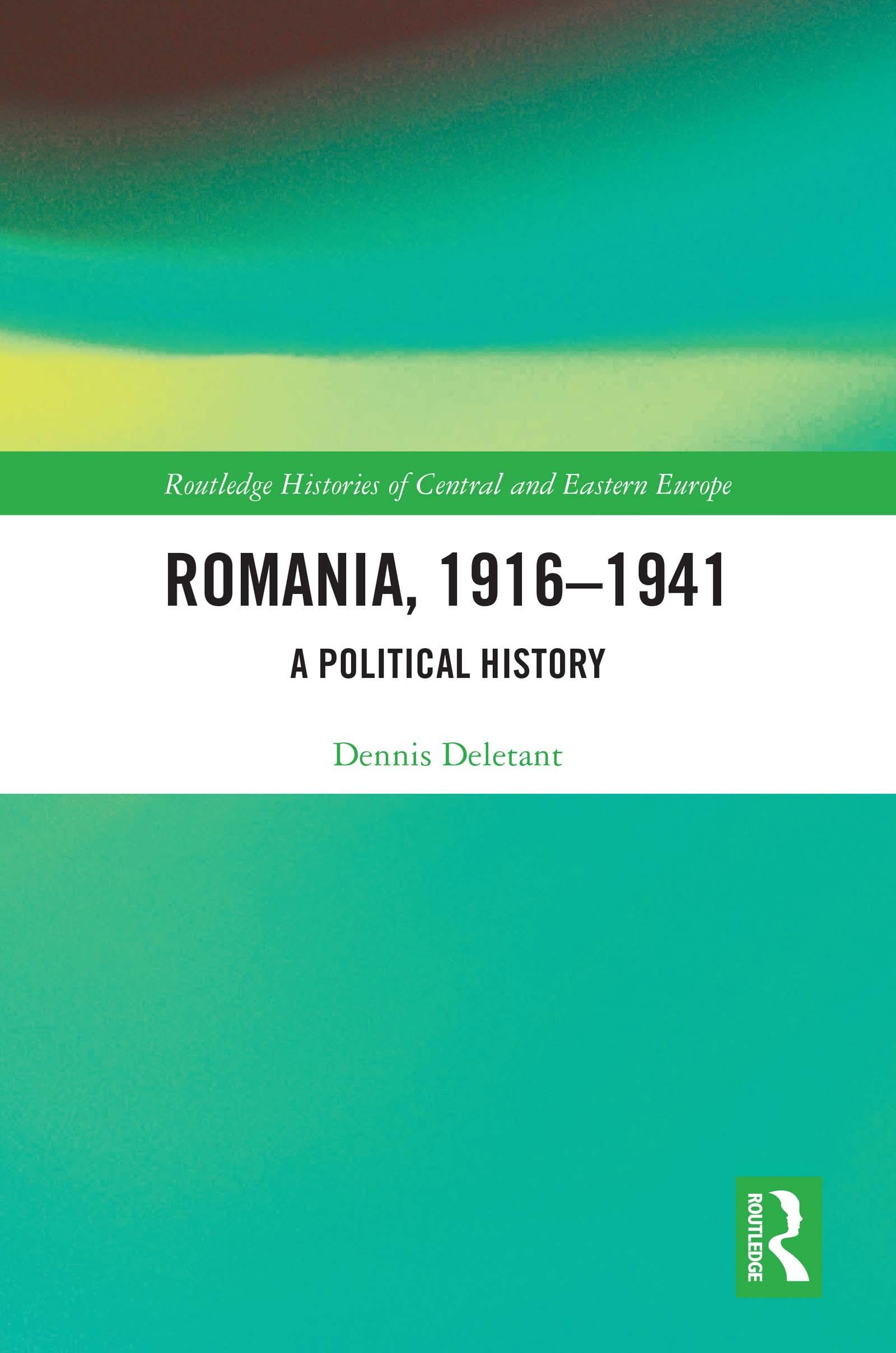
This study challenges the rose-tinted view of the interwar period in Romanian history, which is often judged against the darkness of almost five decades of Communist rule.
Romania, like several of the states of Eastern Europe, emerged from the First World War as it had entered it, as a predominantly agricultural country, and one of its major problems was the condition of the peasantry. This volume’s focus is the drive to improve that condition, on the collapse of democracy, and the search by Romania’s leaders for strategies to secure the state, to assert the country’s independence, and to maintain its territorial integrity in the face of the threat to the European order posed by two totalitarian systems, represented by Nazi Germany and the Soviet Union. By examining recent scholarship, this volume provides the most up-to-date account of Romania’s predicament in the interwar years.
Romania, 1916–1941 is a useful resource for upper-level undergraduates, postgraduates and scholars interested in foreign policy, politics, society, internationalization and late development in interwar Central and Eastern Europe.
Płać wygodnie kartą, Klarną, Apple Pay lub Google Pay. Nie jesteś zadowolony? Zawsze masz 14-dniową gwarancję zwrotu pieniędzy. Więcej przeczytasz w naszych warunkach. Masz pytania? Napisz do nas na hello@memmo.org.
Memmo ułatwia naukę – gdziekolwiek jesteś na świecie. U nas znajdziesz podręczniki i sprytne narzędzia do nauki w jednym miejscu: streszczenia, quizy, podcasty i fiszki. A do tego Ted, Twój kumpel do nauki, który odpowie na wszystko, co Cię nurtuje. Ponad 50 000 studentów już tu się uczy – stworzone, byś uczył się szybciej i mniej stresował.