
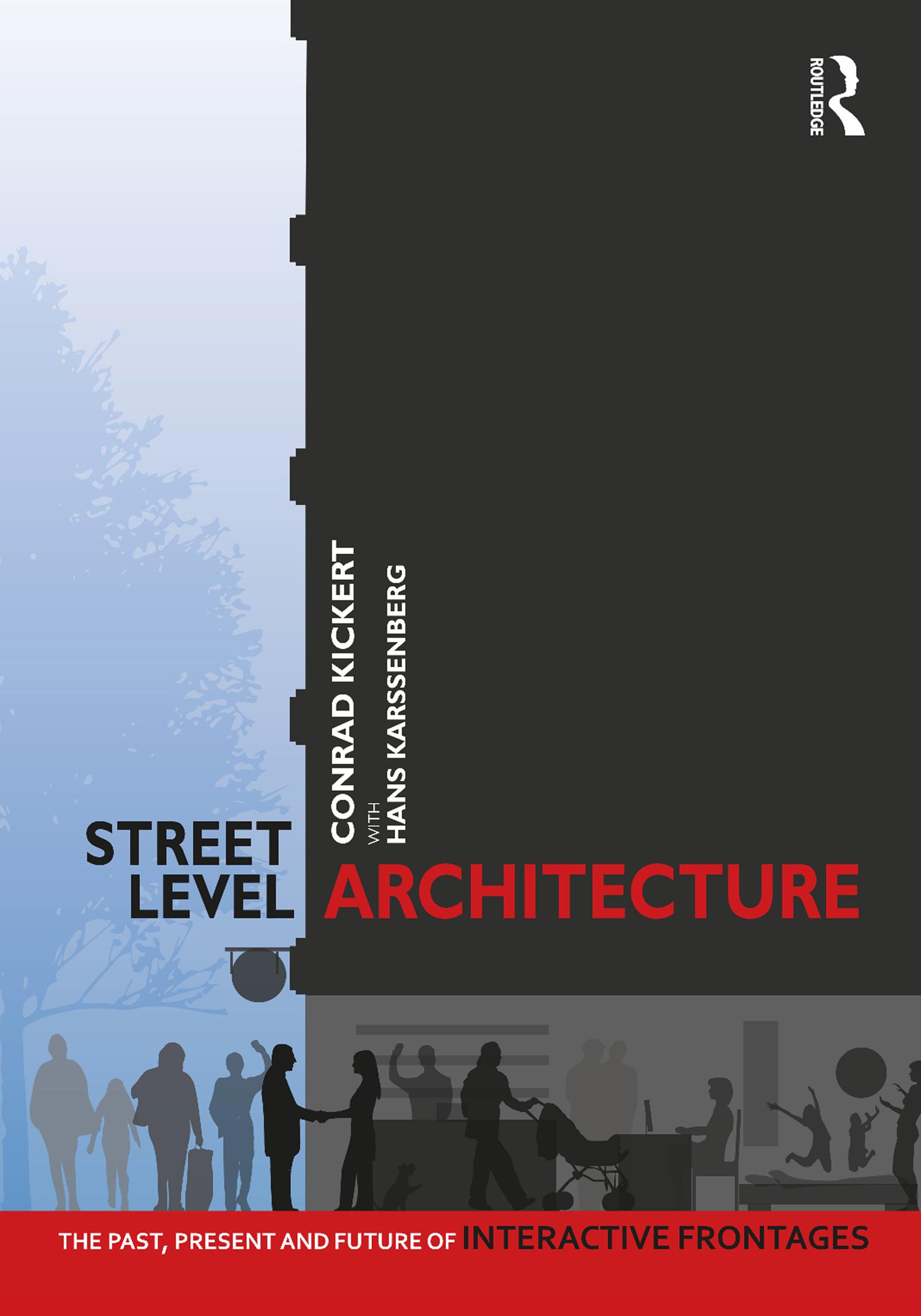
This book provides the tools to maintain and rebuild the interaction between architecture and public space. Despite the best intentions of designers and planners, interactive frontages have dwindled over the past century in Europe and North America. This book demonstrates why even our best intentions for interactive frontages are currently unable to turn a swelling tide of economic and technological evolution, land consolidation, introversion, stratification, and contagious decline. It uses these lessons to offer concrete locational, programming, design, and management strategies to maximize street-level interaction and trust between street-level architecture, its inhabitants, and the city.
This book demonstrates that designers, developers, planners, and managers ultimately have to create the right preconditions for inhabitants and passersby to bring frontages to life. These preconditions connect architecture to its urban, social, economical, and technological context. Only the right frontage in the right context, with the right design, the right inhabitation, and the right attitude to the city will become part of the ecosystem of trust and interaction that supports public life. This book empowers the many participants in this ecosystem to build, inhabit, and enjoy truly urbane architecture.
Płać wygodnie kartą, Klarną, Apple Pay lub Google Pay. Nie jesteś zadowolony? Zawsze masz 14-dniową gwarancję zwrotu pieniędzy. Więcej przeczytasz w naszych warunkach. Masz pytania? Napisz do nas na hello@memmo.org.
Memmo ułatwia naukę – gdziekolwiek jesteś na świecie. U nas znajdziesz podręczniki i sprytne narzędzia do nauki w jednym miejscu: streszczenia, quizy, podcasty i fiszki. A do tego Ted, Twój kumpel do nauki, który odpowie na wszystko, co Cię nurtuje. Ponad 50 000 studentów już tu się uczy – stworzone, byś uczył się szybciej i mniej stresował.