
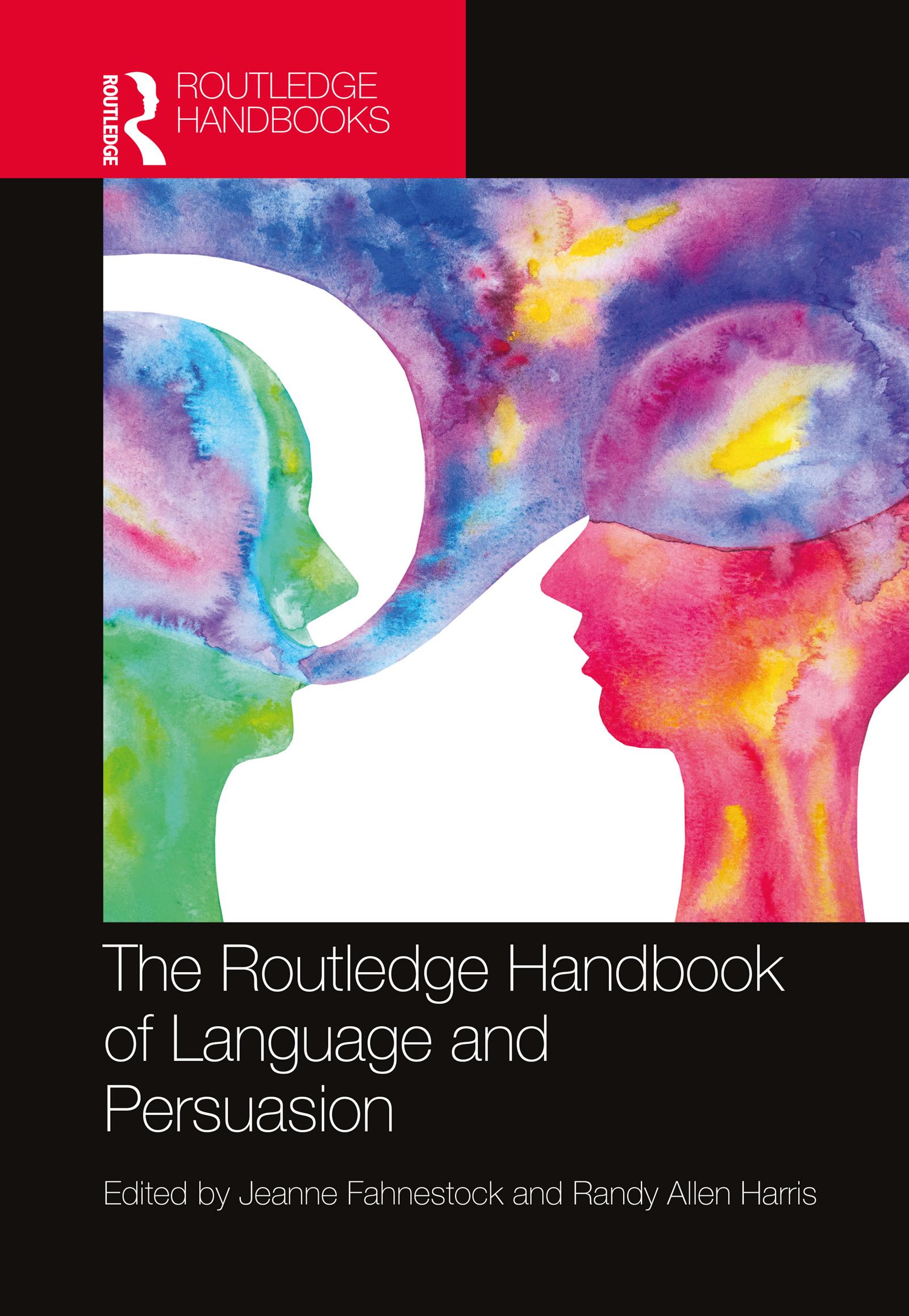
This handbook provides a wide-ranging, authoritative, and cutting-edge overview of language and persuasion. Featuring a range of international contributors, the handbook outlines the basic materials of linguistic persuasion – sound, words, syntax, and discourse – and the rhetorical basics that they enable, such as appeals, argument schemes, arrangement strategies, and accommodation devices.
After a comprehensive introduction that brings together the elements of linguistics and the vectors of rhetoric, the handbook is divided into six parts. Part I covers the basic rhetorical appeals to character, the emotions, argument schemes, and types of issues that constitute persuasion. Part II covers the enduring effects of persuasive language, from humor to polarization, while a special group of chapters in Part III examines figures of speech and their rhetorical uses. In Part IV, contributors focus on different fields and genres of argument as entry points for research into conventions of arguing. Part V examines the evolutionary and developmental roots of persuasive language, and Part VI highlights new computational methods of language analysis.
This handbook is essential reading for those researching and studying persuasive language in the fields of linguistics, rhetoric, argumentation, communication, discourse studies, political science, psychology, digital studies, mass media, and journalism.
Płać wygodnie kartą, Klarną, Apple Pay lub Google Pay. Nie jesteś zadowolony? Zawsze masz 14-dniową gwarancję zwrotu pieniędzy. Więcej przeczytasz w naszych warunkach. Masz pytania? Napisz do nas na hello@memmo.org.
Memmo ułatwia naukę – gdziekolwiek jesteś na świecie. U nas znajdziesz podręczniki i sprytne narzędzia do nauki w jednym miejscu: streszczenia, quizy, podcasty i fiszki. A do tego Ted, Twój kumpel do nauki, który odpowie na wszystko, co Cię nurtuje. Ponad 50 000 studentów już tu się uczy – stworzone, byś uczył się szybciej i mniej stresował.