
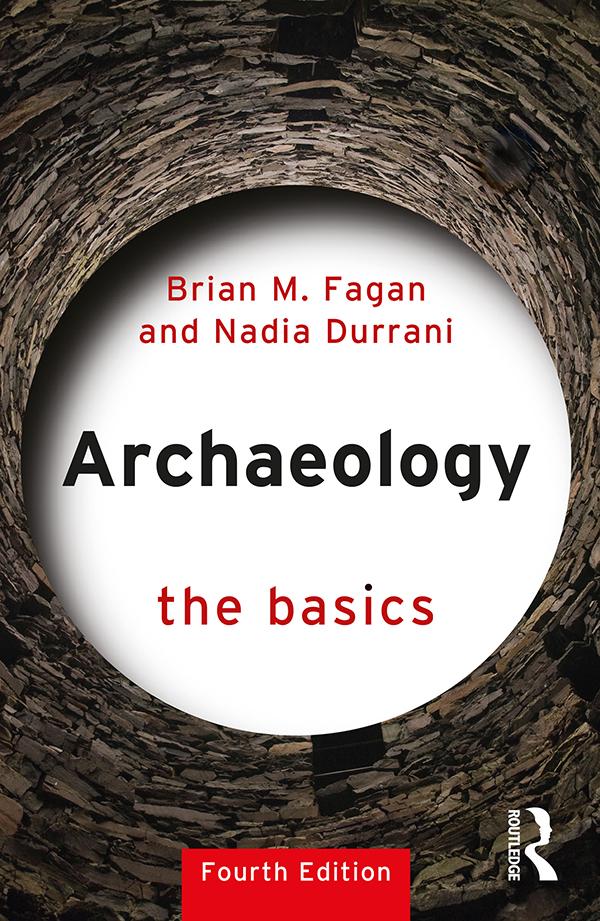
Archaeology: The Basics, rewritten for this fourth edition, is a short, engaging book that takes the reader on a journey through the fascinating world of archaeology and archaeologists.
Written in a non-technical style by two experienced archaeologists and writers about the past, the book begins by introducing archaeology as a unique way of studying the entire span of the human past from our origins some six million years ago to today. The authors stress that archaeology is a global study of human biological and cultural diversity. After a brief look at early archaeological discoveries, they introduce today’s multidisciplinary archaeology. Then they go on to describe the archaeological record, the archives of the past and the importance of contexts of time and space. How do we find archaeological sites and how do we explore them? Two chapters laced with examples examine these questions. Later chapters describe ancient technologies and how we study them, and the all-important subject of changing ancient environments and climate change. Zooarchaeology, flotation methods, and other ways of reconstructing ancient diet and subsistence lead us into the study of changing settlement patterns across the landscape. Next, they visit the people of the past, either as individuals or groups, calling on bioarchaeology to assist them. Two chapters discuss ancient culture change and the remarkable diversity of ancient societies, and they are followed by an exploration of the spiritual realm, the exploration of the intangible. The final chapter looks at the importance of archaeology in today’s world. Rich in numerous examples and contemporary thinking about archaeology, this book tries to answer an important question: What does archaeology tell us about ourselves?
Archaeology: The Basics is essential reading for all those beginning to study archaeology and anyone who has ever questioned the past.
Płać wygodnie kartą, Klarną, Apple Pay lub Google Pay. Nie jesteś zadowolony? Zawsze masz 14-dniową gwarancję zwrotu pieniędzy. Więcej przeczytasz w naszych warunkach. Masz pytania? Napisz do nas na hello@memmo.org.
Memmo ułatwia naukę – gdziekolwiek jesteś na świecie. U nas znajdziesz podręczniki i sprytne narzędzia do nauki w jednym miejscu: streszczenia, quizy, podcasty i fiszki. A do tego Ted, Twój kumpel do nauki, który odpowie na wszystko, co Cię nurtuje. Ponad 50 000 studentów już tu się uczy – stworzone, byś uczył się szybciej i mniej stresował.