
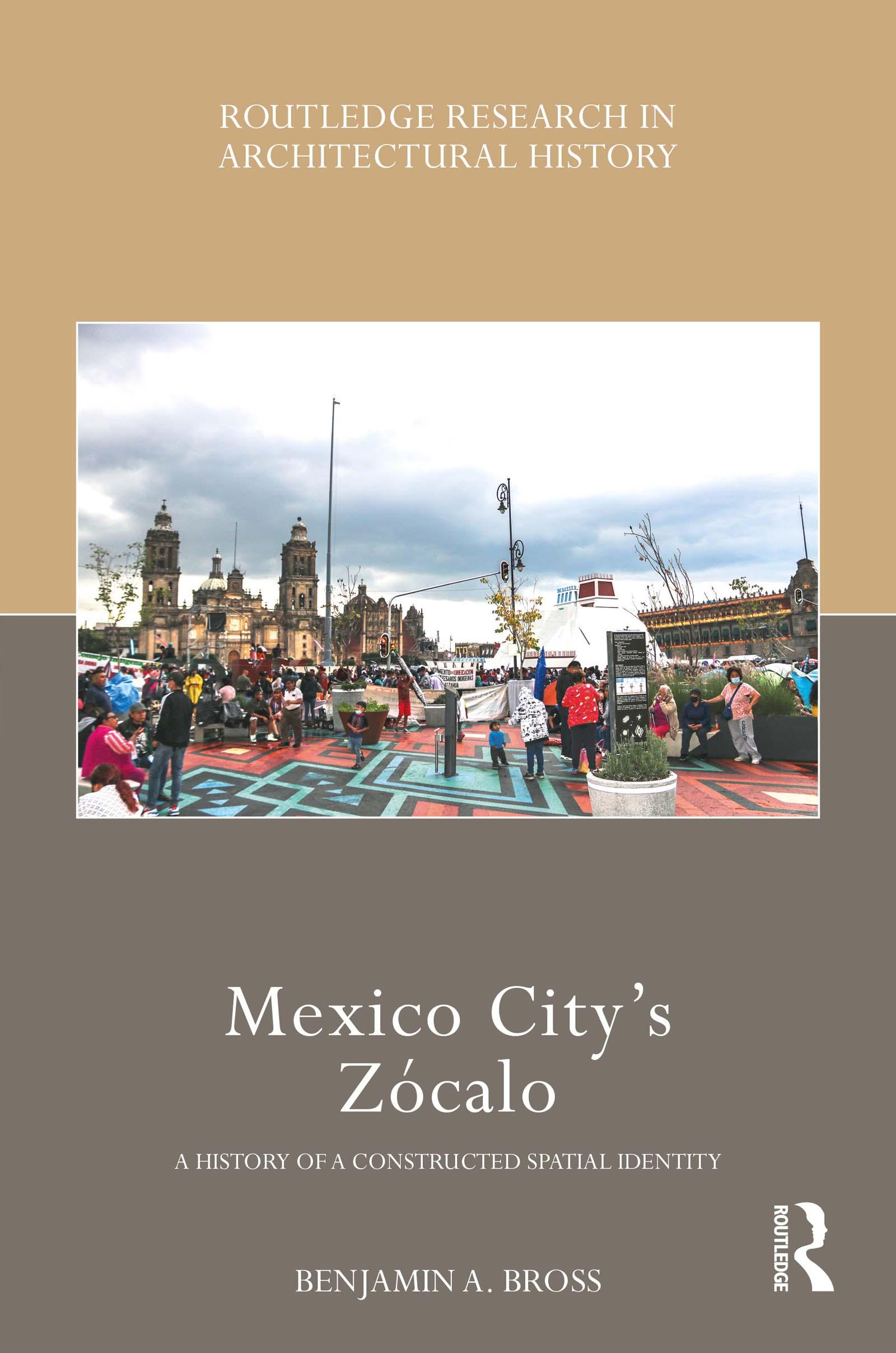
This book presents a case study of one of Latin America’s most important and symbolic spaces, the Zócalo in Mexico City, weaving together historic events and corresponding morphological changes in the urban environment. It poses questions about how the identity of a place emerges, how it evolves and, why does it change? Mexico City’s Zócalo: A History of a Constructed Spatial Identity utilizes the history of a specific place, the Zócalo (Plaza de la Constitución), to explain the emergence and evolution of Mexican identities over time.
Starting from the pre-Hispanic period to present day, the work illustrates how the Zócalo reveals spatial manifestations as part of the larger socio-cultural zeitgeist. By focusing on the history of changes in spatial production – what Henri Lefebvre calls society’s "secretions" – Bross traces how cultural, social, economic, and political forces shaped the Zócalo’s spatial identity and, in turn, how the Zócalo shaped and fostered new identities in return. It will be a fascinating read for architectural and urban historians investigating Latin America.
Płać wygodnie kartą, Klarną, Apple Pay lub Google Pay. Nie jesteś zadowolony? Zawsze masz 14-dniową gwarancję zwrotu pieniędzy. Więcej przeczytasz w naszych warunkach. Masz pytania? Napisz do nas na hello@memmo.org.
Memmo ułatwia naukę – gdziekolwiek jesteś na świecie. U nas znajdziesz podręczniki i sprytne narzędzia do nauki w jednym miejscu: streszczenia, quizy, podcasty i fiszki. A do tego Ted, Twój kumpel do nauki, który odpowie na wszystko, co Cię nurtuje. Ponad 50 000 studentów już tu się uczy – stworzone, byś uczył się szybciej i mniej stresował.