
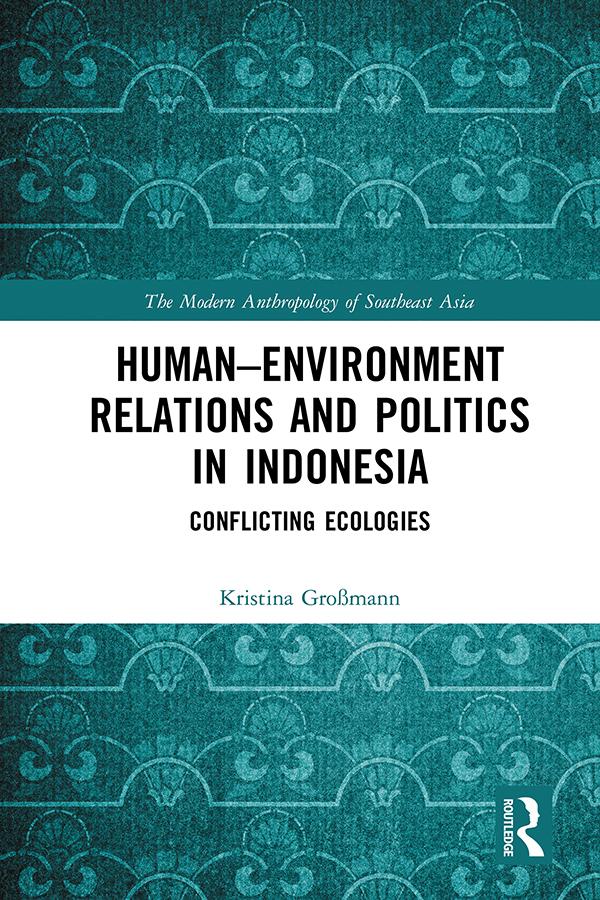
This book analyses how people in Kalimantan, the Indonesian part of the island of Borneo, relate to their environment in different political and historical contexts.
Drawing on multi-sited ethnographic studies of Dayak people, the indigenous inhabitants of Borneo, the book examines how human-environment relationships differ and collide. These "conflicting ecologies" are based on people's relation to the "environment", which encompasses the non-human realm in the widest sense, including forests, rivers, land, natural resources, animals and spirits. The author argues that relationality and power are decisive factors for the understanding and analysis of peoples’ ecologies. The book integrates different theoretical approaches, sheds light upon the environmental transformation taking place in Indonesia, as well as the social exclusion it entails, and highlights the conceptual shortcomings of universalistic concepts of human-environment relations.
An exploration of evolving human-nature relations, this book will be of interest to academics studying political ecology, environmental anthropology, sustainability sciences, political sciences, development studies, human geography, human ecology, Southeast Asian studies, and Asian studies.
Płać wygodnie kartą, Klarną, Apple Pay lub Google Pay. Nie jesteś zadowolony? Zawsze masz 14-dniową gwarancję zwrotu pieniędzy. Więcej przeczytasz w naszych warunkach. Masz pytania? Napisz do nas na hello@memmo.org.
Memmo ułatwia naukę – gdziekolwiek jesteś na świecie. U nas znajdziesz podręczniki i sprytne narzędzia do nauki w jednym miejscu: streszczenia, quizy, podcasty i fiszki. A do tego Ted, Twój kumpel do nauki, który odpowie na wszystko, co Cię nurtuje. Ponad 50 000 studentów już tu się uczy – stworzone, byś uczył się szybciej i mniej stresował.