
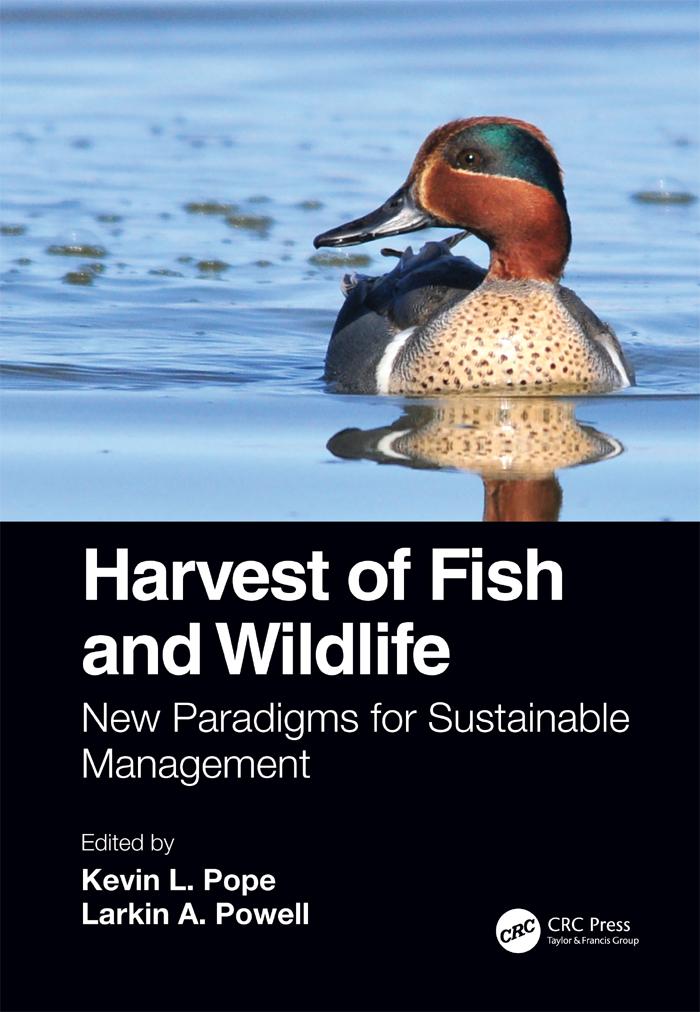
Harvest of Fish and Wildlife: New Paradigms for Sustainable Management unites experts in wildlife and fishery sciences for an interdisciplinary overview of harvest management. This book presents unique insights for embracing the complete social-ecological system to ensure a sustainable future. It educates users on evolutionary and population dynamics; social and political influences; hunter and angler behavior; decision processes; impacts of regulations; and stakeholder involvement.
Features:
- Written by twenty-four teams of leading scientists and managers.
- Promotes transparent justification for fishing and hunting regulations.
- Provides examples for integrating decision making into management.
- Emphasizes creativity in management by integrating art and science.
This book appeals to population biologists, evolutionary biologists and social scientists. It is a key resource for on-the-ground managers and research scientists developing harvesting applications.
As the book’s contributors explain:
- “Making decisions that are robust to uncertainty…is a paradigm shift with a lot of potential to improve outcomes for fish and wildlife populations.” –Andrew Tyre and Brigitte Tenhumberg
- “Temporal shifts in system states…must somehow be anticipated and dealt with to derive harvest policies that remain optimal in the long term.” –Michael Conroy
- “Proactive, effective management of sportspersons…will be essential in the new paradigm of harvest management.” –Matthew Gruntorad and Christopher Chizinski
Płać wygodnie kartą, Klarną, Apple Pay lub Google Pay. Nie jesteś zadowolony? Zawsze masz 14-dniową gwarancję zwrotu pieniędzy. Więcej przeczytasz w naszych warunkach. Masz pytania? Napisz do nas na hello@memmo.org.
Memmo ułatwia naukę – gdziekolwiek jesteś na świecie. U nas znajdziesz podręczniki i sprytne narzędzia do nauki w jednym miejscu: streszczenia, quizy, podcasty i fiszki. A do tego Ted, Twój kumpel do nauki, który odpowie na wszystko, co Cię nurtuje. Ponad 50 000 studentów już tu się uczy – stworzone, byś uczył się szybciej i mniej stresował.