
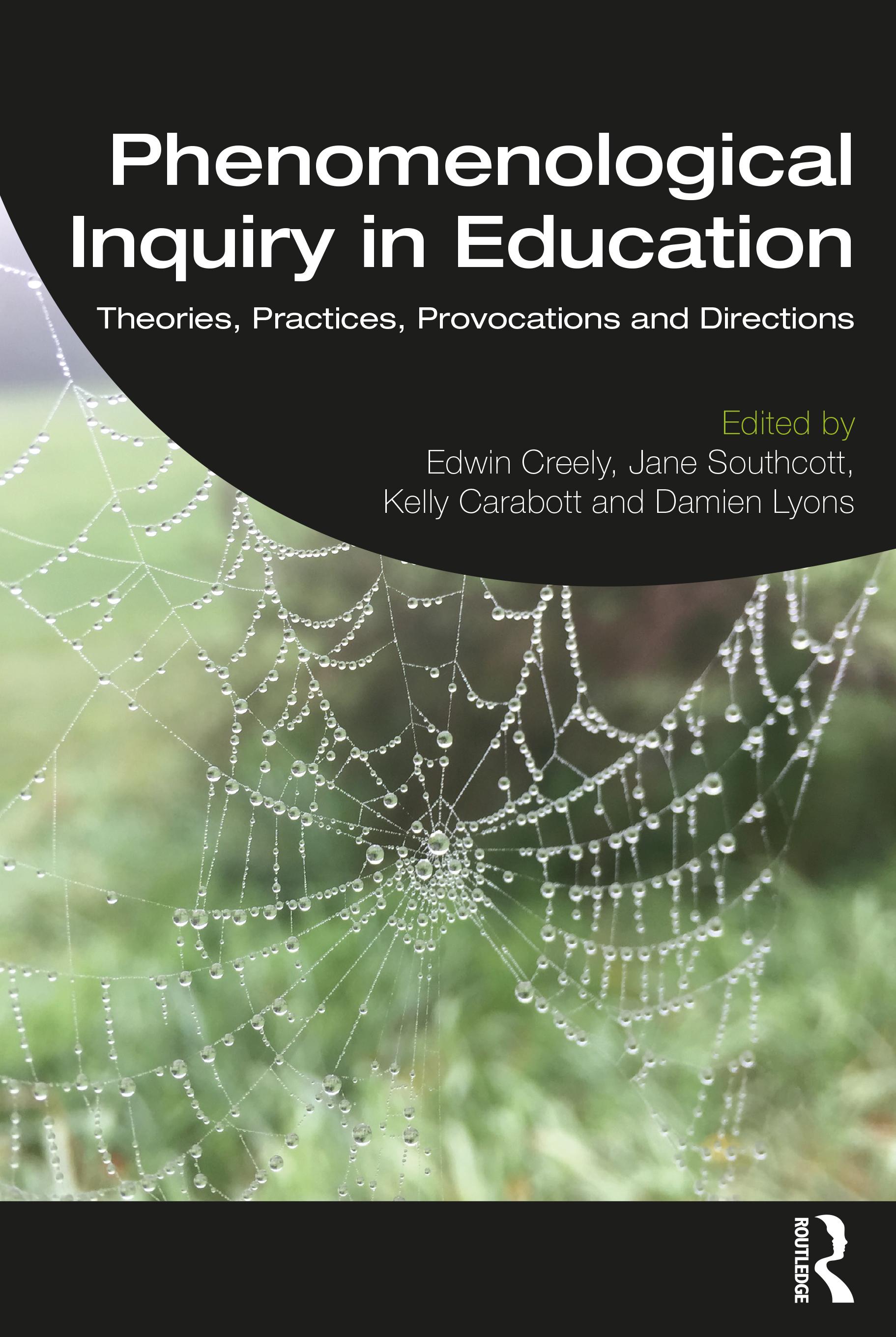
Phenomenological Inquiry in Education is an edited collection of 16 chapters that offers a fascinating and diverse range of approaches and views about phenomenological inquiry as applied in educational research.
Written by a group of international scholars concerned about understanding lived experience, the editors assemble theoretical ideas, methodological approaches and empirical research to create a distinctive transdisciplinary outlook. Embodying many unique and useful insights the book provokes thought about the possibilities for phenomenology in contemporary educational research. The international contributors highlight what an exploration of lived experience can offer qualitative research and extend on methodologies commonly used in educational research. By grounding phenomenological inquiry in the complexities of doing research across discipline areas in education, the writers of the book forge links between theory and empirical research, and give their unique perspectives about how phenomenological ideas are being and might be employed in educational research. The book is thus carefully crafted to address both phenomenology as a philosophical tradition and its possibilities for educational research.
This scholarly work will appeal to educational researchers, as well as those in broader social research. It taps into the growing international interest in phenomenological research in education which brings attention to lived experience and the highly important affective dimension of learning.
Płać wygodnie kartą, Klarną, Apple Pay lub Google Pay. Nie jesteś zadowolony? Zawsze masz 14-dniową gwarancję zwrotu pieniędzy. Więcej przeczytasz w naszych warunkach. Masz pytania? Napisz do nas na hello@memmo.org.
Memmo ułatwia naukę – gdziekolwiek jesteś na świecie. U nas znajdziesz podręczniki i sprytne narzędzia do nauki w jednym miejscu: streszczenia, quizy, podcasty i fiszki. A do tego Ted, Twój kumpel do nauki, który odpowie na wszystko, co Cię nurtuje. Ponad 50 000 studentów już tu się uczy – stworzone, byś uczył się szybciej i mniej stresował.