
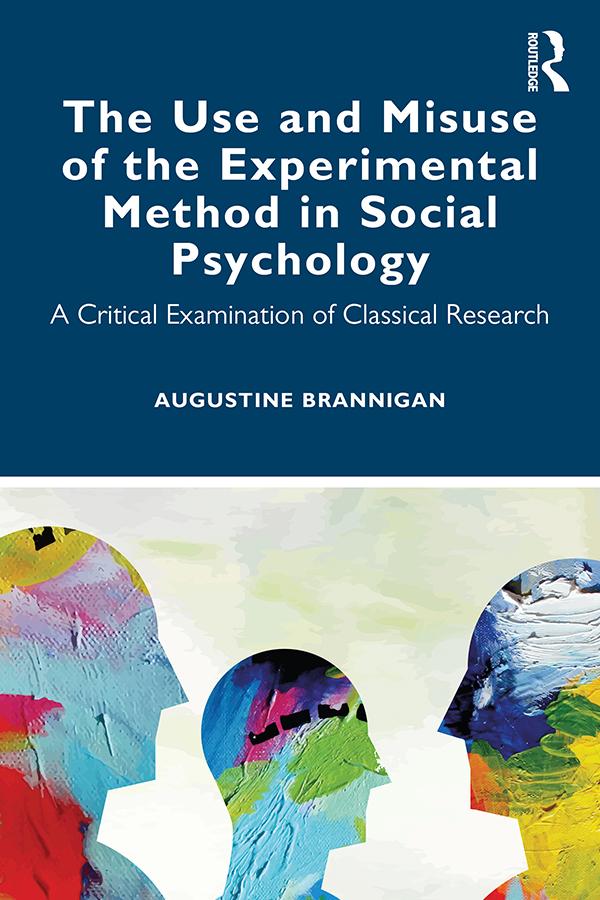
This book critically examines the work of a number of pioneers of social psychology, including legendary figures such as Kurt Lewin, Leon Festinger, Muzafer Sherif, Solomon Asch, Stanley Milgram, and Philip Zimbardo. Augustine Brannigan argues that the reliance of these psychologists on experimentation has led to questions around validity and replication of their studies.
The author explores new research and archival work relating to these studies and outlines a new approach to experimentation that repudiates the use of deception in human experiments and provides clues to how social psychology can re-articulate its premises and future lines of research. Based on the author’s 2004 work The Rise and Fall of Social Psychology, in which he critiques the experimental methods used, the book advocates for a return to qualitative methods to redeem the essential social dimensions of social psychology.
Covering famous studies such as the Stanford Prison Experiment, Milgram’s studies of obedience, Sherif's Robbers Cave, and Rosenhan's exposé of psychiatric institutions, this is essential and fascinating reading for students of social psychology, and the social sciences. It’s also of interest to academics and researchers interested in engaging with a critical approach to classical social psychology, with a view to changing the future of this important discipline.
Płać wygodnie kartą, Klarną, Apple Pay lub Google Pay. Nie jesteś zadowolony? Zawsze masz 14-dniową gwarancję zwrotu pieniędzy. Więcej przeczytasz w naszych warunkach. Masz pytania? Napisz do nas na hello@memmo.org.
Memmo ułatwia naukę – gdziekolwiek jesteś na świecie. U nas znajdziesz podręczniki i sprytne narzędzia do nauki w jednym miejscu: streszczenia, quizy, podcasty i fiszki. A do tego Ted, Twój kumpel do nauki, który odpowie na wszystko, co Cię nurtuje. Ponad 50 000 studentów już tu się uczy – stworzone, byś uczył się szybciej i mniej stresował.