
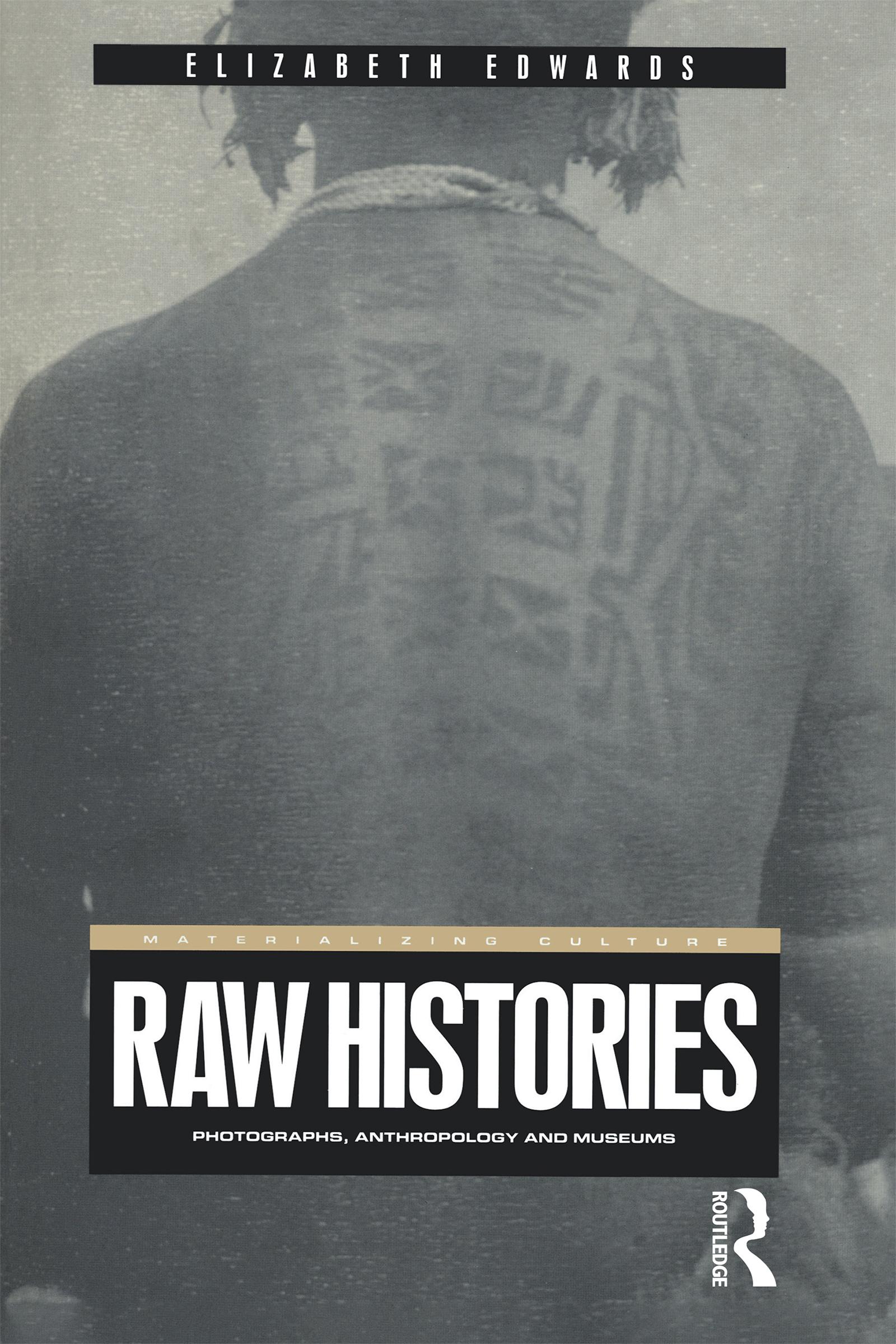
Photographs have had an integral and complex role in many anthropological contexts, from fieldwork to museum exhibitions. This book explores how approaching anthropological photographs as 'history' can offer both theoretical and empirical insights into these roles. Photographs are thought to make problematic history because of their ambiguity and 'rawness'. In short, they have too many meanings. The author refutes this prejudice by exploring, through a series of case studies, precisely the potential of this raw quality to open up new perspectives. Taking the nature of photography as her starting point, the author argues that photographs are not merely pictures of things but are part of a dynamic and fluid historical dialogue, which is active not only in the creation of the photograph but in its subsequent social biography in archive and museum spaces, past and present. In this context, the book challenges any uniform view of anthropological photography and its resulting archives. Drawing on a variety of examples, largely from the Pacific, the book demonstrates how close readings of photographs reveal not only western agendas, but also many layers of differing historical and cross-cultural experiences. That is, photographs can 'spring leaks' to show an alternative viewpoint. These themes are developed further by examining the dynamics of photographs and issues around them as used by contemporary artists and curators and presented to an increasingly varied public. This book convincingly demonstrates photographs' potential to articulate histories other than those of their immediate appearances, a potential that can no longer be neglected by scholars and institutions.
Płać wygodnie kartą, Klarną, Apple Pay lub Google Pay. Nie jesteś zadowolony? Zawsze masz 14-dniową gwarancję zwrotu pieniędzy. Więcej przeczytasz w naszych warunkach. Masz pytania? Napisz do nas na hello@memmo.org.
Memmo ułatwia naukę – gdziekolwiek jesteś na świecie. U nas znajdziesz podręczniki i sprytne narzędzia do nauki w jednym miejscu: streszczenia, quizy, podcasty i fiszki. A do tego Ted, Twój kumpel do nauki, który odpowie na wszystko, co Cię nurtuje. Ponad 50 000 studentów już tu się uczy – stworzone, byś uczył się szybciej i mniej stresował.
Może Ci się spodobać
Kup książkę0