
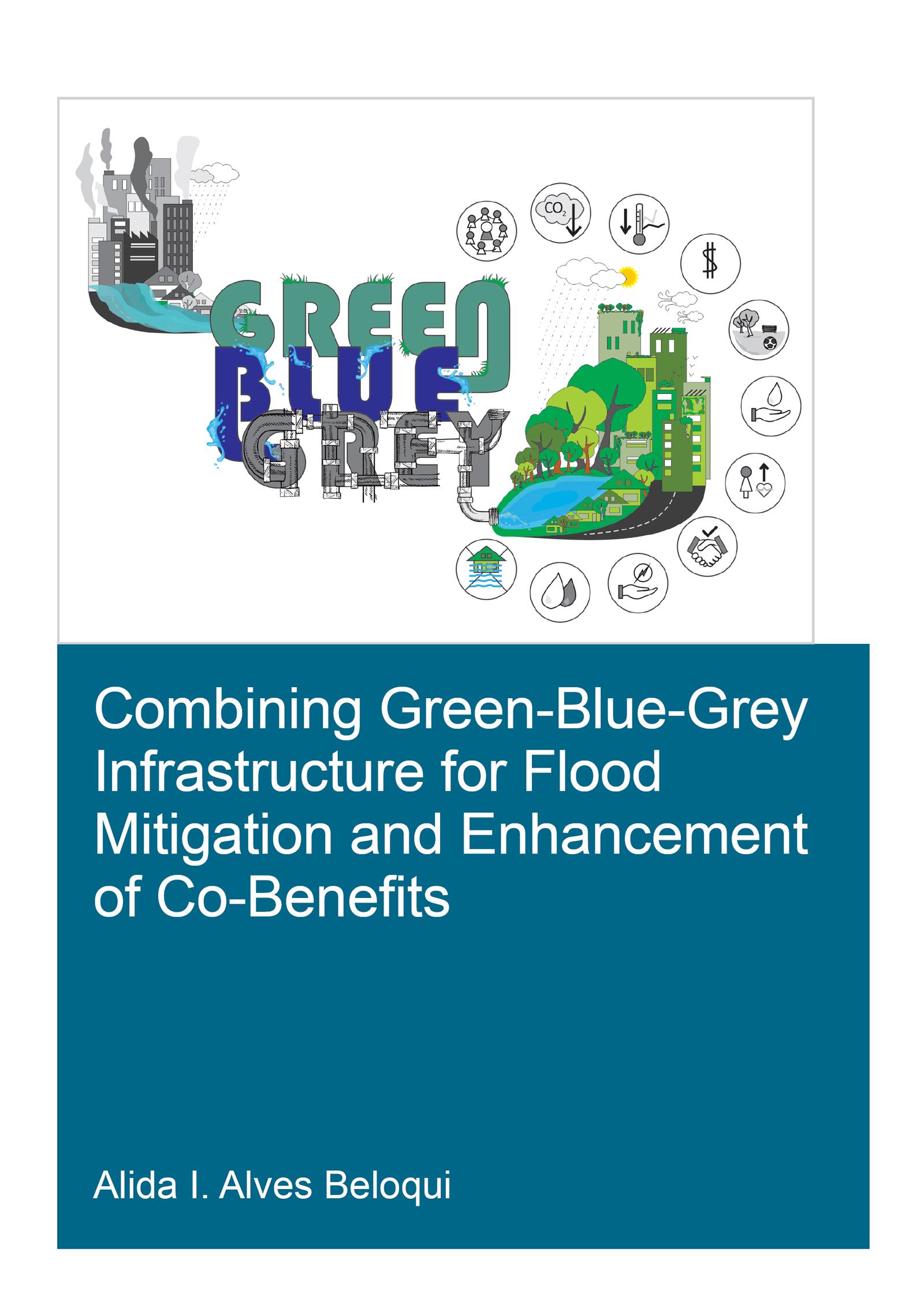
An increment of urban flood risk in many areas around the globe is expected, accentuated due to climate change and urbanisation. Thus, appropriate flood risk management is crucial. Conventional approaches focus on grey infrastructure, which frequently do not address the root causes of risk. A change of paradigm is needed to develop effective adaptation strategies. Green-blue infrastructure (GBI) is a central concept to achieve adaptation to climate change. Its main strength is the ability to deliver multiple benefits. Although strong evidence exists demonstrating that GBI is a sustainable solution to reduce flooding, its adoption is still slow. Therefore, the objective of this research is to help decision-makers to adopt adaptation strategies to cope with flood risk while achieving other benefits. This study provides a framework which introduces co-benefits into decision-making for stormwater infrastructure planning. Besides, the multiple benefits are quantified and their impact on helping GBI implementation are evaluated. Finally, the effects of including co-benefits on the selection of flood mitigation strategies and the trade-offs among cost and benefits are assessed. This work contributes to enhance planning processes for flood mitigation combining green-blue-grey measures. It provides tools and knowledge to facilitate holistic decision-making, in order to ensure safe and liveable urban spaces for current and future conditions.
Płać wygodnie kartą, Klarną, Apple Pay lub Google Pay. Nie jesteś zadowolony? Zawsze masz 14-dniową gwarancję zwrotu pieniędzy. Więcej przeczytasz w naszych warunkach. Masz pytania? Napisz do nas na hello@memmo.org.
Memmo ułatwia naukę – gdziekolwiek jesteś na świecie. U nas znajdziesz podręczniki i sprytne narzędzia do nauki w jednym miejscu: streszczenia, quizy, podcasty i fiszki. A do tego Ted, Twój kumpel do nauki, który odpowie na wszystko, co Cię nurtuje. Ponad 50 000 studentów już tu się uczy – stworzone, byś uczył się szybciej i mniej stresował.