
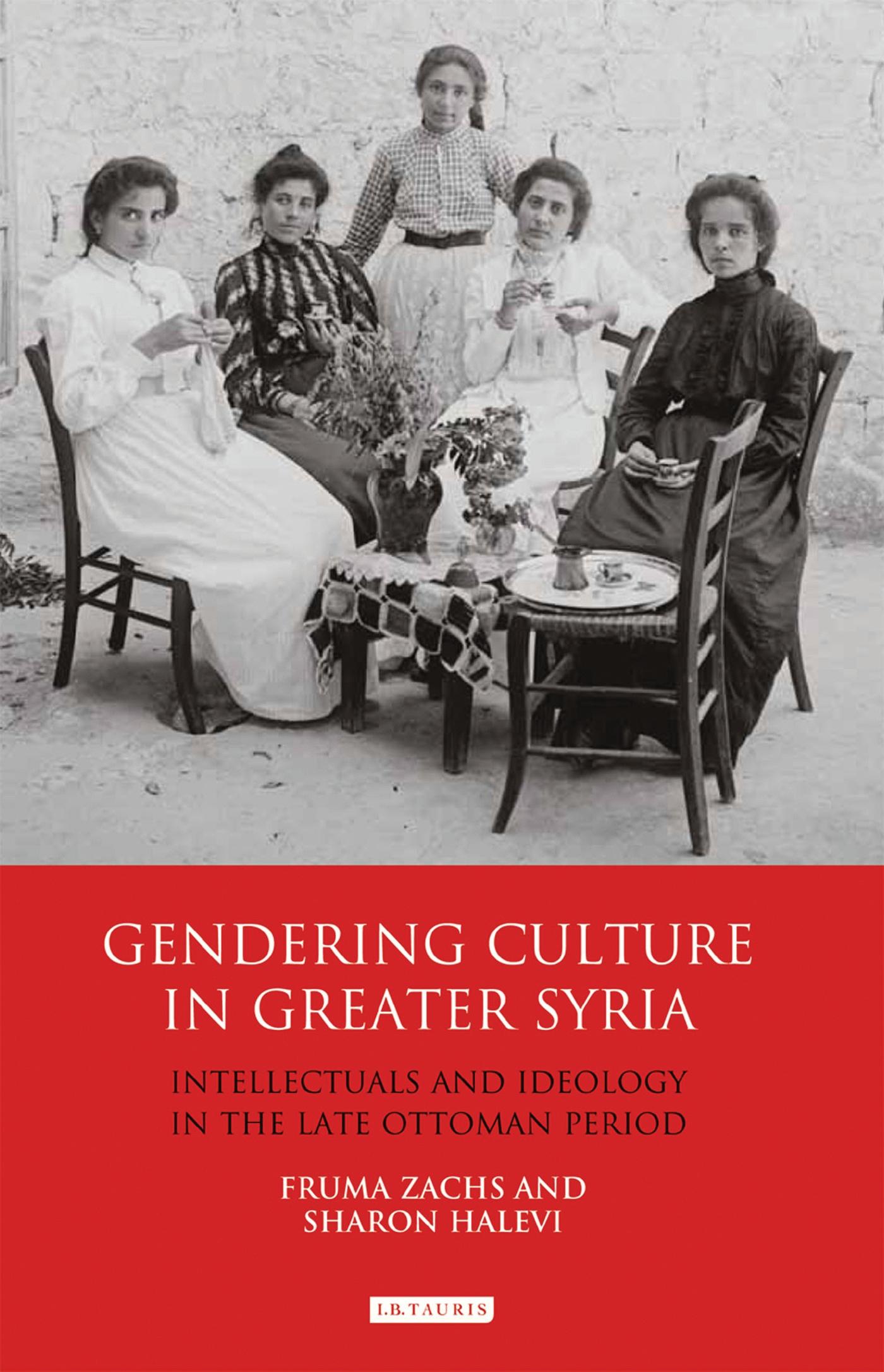
The Nahda (lit. 'the Awakening') was one of the most significant cultural movements in modern Arab history. By focusing on the neglected role of women in the intellectual Islamic renaissance of the late Ottoman Period, Fruma Zachs and Sharon Halevi provide a refreshingly interdisciplinary exploration of gender and culture in the Arab World. Focusing mainly on Greater Syria, this book re-examines the cultural by-products of the Nahda - such as scientific debates, journal articles, essays, short stories and novels - and provides a new framework for rethinking the dynamics of cultural and social change in what today we know as Syria and Lebanon. The lasting impact of the Nahda is given an innovative and thoroughly unique interpretation, providing an indispensable perspective to studying the nuanced roles of the construction and development of gender ideologies in the nineteenth century Middle East. The authors explore contemporary ideas concerning modern gender roles in the Middle East, and the extent to which these emerged in nineteenth-century Greater Syria. How were these ideas incorporated into daily lives, consumer patterns and cultural activities?
Was class a determining factor in the creation of gender relations in the Muslim world? How were the subjectivities of gender moulded and articulated in fictional and non-fictional texts? The authors delineate both the evolution of a discourse on gender as well the "real-life" activities of men and women as writers, readers and participants in philanthropic and cultural societies, literary salons and educational enterprises. This book reemphasizes the position of the Nahda in the worlds of Damascus, Aleppo and Beirut as an innovative, deeply influential, and significant socio-cultural and political movement in its own right, which played a major role in shaping modern Arab culture, worldviews and self-perception. Zachs and Halevi here provide a new framework for rethinking the dynamics of cultural and social change, and present a groundbreaking new interpretation of the cumulative impact of the Nahda on gender perception in the late Ottoman Period.
Was class a determining factor in the creation of gender relations in the Muslim world? How were the subjectivities of gender moulded and articulated in fictional and non-fictional texts? The authors delineate both the evolution of a discourse on gender as well the "real-life" activities of men and women as writers, readers and participants in philanthropic and cultural societies, literary salons and educational enterprises. This book reemphasizes the position of the Nahda in the worlds of Damascus, Aleppo and Beirut as an innovative, deeply influential, and significant socio-cultural and political movement in its own right, which played a major role in shaping modern Arab culture, worldviews and self-perception. Zachs and Halevi here provide a new framework for rethinking the dynamics of cultural and social change, and present a groundbreaking new interpretation of the cumulative impact of the Nahda on gender perception in the late Ottoman Period.
Płać wygodnie kartą, Klarną, Apple Pay lub Google Pay. Nie jesteś zadowolony? Zawsze masz 14-dniową gwarancję zwrotu pieniędzy. Więcej przeczytasz w naszych warunkach. Masz pytania? Napisz do nas na hello@memmo.org.
Memmo ułatwia naukę – gdziekolwiek jesteś na świecie. U nas znajdziesz podręczniki i sprytne narzędzia do nauki w jednym miejscu: streszczenia, quizy, podcasty i fiszki. A do tego Ted, Twój kumpel do nauki, który odpowie na wszystko, co Cię nurtuje. Ponad 50 000 studentów już tu się uczy – stworzone, byś uczył się szybciej i mniej stresował.