
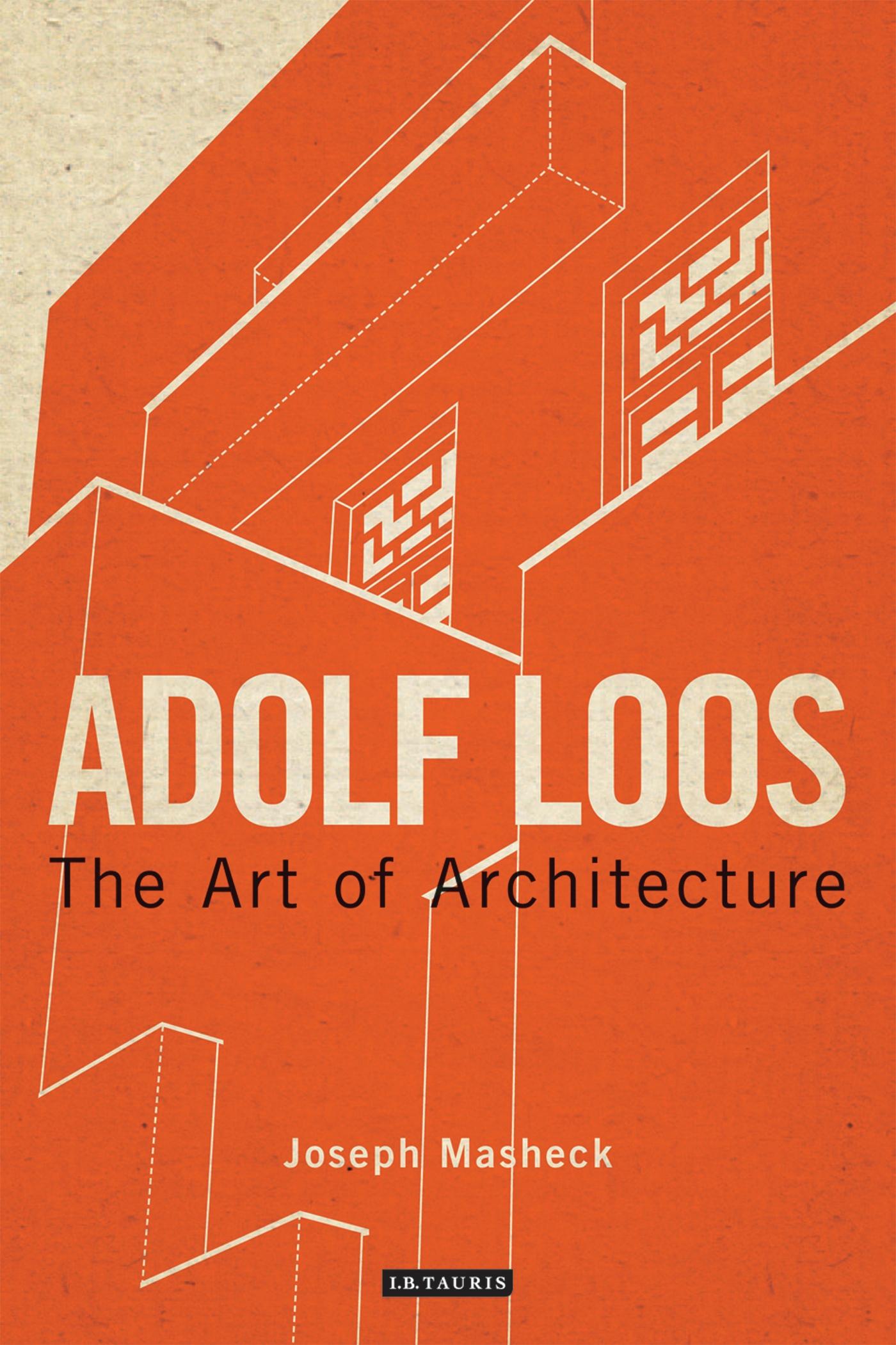
Widely regarded as one of the most significant prophets of modern architecture, Adolf Loos was a celebrity in his own day. His work was emblematic of the turn-of-the-century generation that was torn between the traditional culture of the nineteenth century and the innovative modernism of the twentieth. His essay 'Ornament and Crime' equated superfluous ornament and 'decorative arts' with tattooing in an attempt to tell modern Europeans that they should know better. But the negation of ornament was supposed to reveal, not negate, good style; and an incorrigible ironist has been taken too literally in denying architecture as a fine art. Without normalizing his edgy radicality, Masheck argues that Loos' masterful "astylistic architecture" was an appreciation of tradition and utility and not, as most architectural historians have argued, a mere repudiation of the florid style of the Vienna Secession. Masheck reads Loos as a witty, ironic rhetorician who has all too often been taken at face value. Far from being the anti-architect of the modern era, Masheck's Loos is 'an unruly yet integrally canonical artist-architect'.
He believed in culture, comfort, intimacy and privacy and advocated the evolution of artful architecture. This is a brilliantly written revisionist reading of a perennially popular architect.
He believed in culture, comfort, intimacy and privacy and advocated the evolution of artful architecture. This is a brilliantly written revisionist reading of a perennially popular architect.
Płać wygodnie kartą, Klarną, Apple Pay lub Google Pay. Nie jesteś zadowolony? Zawsze masz 14-dniową gwarancję zwrotu pieniędzy. Więcej przeczytasz w naszych warunkach. Masz pytania? Napisz do nas na hello@memmo.org.
Memmo ułatwia naukę – gdziekolwiek jesteś na świecie. U nas znajdziesz podręczniki i sprytne narzędzia do nauki w jednym miejscu: streszczenia, quizy, podcasty i fiszki. A do tego Ted, Twój kumpel do nauki, który odpowie na wszystko, co Cię nurtuje. Ponad 50 000 studentów już tu się uczy – stworzone, byś uczył się szybciej i mniej stresował.