
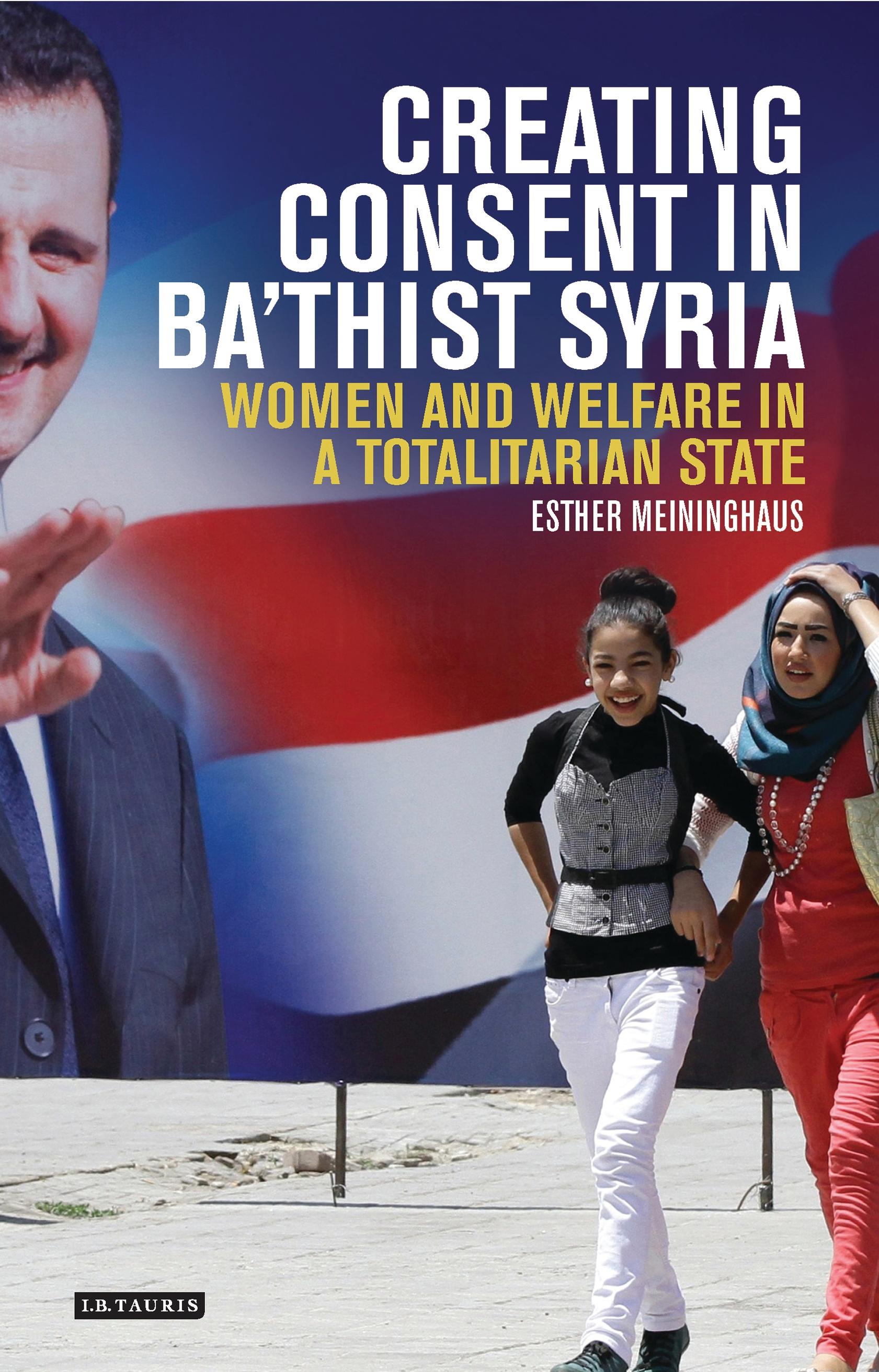
The challenge of maintaining dictatorial regimes through control, co-option and coercion while upholding a facade of legitimacy is something that has concerned leaders throughout the Middle East and beyond. Nowhere is this more evident than in the Syria ruled by the Asads, both Hafiz and his son Bashar. Drawing on the example of the General Union of Syrian Women (founded in 1967), Esther Meininghaus offers new insights into how the Syrian Ba'thist regimes attempted to move beyond mere satisfaction with the compliance of the citizenry and to consolidate their rule amongst the local population. Meininghaus argues that this was partially achieved through providing welfare services delivered by the Union as one of the state-led mass organisations. In this way, she suggests, these regimes did not only aim to undermine opposition and to create the illusion of consent, but they factually catered to local needs and depended on consent. Based on archival material, interviews and statistics, Creating Consent in Ba'thist Syria will shed new light on mass organisations as a crucial institution of Ba'thist state building and, more broadly, the construction of the Asad regimes.
Płać wygodnie kartą, Klarną, Apple Pay lub Google Pay. Nie jesteś zadowolony? Zawsze masz 14-dniową gwarancję zwrotu pieniędzy. Więcej przeczytasz w naszych warunkach. Masz pytania? Napisz do nas na hello@memmo.org.
Memmo ułatwia naukę – gdziekolwiek jesteś na świecie. U nas znajdziesz podręczniki i sprytne narzędzia do nauki w jednym miejscu: streszczenia, quizy, podcasty i fiszki. A do tego Ted, Twój kumpel do nauki, który odpowie na wszystko, co Cię nurtuje. Ponad 50 000 studentów już tu się uczy – stworzone, byś uczył się szybciej i mniej stresował.