
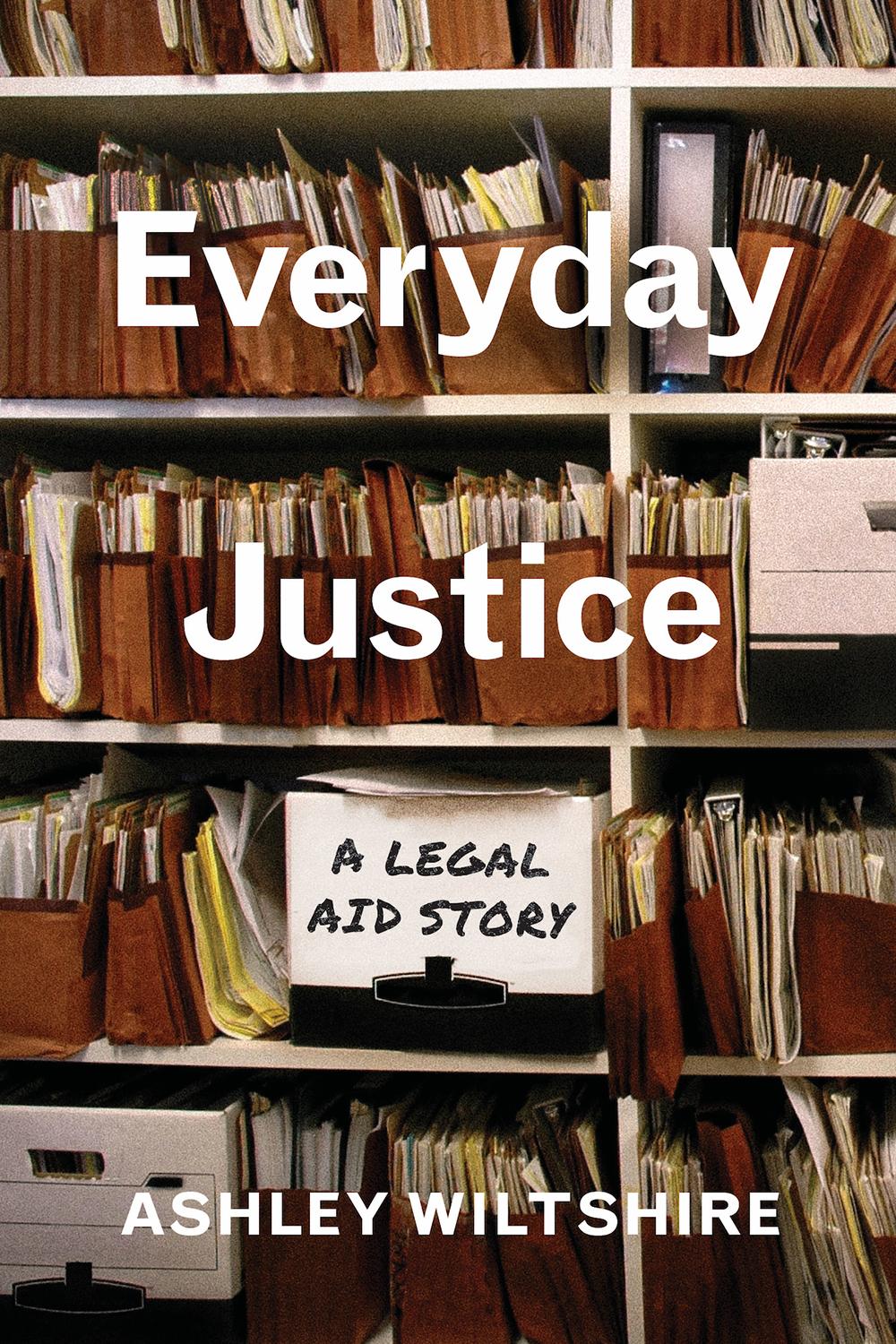
The Legal Aid Society’s mission is to advance, defend, and enforce the legal rights of low-income and otherwise vulnerable people in order to secure for them the basic necessities of life. Everyday Justice is an on-the-ground history of the Legal Aid Society of Middle Tennessee and the Cumberlands, the story of how national debates about access to justice have impacted the work of its lawyers, and a warning about why the federally imposed limits on that work must be lifted in order to fulfill the pledge of justice for all.
Those surviving on low incomes often see the legal system as an oppressive force stacked against them. Everyday Justice is about lawyers trying to make the law work for these people. This book traces the development and evolution of legal aid in Middle Tennessee from the late 1960s to the turn of the millennium, as told by Ashley Wiltshire, who worked for the Legal Aid Society of Middle Tennessee and the Cumberlands in all its incarnations for four decades, beginning a year after its inception.
Set in the context of the legal aid movement in the United States—beginning as a part of the social awakening in the post–Civil War era, continuing with volunteer efforts in the first part of the twentieth century, and coming to fruition beginning with the OEO Office of Legal Services grants of the 1960s as part of the War on Poverty—Everyday Justice is a story of Nashville, which levied an extended period of opposition because of prevailing cultural and religious views on race and poverty.
Those surviving on low incomes often see the legal system as an oppressive force stacked against them. Everyday Justice is about lawyers trying to make the law work for these people. This book traces the development and evolution of legal aid in Middle Tennessee from the late 1960s to the turn of the millennium, as told by Ashley Wiltshire, who worked for the Legal Aid Society of Middle Tennessee and the Cumberlands in all its incarnations for four decades, beginning a year after its inception.
Set in the context of the legal aid movement in the United States—beginning as a part of the social awakening in the post–Civil War era, continuing with volunteer efforts in the first part of the twentieth century, and coming to fruition beginning with the OEO Office of Legal Services grants of the 1960s as part of the War on Poverty—Everyday Justice is a story of Nashville, which levied an extended period of opposition because of prevailing cultural and religious views on race and poverty.
Płać wygodnie kartą, Klarną, Apple Pay lub Google Pay. Nie jesteś zadowolony? Zawsze masz 14-dniową gwarancję zwrotu pieniędzy. Więcej przeczytasz w naszych warunkach. Masz pytania? Napisz do nas na hello@memmo.org.
Memmo ułatwia naukę – gdziekolwiek jesteś na świecie. U nas znajdziesz podręczniki i sprytne narzędzia do nauki w jednym miejscu: streszczenia, quizy, podcasty i fiszki. A do tego Ted, Twój kumpel do nauki, który odpowie na wszystko, co Cię nurtuje. Ponad 50 000 studentów już tu się uczy – stworzone, byś uczył się szybciej i mniej stresował.
Może Ci się spodobać
Kup książkę0