
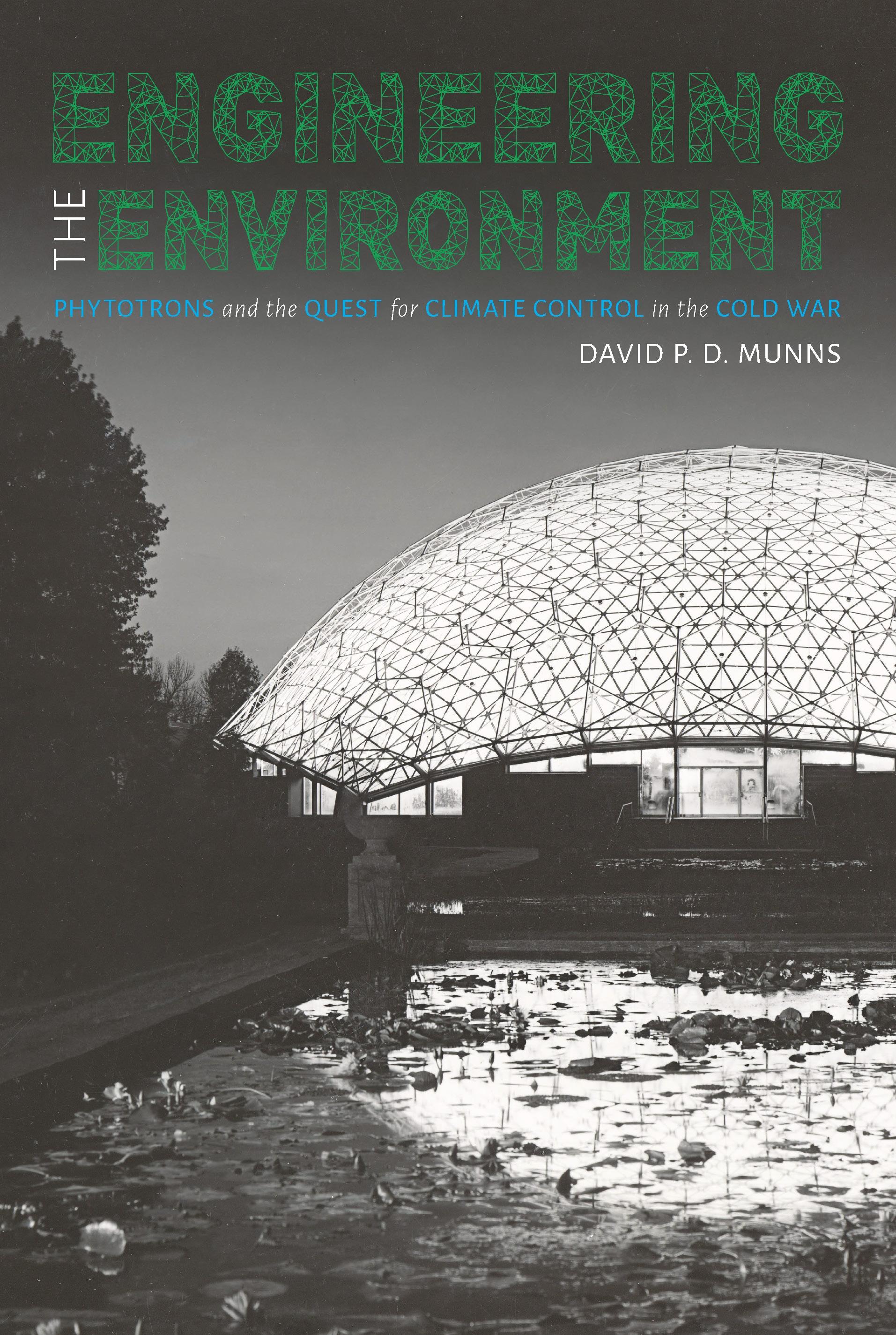
Promising an end to global hunger and political instability, huge climate-controlled laboratories known as phytotrons spread around the world to thirty countries after the Second World War. The United States built nearly a dozen, including the first at Caltech in 1949. Made possible by computers and other novel greenhouse technologies of the early Cold War, phytotrons enabled plant scientists to experiment on the environmental causes of growth and development of living organisms. Subsequently, they turned biologists into technologists who, in their pursuit of knowledge about plants, also set out to master the machines that controlled their environment.
Engineering the Environment tells the forgotten story of a research program that revealed the shape of the environment, the limits of growth and development, and the limits of human control over complex technological systems. As support and funding for basic science dwindled in the mid-1960s, phytotrons declined and ultimately disappeared—until, nearly thirty years later, the British built the Ecotron to study the impact of climate change on biological communities. By revisiting this history of phytotrons, David Munns reminds us of the vital role they can play in helping researchers unravel the complexities of natural ecosystems in the Anthropocene.
Engineering the Environment tells the forgotten story of a research program that revealed the shape of the environment, the limits of growth and development, and the limits of human control over complex technological systems. As support and funding for basic science dwindled in the mid-1960s, phytotrons declined and ultimately disappeared—until, nearly thirty years later, the British built the Ecotron to study the impact of climate change on biological communities. By revisiting this history of phytotrons, David Munns reminds us of the vital role they can play in helping researchers unravel the complexities of natural ecosystems in the Anthropocene.
Kategoria: Miljövetenskap & Klimat
e-ISBN: 9780822982760
Płać wygodnie kartą, Klarną, Apple Pay lub Google Pay. Nie jesteś zadowolony? Zawsze masz 14-dniową gwarancję zwrotu pieniędzy. Więcej przeczytasz w naszych warunkach. Masz pytania? Napisz do nas na hello@memmo.org.
Memmo ułatwia naukę – gdziekolwiek jesteś na świecie. U nas znajdziesz podręczniki i sprytne narzędzia do nauki w jednym miejscu: streszczenia, quizy, podcasty i fiszki. A do tego Ted, Twój kumpel do nauki, który odpowie na wszystko, co Cię nurtuje. Ponad 50 000 studentów już tu się uczy – stworzone, byś uczył się szybciej i mniej stresował.
Może Ci się spodobać
Kup książkę0