
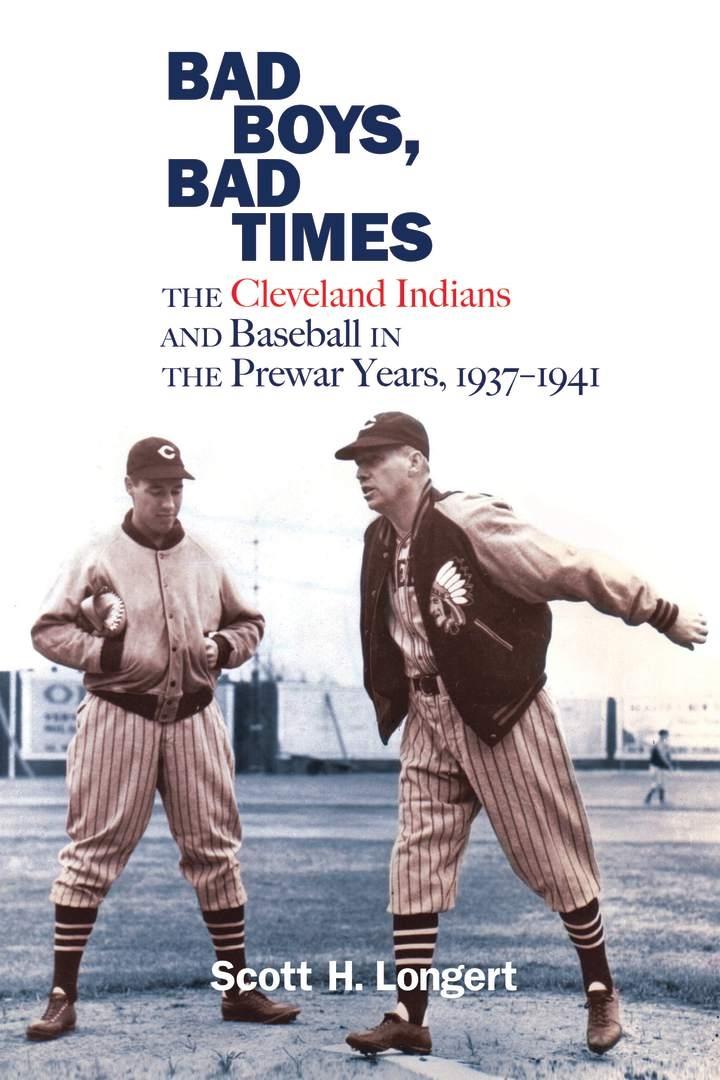
In 1937, the Great Depression was still lingering, but at baseball parks across the country there was a sense of optimism. Major League attendance was on a sharp rise. Tickets to an Indians game at League Park on Lexington and East 66th were $1.60 for box seats, $1.35 for reserve seats, and $.55 for the bleachers. Cleveland fans were particularly upbeat—Bob Feller, the teenage phenomenon, was a farm boy with a blistering fast ball. Night games were an exciting development. Better days were ahead.
But there were mounting issues facing the Indians. For one thing, it was rumored that the team had illegally signed Feller. Baseball Commissioner Judge Kenesaw Mountain Landis was looking into that matter and one other. Issues with an alcoholic catcher, dugout fights, bats thrown into stands, injuries, and a player revolt kept things lively.
In Bad Boys, Bad Times: The Cleveland Indians and Baseball in the Prewar Years, 1937–1941—the follow-up to his No Money, No Beer, No Pennants: The Cleveland Indians and Baseball in the Great Depression—baseball historian Scott H. Longert writes about an exciting period for the team, with details and anecdotes that will please fans all over.
Płać wygodnie kartą, Klarną, Apple Pay lub Google Pay. Nie jesteś zadowolony? Zawsze masz 14-dniową gwarancję zwrotu pieniędzy. Więcej przeczytasz w naszych warunkach. Masz pytania? Napisz do nas na hello@memmo.org.
Memmo ułatwia naukę – gdziekolwiek jesteś na świecie. U nas znajdziesz podręczniki i sprytne narzędzia do nauki w jednym miejscu: streszczenia, quizy, podcasty i fiszki. A do tego Ted, Twój kumpel do nauki, który odpowie na wszystko, co Cię nurtuje. Ponad 50 000 studentów już tu się uczy – stworzone, byś uczył się szybciej i mniej stresował.