
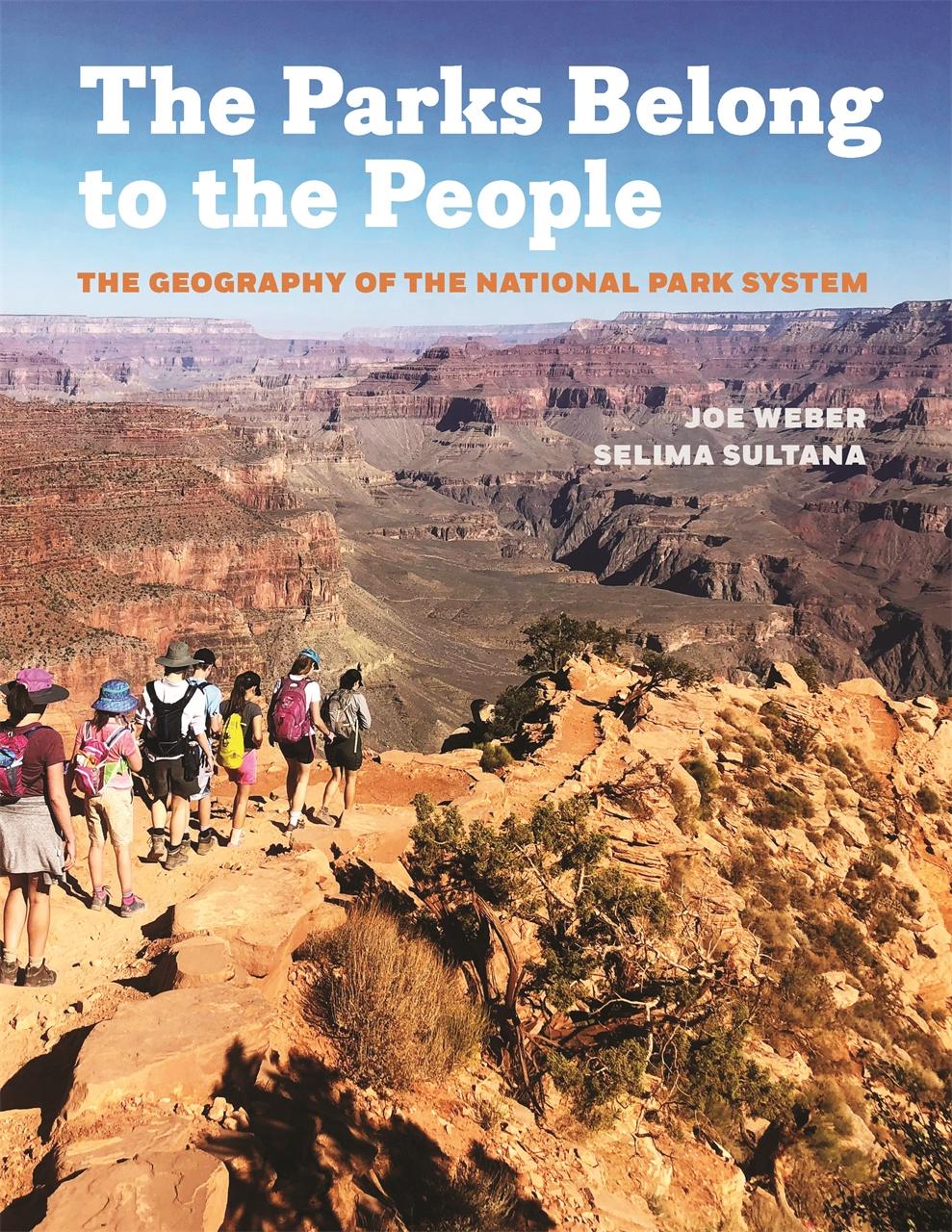
In examining the 424 units of the U.S. national park system, geographers Joe Weber and Selima Sultana focus attention on the historical geography of the system as well as its present distribution, covering the diversity of places under the control of the National Park Service (NPS). This includes the famous national parks such as the Grand Canyon, Yellowstone, and Yosemite and the lesser-known national monuments, memorials, lakeshores, seashores, rivers, recreation areas, preserves, reserves, parkways, historic sites, historic parks, and a range of battlefields, as well as more than twenty additional sites not fitting into any of these categories (such as the White House).
The geographic view of The Parks Belong to the People sets it apart from others that have taken a solely historical approach. Where parks are located, what they are near, where their visitors come from, and how land use and activities are organized within parks are some of the fundamental issues discussed. The majority of units in the NPS are devoted to recreation areas or historic sites such as battlefields, archaeological sites, or sites devoted to a specific person, and this is reflected in the authors’ approach.
What we think of as a national park has changed over the years and will continue to change. Weber and Sultana emphasize changing social and political environments in which NPS units were created and the roles they serve, such as protecting scenery, providing wildlife habitats, preserving history, and serving as scientific laboratories and places for outdoor recreation. The authors also focus on parks as public facilities and sites of economic activities. National parks were created by people for people to enjoy, at great cost and with great benefit. They cannot be understood without taking this human context into account.
Płać wygodnie kartą, Klarną, Apple Pay lub Google Pay. Nie jesteś zadowolony? Zawsze masz 14-dniową gwarancję zwrotu pieniędzy. Więcej przeczytasz w naszych warunkach. Masz pytania? Napisz do nas na hello@memmo.org.
Memmo ułatwia naukę – gdziekolwiek jesteś na świecie. U nas znajdziesz podręczniki i sprytne narzędzia do nauki w jednym miejscu: streszczenia, quizy, podcasty i fiszki. A do tego Ted, Twój kumpel do nauki, który odpowie na wszystko, co Cię nurtuje. Ponad 50 000 studentów już tu się uczy – stworzone, byś uczył się szybciej i mniej stresował.