
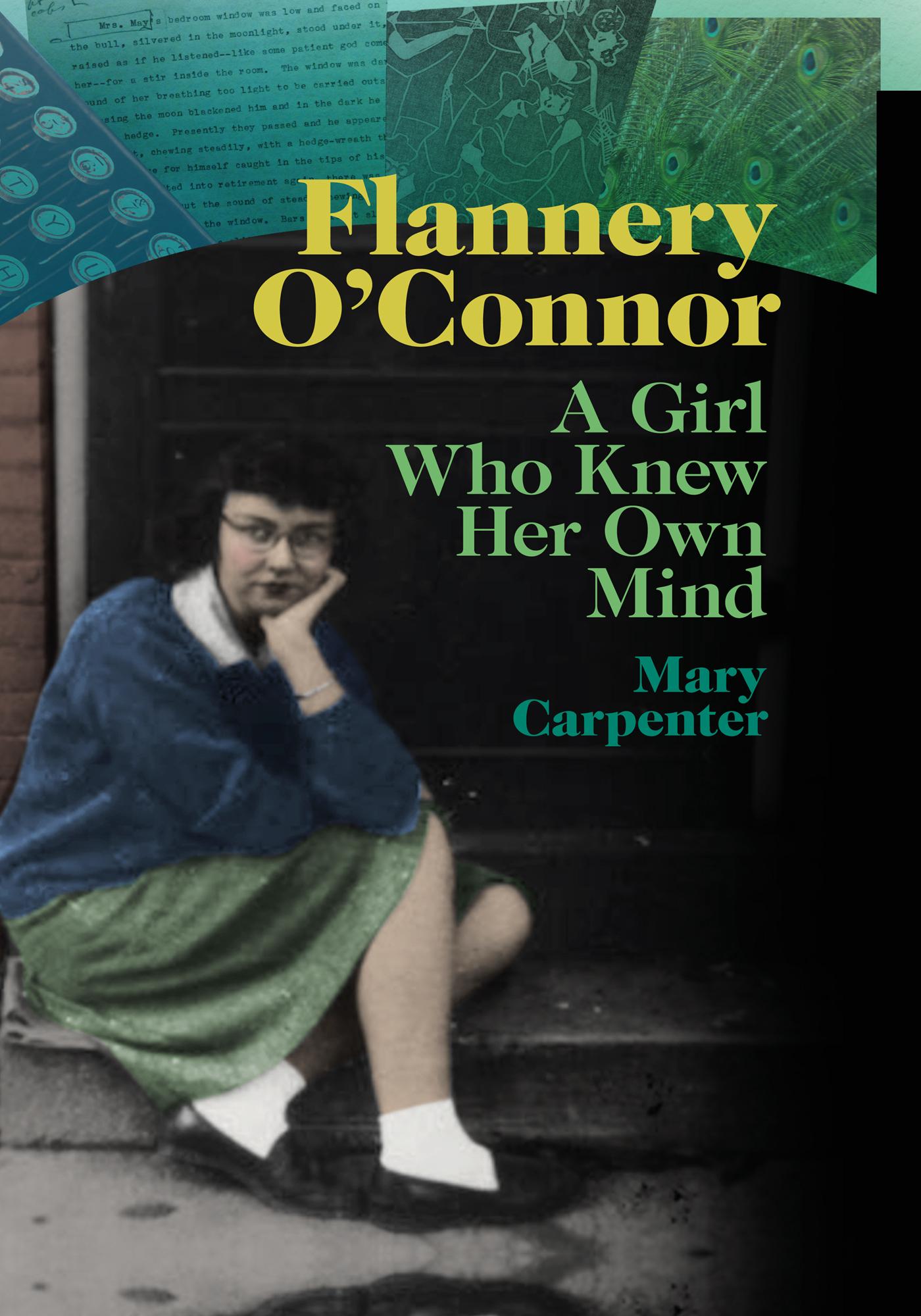
In her biography of writer Flannery O’Connor (1925–1964, née Mary Flannery), Mary Carpenter introduces young readers to one of the most renowned American authors. With an accessible style of writing, Flannery O’Connor gives younger readers an overview of O’Connor’s life and examines the influences, such as her family, region, and education, that helped her become one of the most respected fiction writers of the twentieth century. In a frank but age-appropriate manner, Carpenter discusses the writer’s rural southern upbringing, her relationship to race, her chronic lupus, and her Catholic faith. The book will appeal to younger (nine- to ten-year-old) readers with sophisticated interests along with, and maybe more importantly, those older middle-school students who are not yet skillful readers and who thus often search with difficulty for interesting topics presented in books of a shorter length than most written for that age group.
Mary Flannery’s life is inspirational. Her childhood in Savannah, Georgia, was both difficult and privileged. During the Great Depression, her father had to leave home to find work and then became very ill. Later in small-town Milledgeville, Georgia, Flannery lived with her mother and an extended family of strong women. Flannery’s ability to know her mind at an early age helped her build an artistic reputation starting in high school. Through her fiction, she went on to become a role model for unconventional girls everywhere and for anyone who dreams of becoming a writer.
Płać wygodnie kartą, Klarną, Apple Pay lub Google Pay. Nie jesteś zadowolony? Zawsze masz 14-dniową gwarancję zwrotu pieniędzy. Więcej przeczytasz w naszych warunkach. Masz pytania? Napisz do nas na hello@memmo.org.
Memmo ułatwia naukę – gdziekolwiek jesteś na świecie. U nas znajdziesz podręczniki i sprytne narzędzia do nauki w jednym miejscu: streszczenia, quizy, podcasty i fiszki. A do tego Ted, Twój kumpel do nauki, który odpowie na wszystko, co Cię nurtuje. Ponad 50 000 studentów już tu się uczy – stworzone, byś uczył się szybciej i mniej stresował.