
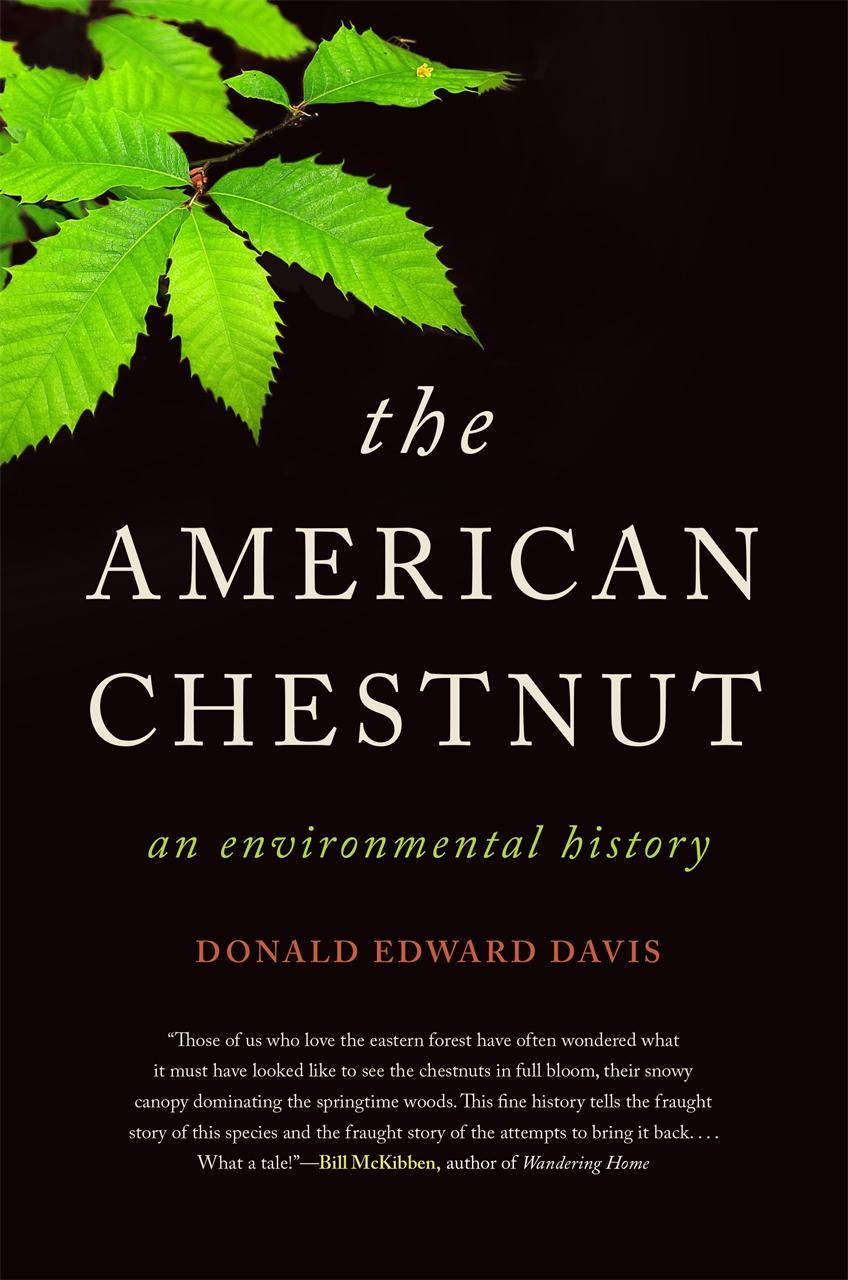
Before 1910 the American chestnut was one of the most common trees in the eastern United States. Although historical evidence suggests the natural distribution of the American chestnut extended across more than four hundred thousand square miles of territory—an area stretching from eastern Maine to southeast Louisiana—stands of the trees could also be found in parts of Wisconsin, Michigan, Washington State, and Oregon. An important natural resource, chestnut wood was preferred for woodworking, fencing, and building construction, as it was rot resistant and straight grained. The hearty and delicious nuts also fed wildlife, people, and livestock.
Ironically, the tree that most piqued the emotions of nineteenth- and early twentieth-century Americans has virtually disappeared from the eastern United States. After a blight fungus was introduced into the United States during the late nineteenth century, the American chestnut became functionally extinct. Although the virtual eradication of the species caused one of the greatest ecological catastrophes since the last ice age, considerable folklore about the American chestnut remains. Some of the tree’s history dates to the very founding of our country, making the story of the American chestnut an integral part of American cultural and environmental history.
The American Chestnut tells the story of the American chestnut from Native American prehistory through the Civil War and the Great Depression. Davis documents the tree’s impact on nineteenth-and early twentieth-century American life, including the decorative and culinary arts. While he pays much attention to the importation of chestnut blight and the tree’s decline as a dominant species, the author also evaluates efforts to restore the American chestnut to its former place in the eastern deciduous forest, including modern attempts to genetically modify the species.
Płać wygodnie kartą, Klarną, Apple Pay lub Google Pay. Nie jesteś zadowolony? Zawsze masz 14-dniową gwarancję zwrotu pieniędzy. Więcej przeczytasz w naszych warunkach. Masz pytania? Napisz do nas na hello@memmo.org.
Memmo ułatwia naukę – gdziekolwiek jesteś na świecie. U nas znajdziesz podręczniki i sprytne narzędzia do nauki w jednym miejscu: streszczenia, quizy, podcasty i fiszki. A do tego Ted, Twój kumpel do nauki, który odpowie na wszystko, co Cię nurtuje. Ponad 50 000 studentów już tu się uczy – stworzone, byś uczył się szybciej i mniej stresował.