
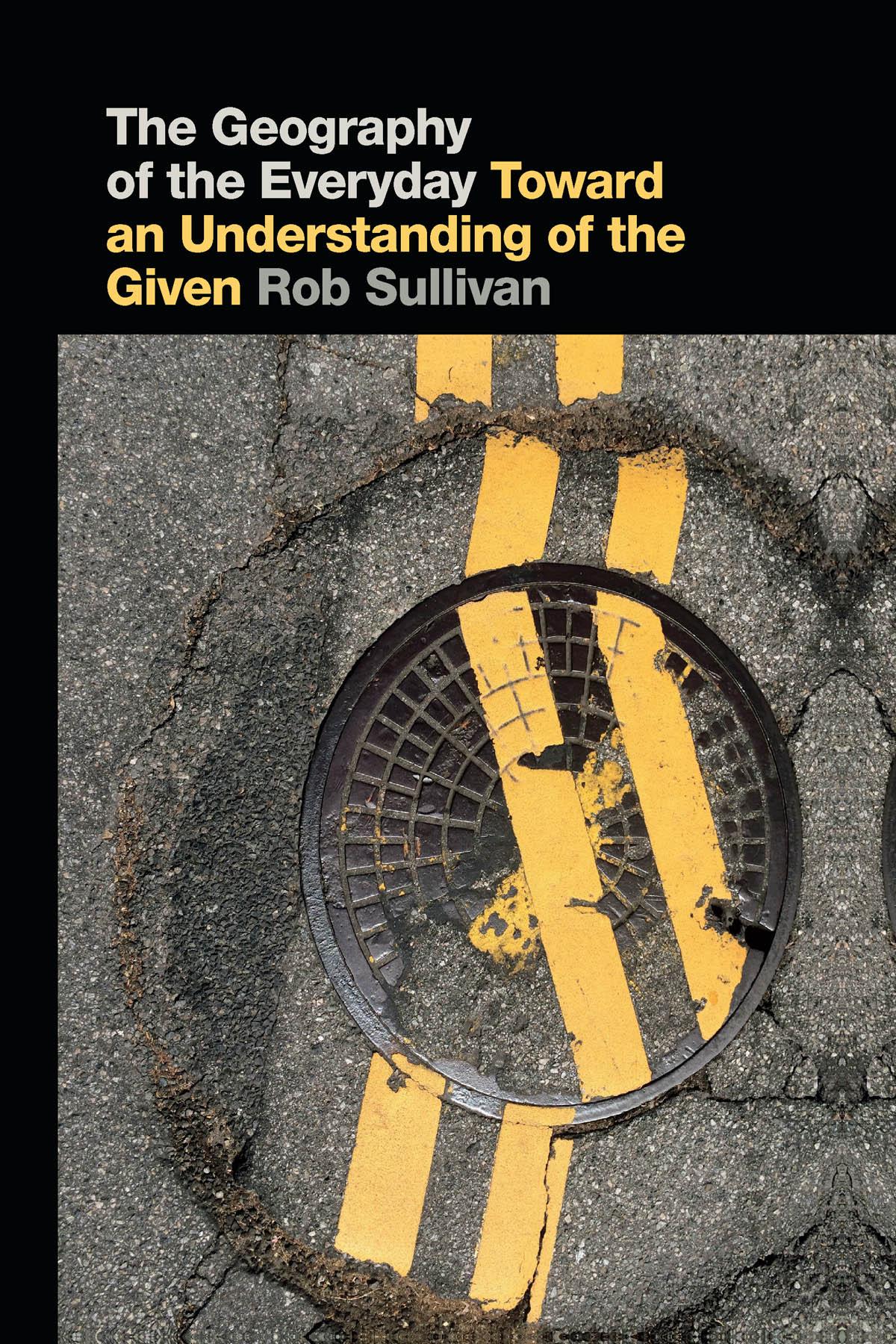
Anthropologists, psychologists, feminists, and sociologists have long studied the “everyday,” the quotidian, the taken-for-granted; however, geographers have lagged behind in engaging with this slippery aspect of reality. Now, Rob Sullivan makes the case for geography as a powerful conceptual framework for seeing the everyday anew and for pushing back against its “givenness”: its capacity to so fade into the background that it controls us in dangerously unexamined ways. Drawing on a number of theorists (Foucault, Goffman, Marx, Lefebvre, Hägerstrand, and others), Sullivan unpacks the concepts and perceived realities that structure everyday life while grounding them in real-world cases, such as Nigeria’s troubled oil network, the working poor in the United States, China’s urban villages, and ultra-high-end housing in London and Cairo.
In examining the everyday from a geographical perspective, Sullivan ranges widely across time, space, history, geography, Marxian reproduction, the body, and the geographical mind. The everyday, Sullivan suggests, is where change occurs and where resistance to change can begin. By locating the everyday through geography, we can help to make change possible. Whatever the issue, be it struggles over race, LGBT rights, class inequality, or global warming, the transformations required to achieve social justice all begin with transformation of the everyday order.
Płać wygodnie kartą, Klarną, Apple Pay lub Google Pay. Nie jesteś zadowolony? Zawsze masz 14-dniową gwarancję zwrotu pieniędzy. Więcej przeczytasz w naszych warunkach. Masz pytania? Napisz do nas na hello@memmo.org.
Memmo ułatwia naukę – gdziekolwiek jesteś na świecie. U nas znajdziesz podręczniki i sprytne narzędzia do nauki w jednym miejscu: streszczenia, quizy, podcasty i fiszki. A do tego Ted, Twój kumpel do nauki, który odpowie na wszystko, co Cię nurtuje. Ponad 50 000 studentów już tu się uczy – stworzone, byś uczył się szybciej i mniej stresował.