
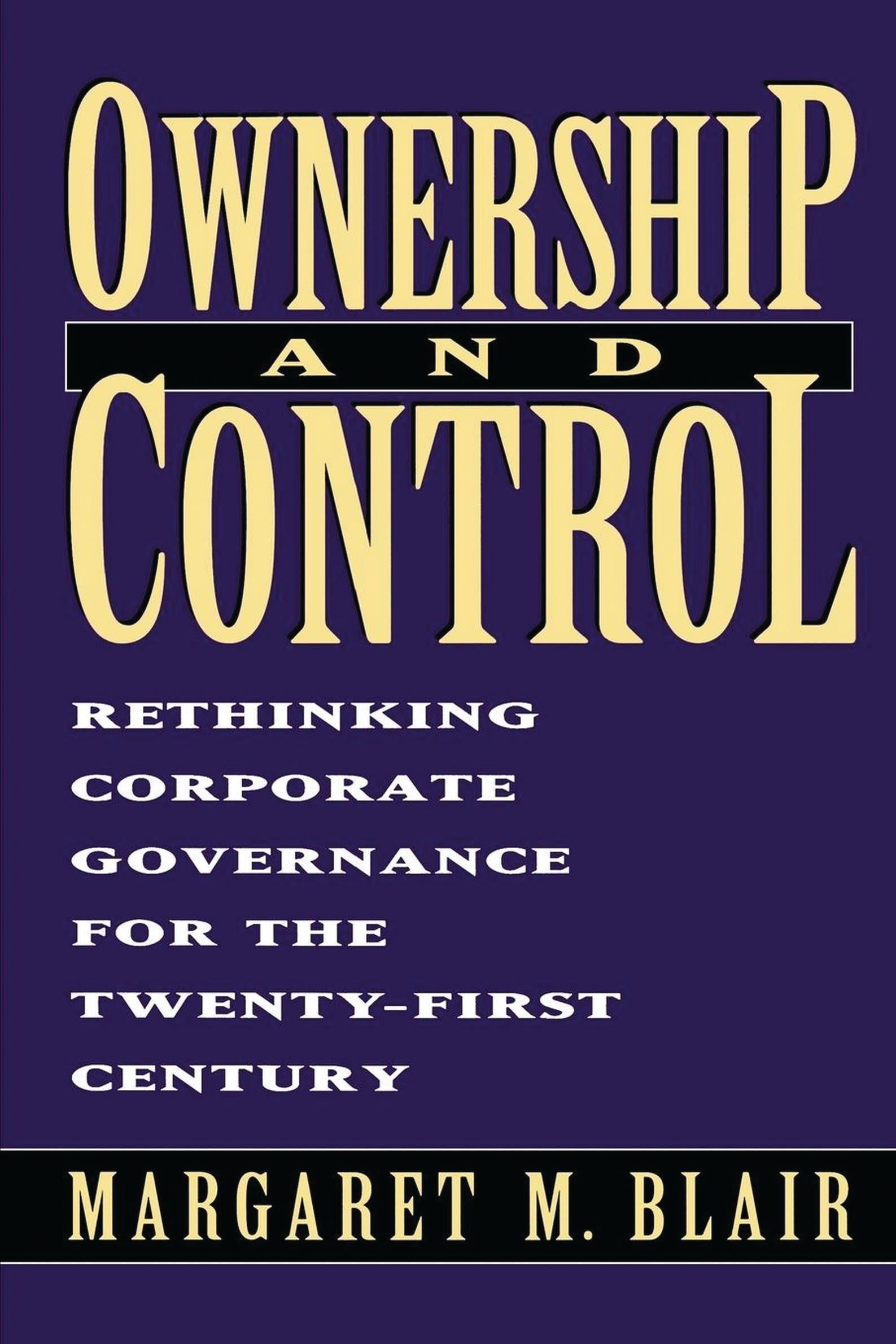
Who should be allowed to call the shots in the boardrooms of U. S. Corporations? And what difference does it make for their growth and profitability? In the last decade, these issues have moved to the center of policy debates about the time horizons and competitiveness of U.S. companies. This book is an indispensable guide through the historical, legal, and institutional background for these corporate governance debates. It explains three broad views on the relationship among the governance, performance, and competitiveness of corporations, and examines the intellectual history, politics, and empirical evidence behind each argument. It also considers the effect that two trends will have on corporate governance: the growth and power of public employees' pension funds and the increase in the economic activity that comes from specialized services and customized production.
Blair asserts that companies need to experiment with different governance arrangements, such as choosing directors to represent particular constituencies, or making more radical arrangements like leveraged buyouts or worker-owned companies. Public policy should encourage, or at least not impede, such experimentation.
Blair asserts that companies need to experiment with different governance arrangements, such as choosing directors to represent particular constituencies, or making more radical arrangements like leveraged buyouts or worker-owned companies. Public policy should encourage, or at least not impede, such experimentation.
Płać wygodnie kartą, Klarną, Apple Pay lub Google Pay. Nie jesteś zadowolony? Zawsze masz 14-dniową gwarancję zwrotu pieniędzy. Więcej przeczytasz w naszych warunkach. Masz pytania? Napisz do nas na hello@memmo.org.
Memmo ułatwia naukę – gdziekolwiek jesteś na świecie. U nas znajdziesz podręczniki i sprytne narzędzia do nauki w jednym miejscu: streszczenia, quizy, podcasty i fiszki. A do tego Ted, Twój kumpel do nauki, który odpowie na wszystko, co Cię nurtuje. Ponad 50 000 studentów już tu się uczy – stworzone, byś uczył się szybciej i mniej stresował.