
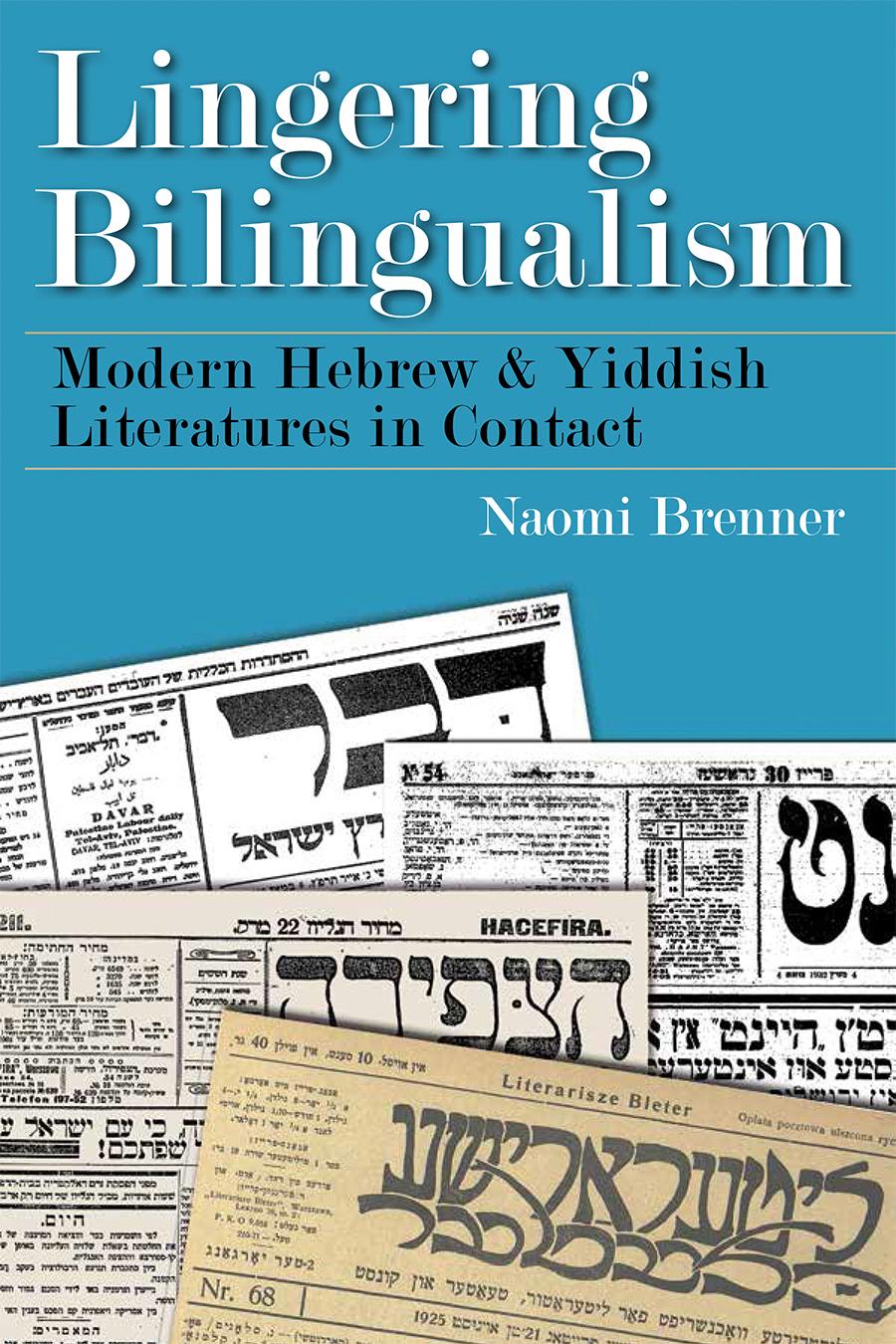
In a famous comment made by the poet Chayim Nachman Bialik, Hebrew—the language of the Jewish religious and intellectual tradition—and Yiddish—the East European Jewish vernacular—were "a match made in heaven that cannot be separated." That marriage, so the story goes, collapsed in the years immediately preceding and following World War I. But did the "exes" really go their separate ways?
Lingering Bilingualism argues that the interwar period represents not an endpoint but rather a new phase in Hebrew-Yiddish linguistic and literary contact. Though the literatures followed different geographic and ideological paths, their writers and readers continued to interact in places like Berlin, Tel Aviv, and New York—and imagined new paradigms for cultural production in Jewish languages. Brenner traces a shift from traditional bilingualism to a new translingualism in response to profound changes in Jewish life and culture. By foregrounding questions of language, she examines both the unique literary-linguistic circumstances of Ashkenazi Jewish writing and the multilingualism that can lurk within national literary canons.
Płać wygodnie kartą, Klarną, Apple Pay lub Google Pay. Nie jesteś zadowolony? Zawsze masz 14-dniową gwarancję zwrotu pieniędzy. Więcej przeczytasz w naszych warunkach. Masz pytania? Napisz do nas na hello@memmo.org.
Memmo ułatwia naukę – gdziekolwiek jesteś na świecie. U nas znajdziesz podręczniki i sprytne narzędzia do nauki w jednym miejscu: streszczenia, quizy, podcasty i fiszki. A do tego Ted, Twój kumpel do nauki, który odpowie na wszystko, co Cię nurtuje. Ponad 50 000 studentów już tu się uczy – stworzone, byś uczył się szybciej i mniej stresował.