
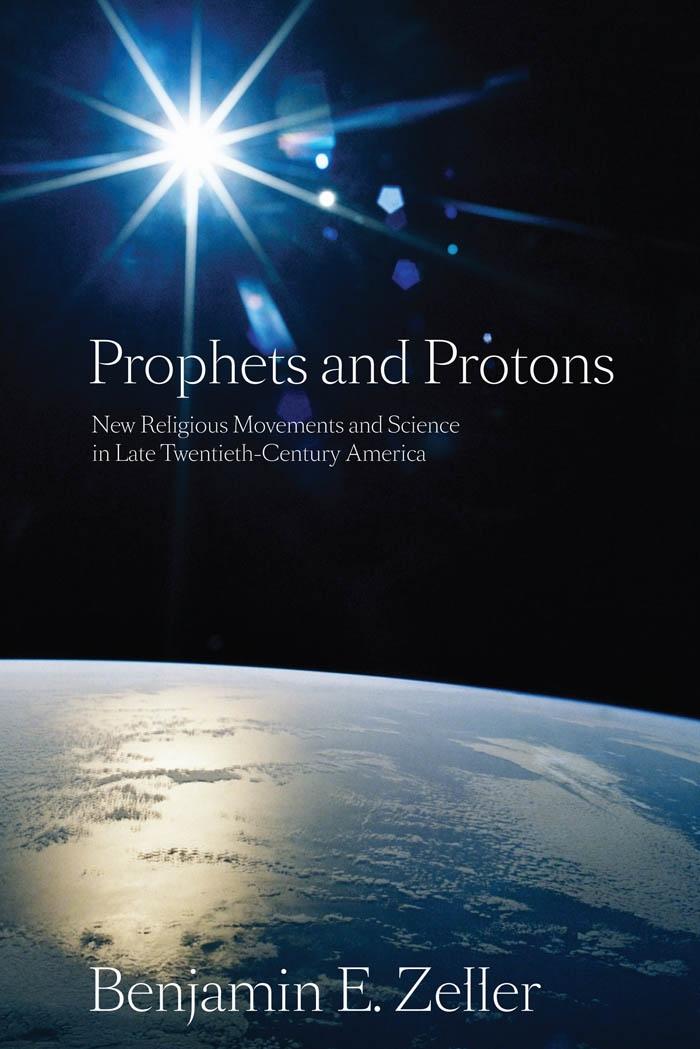
By the twentieth century, science had become so important that religious traditions had to respond to it. Emerging religions, still led by a living founder to guide them, responded with a clarity and focus that illuminates other larger, more established religions’ understandings of science. The Hare Krishnas, the Unification Church, and Heaven’s Gate each found distinct ways to incorporate major findings of modern American science, understanding it as central to their wider theological and social agendas. In tracing the development of these new religious movements’ viewpoints on science during each movement’s founding period, we can discern how their views on science were crafted over time. These NRMs shed light on how religious groups—new, old, alternative, or mainstream—could respond to the tremendous growth of power and prestige of science in late twentieth-century America.
In this engrossing book, Zeller carefully shows that religious groups had several methods of creatively responding to science, and that the often-assumed conflict-based model of “science vs. religion” must be replaced by a more nuanced understanding of how religions operate in our modern scientific world.
Płać wygodnie kartą, Klarną, Apple Pay lub Google Pay. Nie jesteś zadowolony? Zawsze masz 14-dniową gwarancję zwrotu pieniędzy. Więcej przeczytasz w naszych warunkach. Masz pytania? Napisz do nas na hello@memmo.org.
Memmo ułatwia naukę – gdziekolwiek jesteś na świecie. U nas znajdziesz podręczniki i sprytne narzędzia do nauki w jednym miejscu: streszczenia, quizy, podcasty i fiszki. A do tego Ted, Twój kumpel do nauki, który odpowie na wszystko, co Cię nurtuje. Ponad 50 000 studentów już tu się uczy – stworzone, byś uczył się szybciej i mniej stresował.