
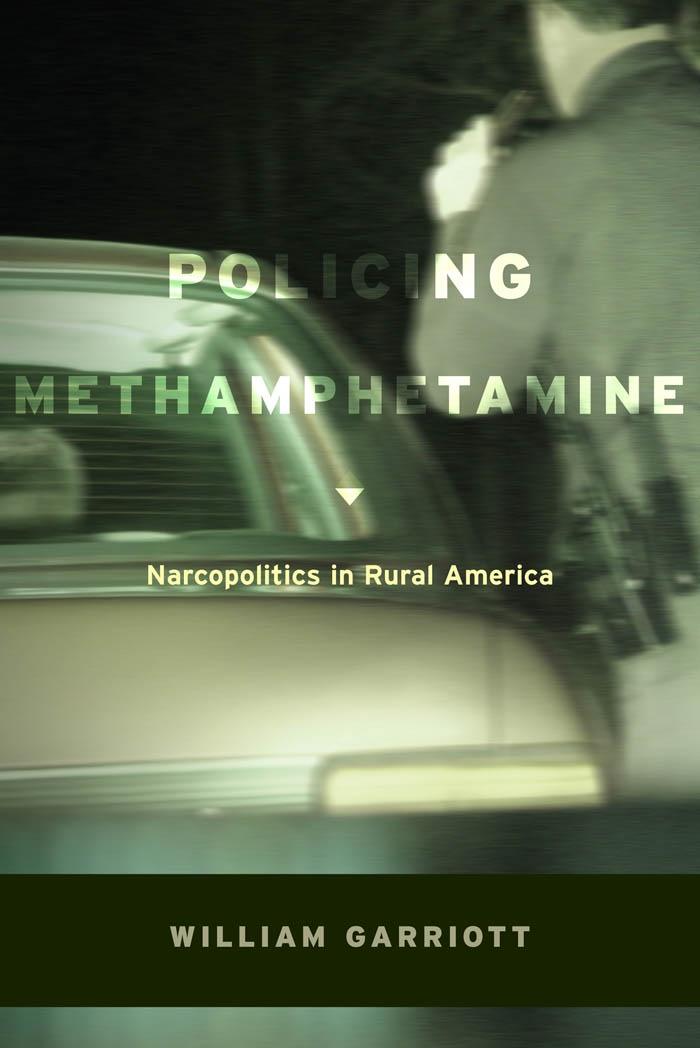
In its steady march across the United States, methamphetamine has become, to quote former Attorney General Alberto Gonzales, “the most dangerous drug in America.” As a result, there has been a concerted effort at the local level to root out the methamphetamine problem by identifying the people at its source—those known or suspected to be involved with methamphetamine. Government-sponsored anti-methamphetamine legislation has enhanced these local efforts, formally and informally encouraging rural residents to identify meth offenders in their communities.
Policing Methamphetamine shows what happens in everyday life—and to everyday life—when methamphetamine becomes an object of collective concern. Drawing on interviews with users, police officers, judges, and parents and friends of addicts in one West Virginia town, William Garriott finds that this overriding effort to confront the problem changed the character of the community as well as the role of law in creating and maintaining social order. Ultimately, this work addresses the impact of methamphetamine and, more generally, the war on drugs, on everyday life in the United States.
Płać wygodnie kartą, Klarną, Apple Pay lub Google Pay. Nie jesteś zadowolony? Zawsze masz 14-dniową gwarancję zwrotu pieniędzy. Więcej przeczytasz w naszych warunkach. Masz pytania? Napisz do nas na hello@memmo.org.
Memmo ułatwia naukę – gdziekolwiek jesteś na świecie. U nas znajdziesz podręczniki i sprytne narzędzia do nauki w jednym miejscu: streszczenia, quizy, podcasty i fiszki. A do tego Ted, Twój kumpel do nauki, który odpowie na wszystko, co Cię nurtuje. Ponad 50 000 studentów już tu się uczy – stworzone, byś uczył się szybciej i mniej stresował.