
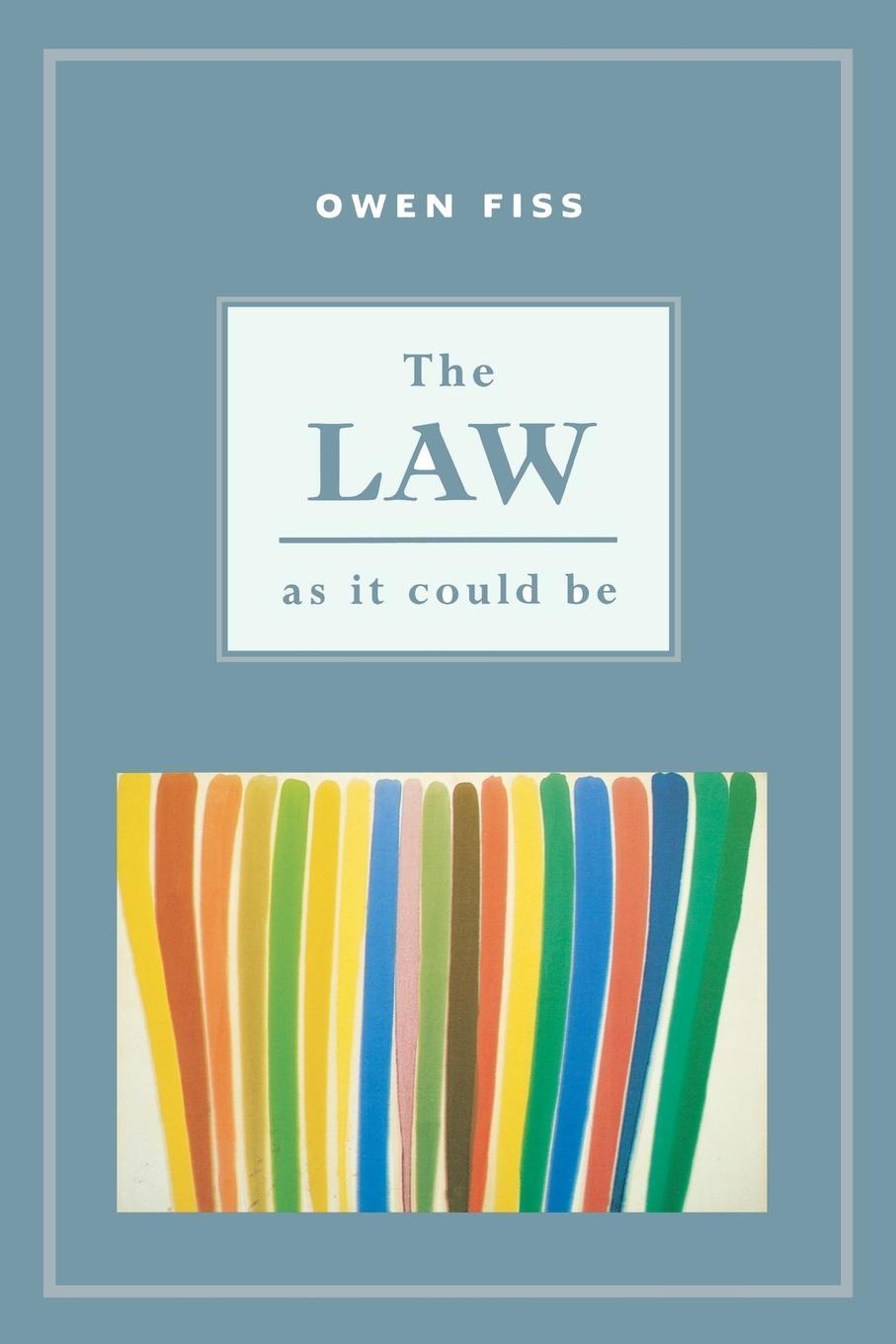
The Law As It Could Be gathers Fiss’s most important work on procedure, adjudication and public reason, introduced by the author and including contextual introductions for each piece—some of which are among the most cited in Twentieth Century legal studies. Fiss surveys the legal terrain between the landmark cases of Brown v. Board of Education and Bush v. Gore to reclaim the legal legacy of the Civil Rights Movement. He argues forcefully for a vision of judges as instruments of public reason and of the courts as a means of shaping society in the image of the Constitution.
In building his argument, Fiss attends to topics as diverse as the use of the injunction to restructure social institutions; how law and economics have misunderstood the role of the judge; why the movement seeking alternatives to adjudication fails to serve the public interest; and why Bush v. Gore was not the constitutional crisis some would have us believe. In so doing, Fiss reveals a vision of adjudication that vindicates the public reason on which Brown v. Board of Education was founded.
Płać wygodnie kartą, Klarną, Apple Pay lub Google Pay. Nie jesteś zadowolony? Zawsze masz 14-dniową gwarancję zwrotu pieniędzy. Więcej przeczytasz w naszych warunkach. Masz pytania? Napisz do nas na hello@memmo.org.
Memmo ułatwia naukę – gdziekolwiek jesteś na świecie. U nas znajdziesz podręczniki i sprytne narzędzia do nauki w jednym miejscu: streszczenia, quizy, podcasty i fiszki. A do tego Ted, Twój kumpel do nauki, który odpowie na wszystko, co Cię nurtuje. Ponad 50 000 studentów już tu się uczy – stworzone, byś uczył się szybciej i mniej stresował.