
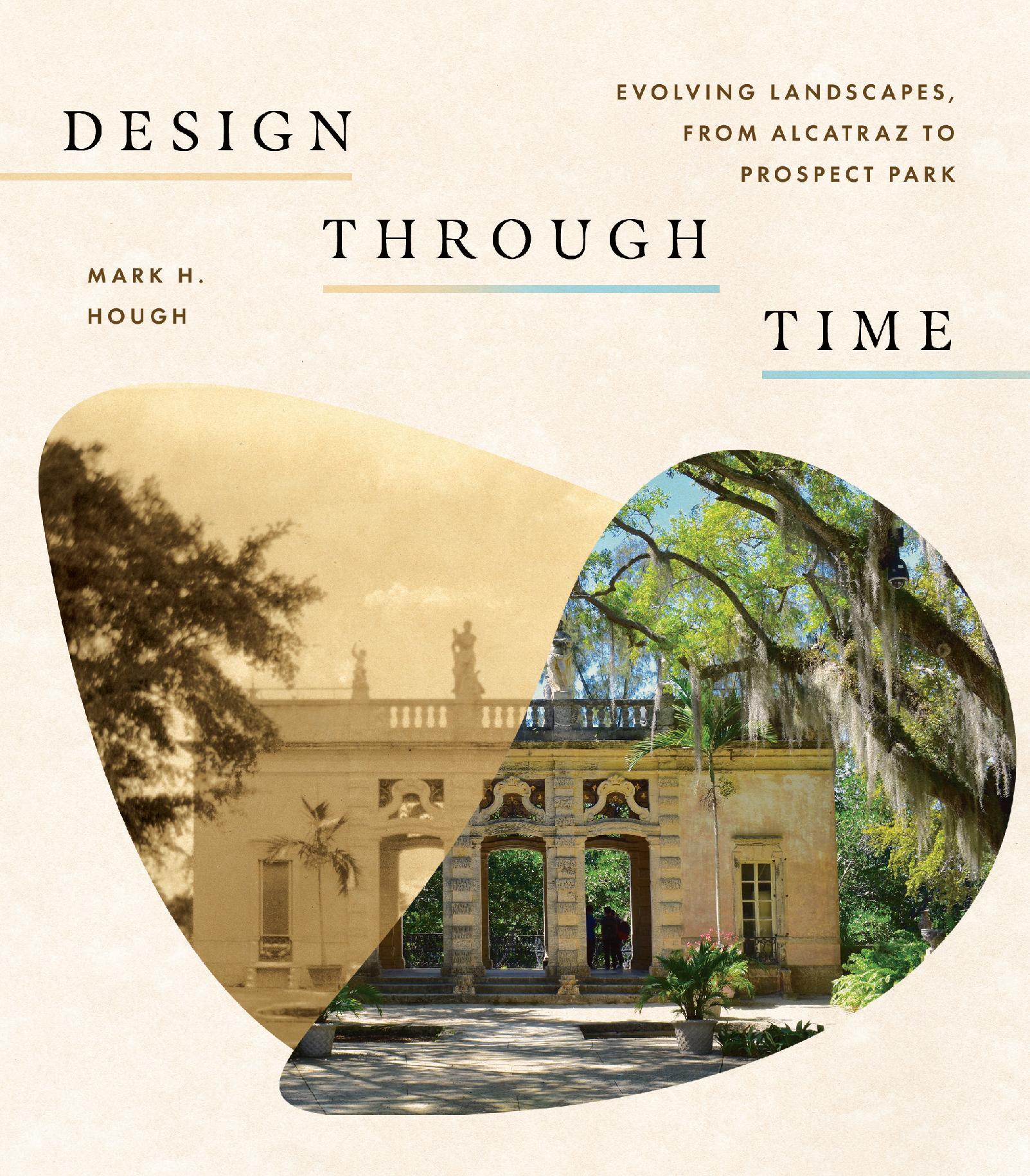
Understanding landscape design as a dynamic, not static, art form
Landscape architects do not situate their work in a vacuum. It exists in a state of constant change and is better understood as a product of continual evolution than as a work of pure design. In Design through Time, Mark Hough offers case studies of parks, gardens, campuses, communities, and cultural sites—from the Missouri Botanical Garden and Mount Auburn Cemetery to Tuskegee University and Dumbarton Oaks Park—to answer several crucial questions: Who is the proposed landscape conceived to please? How will it change, affected by both natural and societal events? How will stewards address the need for landscapes to remain relevant, attractive, and accessible?
To address these concerns, Hough analyzes the influence and impact of generations of administrators, advocates, horticulturalists, institutional leaders, elected officials, and others whose collective decisions compel landscapes to grow and change in ways that strive to respect their established legacies while adjusting to shifting cultural, ecological, and economic realities. The resulting work is a dynamic look at landscape design that reflects its status as an art form that is ever changing, never static.
Landscape architects do not situate their work in a vacuum. It exists in a state of constant change and is better understood as a product of continual evolution than as a work of pure design. In Design through Time, Mark Hough offers case studies of parks, gardens, campuses, communities, and cultural sites—from the Missouri Botanical Garden and Mount Auburn Cemetery to Tuskegee University and Dumbarton Oaks Park—to answer several crucial questions: Who is the proposed landscape conceived to please? How will it change, affected by both natural and societal events? How will stewards address the need for landscapes to remain relevant, attractive, and accessible?
To address these concerns, Hough analyzes the influence and impact of generations of administrators, advocates, horticulturalists, institutional leaders, elected officials, and others whose collective decisions compel landscapes to grow and change in ways that strive to respect their established legacies while adjusting to shifting cultural, ecological, and economic realities. The resulting work is a dynamic look at landscape design that reflects its status as an art form that is ever changing, never static.
Płać wygodnie kartą, Klarną, Apple Pay lub Google Pay. Nie jesteś zadowolony? Zawsze masz 14-dniową gwarancję zwrotu pieniędzy. Więcej przeczytasz w naszych warunkach. Masz pytania? Napisz do nas na hello@memmo.org.
Memmo ułatwia naukę – gdziekolwiek jesteś na świecie. U nas znajdziesz podręczniki i sprytne narzędzia do nauki w jednym miejscu: streszczenia, quizy, podcasty i fiszki. A do tego Ted, Twój kumpel do nauki, który odpowie na wszystko, co Cię nurtuje. Ponad 50 000 studentów już tu się uczy – stworzone, byś uczył się szybciej i mniej stresował.
Może Ci się spodobać
Kup książkę0