
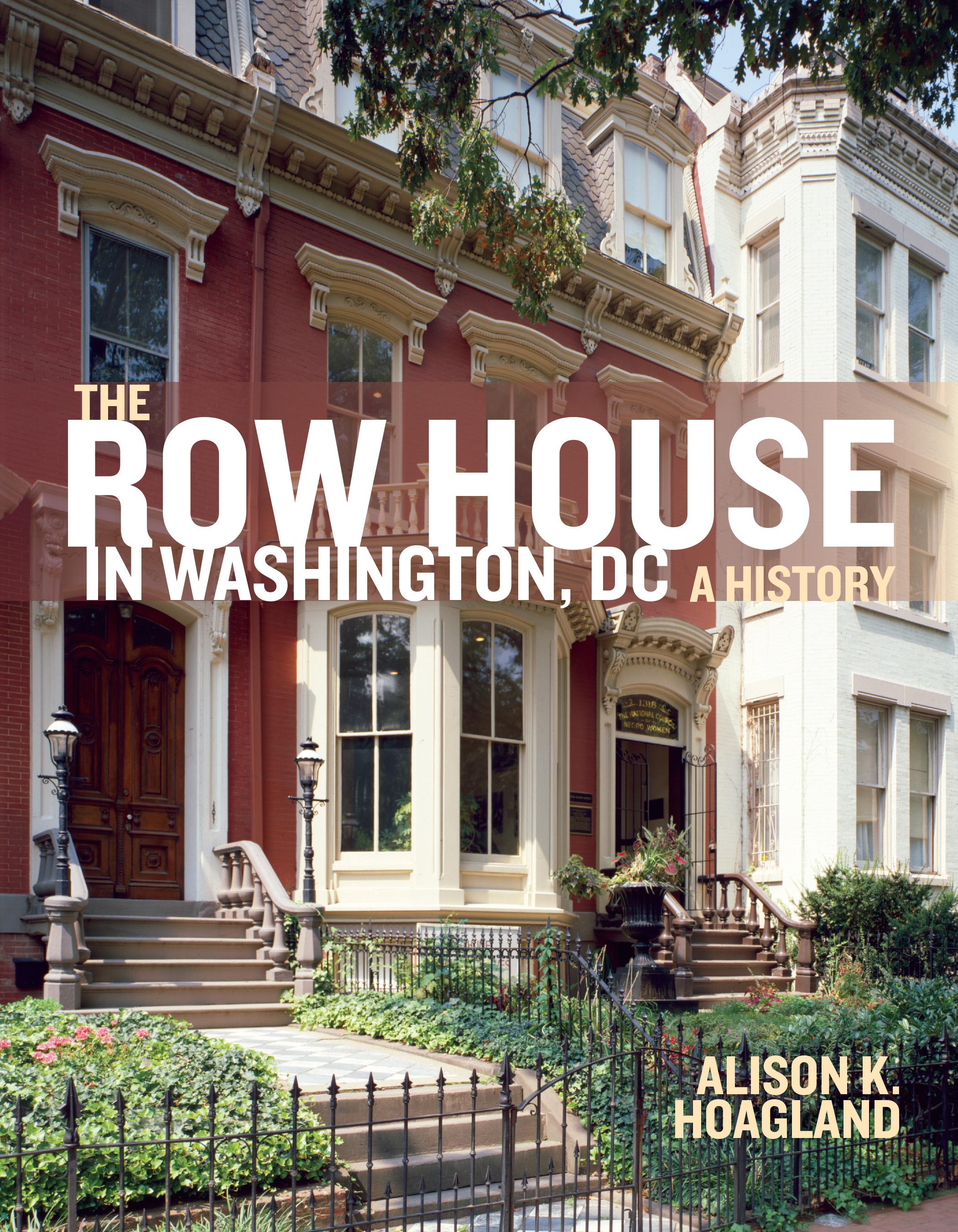
With The Row House in Washington, DC, the architectural historian and preservationist Alison Hoagland turns the lucid prose style and keen analytical skill that characterize all her scholarship to the subject of the Washington row house. Row houses have long been an important component of the housing stock of many major American cities, predominantly sheltering the middle classes comprising clerks, tradespeople, and artisans. In Washington, with its plethora of government workers, they are the dominant typology of the historical city. Hoagland identifies six principal row house types—two-room, L-shaped, three-room, English-basement, quadrant, and kitchen-forward—and documents their wide-ranging impact, as sources of income and statements of attainment as well as domiciles for nuclear families or boarders, homeowners or renters, long tenancy or short stays. Through restrictive covenants on some house sales, they also illustrate the pervasive racism that has haunted the city. This topical study demonstrates at once the distinctive character of the Washington row house and the many similarities it shares with row houses in other mid-Atlantic cities. In a broader sense, it also shows how urban dwellers responded to a challenging concatenation of spatial, regulatory, financial, and demographic limitations, providing a historical model for new, innovative designs.
Publication of this volume was assisted by a grant from Furthermore: a program of the J. M. Kaplan Fund.
Płać wygodnie kartą, Klarną, Apple Pay lub Google Pay. Nie jesteś zadowolony? Zawsze masz 14-dniową gwarancję zwrotu pieniędzy. Więcej przeczytasz w naszych warunkach. Masz pytania? Napisz do nas na hello@memmo.org.
Memmo ułatwia naukę – gdziekolwiek jesteś na świecie. U nas znajdziesz podręczniki i sprytne narzędzia do nauki w jednym miejscu: streszczenia, quizy, podcasty i fiszki. A do tego Ted, Twój kumpel do nauki, który odpowie na wszystko, co Cię nurtuje. Ponad 50 000 studentów już tu się uczy – stworzone, byś uczył się szybciej i mniej stresował.