
"This book is for those inhabited by the same desires that drove the early naturalists afield, who yearn to know wilder territory. We read it voraciously, as if in the understanding of how they loved we might also begin to do so, as if in the reliving of their lives we might recapture some vanishing part of the human psyche that must know wilderness."-- Janisse Ray, author of Ecology of a Cracker Childhood
"Like the naturalists she profiles, Gail Fishman takes us on an odyssey through a time when the extraordinary diversity of the southeastern United States was first being explored and described. . . . Entertaining."-- Steve Gatewood, executive director, Society for Ecological Restoration, Tucson
"Fishman modernizes the men and their explorations by retracing the terrain that they explored, wrote about, drew and painted. The result is an intriguing and appealing lesson in biographical and scientific history and a literary reading experience that will appeal to a wide audience."-- William W. Rogers, professor of history emeritus, Florida State University
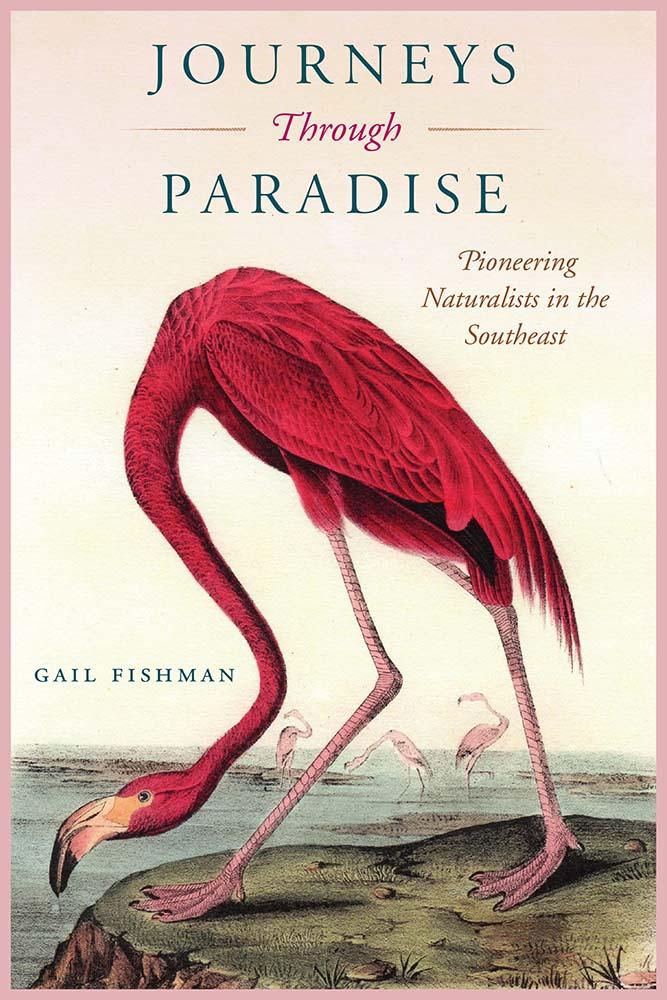
Following the original steps of pioneering naturalists, Gail Fishman profiles thirteen men who explored North America’s southeastern wilderness between 1715 and the 1940s, including John James Audubon, Mark Catesby, John and William Bartram, John Muir, and Alvan Wentworth Chapman. The book is also Fishman’s personal travelogue as she experiences the landscape through their eyes and describes the changes that have occurred along the region’s trails and streams.
Traveling by horseback, boat, and foot, these naturalists--dedicated to their task and blessed with passion and insatiable curiosity--explored gentle mountains, regal forests, and shadowy swamps. Their interests ran deeper than merely cataloging plants and animals. They identified the continent’s foundations and the habits and histories of the flora and fauna of the landscape. Fishman tells us who they were and what compelled them to pursue their work. She evaluates what they accomplished and measures their importance, also pointing out their strengths and failings. And she paints an engaging picture of what America was like at the time.
Fishman combines natural history and American history into a series of portraits that recapture the American Southeast as it was seen by those who first tramped through the wilderness and whose voices from the beginning urged the preservation of wild places.
Gail Fishman, a freelance writer who lives in Tallahassee, has worked for the Florida Defenders of the Environment, The Nature Conservancy, and the National Audubon Society. She is a volunteer for the St. Marks National Wildlife Refuge and helped form the St. Marks Refuge Association.
Płać wygodnie kartą, Klarną, Apple Pay lub Google Pay. Nie jesteś zadowolony? Zawsze masz 14-dniową gwarancję zwrotu pieniędzy. Więcej przeczytasz w naszych warunkach. Masz pytania? Napisz do nas na hello@memmo.org.
Memmo ułatwia naukę – gdziekolwiek jesteś na świecie. U nas znajdziesz podręczniki i sprytne narzędzia do nauki w jednym miejscu: streszczenia, quizy, podcasty i fiszki. A do tego Ted, Twój kumpel do nauki, który odpowie na wszystko, co Cię nurtuje. Ponad 50 000 studentów już tu się uczy – stworzone, byś uczył się szybciej i mniej stresował.
Może Ci się spodobać
Kup książkę0